Surgical treatment of first branchial cleft anomalies using retrograde facial nerve dissection technique
Ji Won Kim, Moo Kyun Park, Myung-Whan Suh, Soon-Hyun Ahn, Seong Keun Kwon, Jungirl Seok, Yoon Kyung Jeon, Seongyeon Jung, Eun-Jae Chung

TL;DR
This study evaluates a new surgical technique for removing first branchial cleft anomalies that reduces facial nerve damage and recurrence.
Contribution
The retrograde facial nerve dissection technique is introduced as a novel approach to improve FBCA surgery outcomes.
Findings
Complete resection was achieved in all 19 patients without facial nerve palsy.
No recurrence was observed during a median follow-up of 23.9 months.
Postoperative pain and paresthesia improved, though cosmetic satisfaction was limited.
Abstract
First branchial cleft anomalies (FBCAs) are infrequent congenital malformations. In FBCAs removal surgery, due to the previous infection history and the anatomical proximity of the FBCAs tract to the facial nerve, postoperative recurrence and facial paralysis are not uncommon. This study aimed to assess the clinical feasibility and outcomes of FBCAs resection using the retrograde facial nerve dissection technique. This retrospective study included 19 patients (mean age, 6.3 ± 4.4 years) who underwent FBCAs excision via retrograde facial nerve dissection between 2017 and 2023. Data on demographics, operative details, histopathology, postoperative complications, and follow-up survey were reviewed. Preoperative infection history was present in 94.7% of patients; 42.1% had prior incision and drainage and 15.8% had previous excision attempts. Complete resection was achieved in all cases…
Genes, proteins, chemicals, diseases, species, mutations and cell lines named across the full text — each resolved to its canonical identifier and authoritative record.
Click any figure to enlarge with its caption.
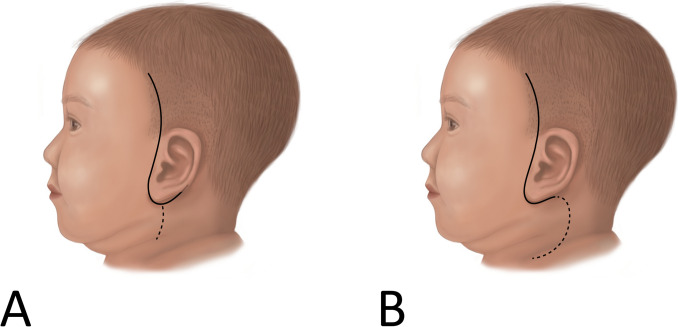 Figure 1
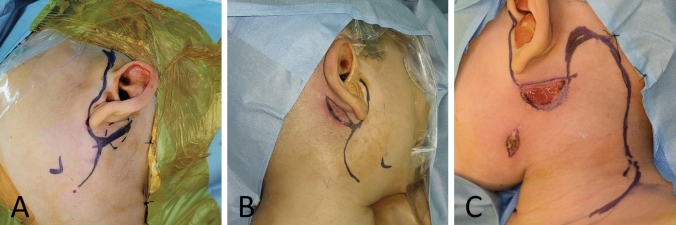 Figure 2
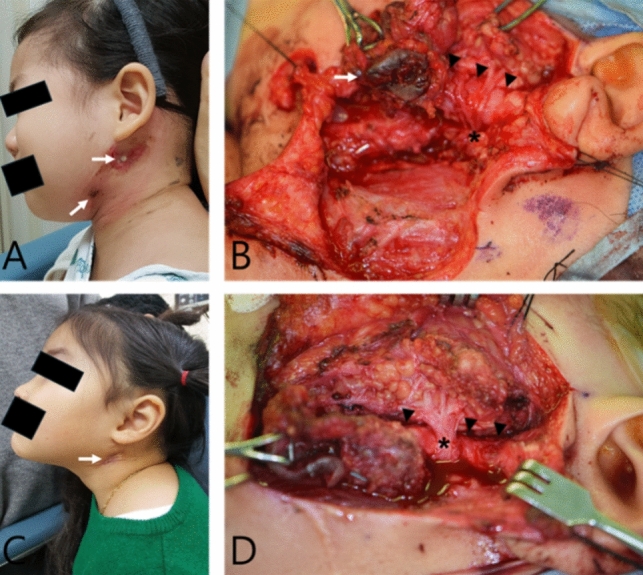 Figure 3
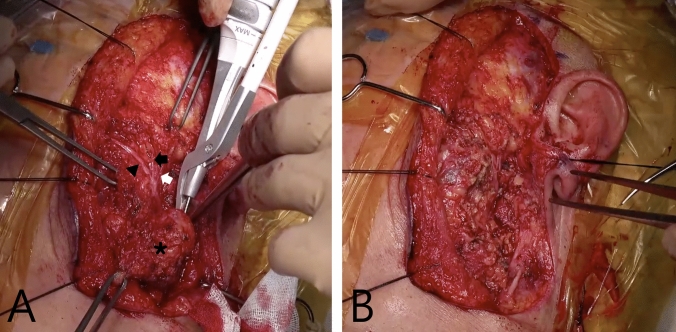 Figure 4
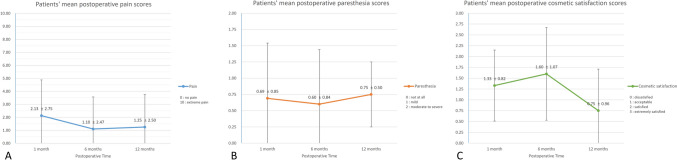 Figure 5
Peer Reviews
No public reviews on file for this paper yet. If you reviewed it on a platform where reviews are public (OpenReview, ICLR, NeurIPS, ICML), you can paste yours below so the community can read it here.
Videos
No videos yet. Explain this paper in a talk, walkthrough, or lecture? Add one.
Taxonomy
TopicsHead and Neck Anomalies · Salivary Gland Tumors Diagnosis and Treatment · Teratomas and Epidermoid Cysts