Electroantennographic response and odorant-binding protein expression alterations induced by host plant volatiles in Athetis dissimilis (Hampson)
Yue Qin Song, Tian Si Zhang, Hao Zhan Yuan, Sheng Jie Han, Bo Liao Li

TL;DR
This study explores how host plant volatiles affect the sense of smell in a crop pest, revealing stronger responses in males and potential for eco-friendly pest control.
Contribution
The study identifies specific plant volatiles and odorant-binding protein (OBP) expression changes in male and female Athetis dissimilis, offering new insights for sustainable pest management.
Findings
Male Athetis dissimilis show stronger electroantennogram (EAG) responses to specific plant volatiles like trans-2-hexenal and cis-3-hexen-1-ol.
Fumigation with β-caryophyllene and benzyl acetate significantly increases the expression of multiple AdisOBP genes in male antennae.
Males exhibit more upregulated OBP genes than females, aligning with their stronger EAG responses to odorants.
Abstract
Athetis dissimilis is one of the main pests affecting crops, and is currently managed through chemical control methods. Plant volatiles can stimulate insects to feed and lay eggs. The investigation of plant volatiles and the development of effective attractants are essential for sustainable pest control. In this study, we examined plant volatiles using electroantennogram (EAG) analysis, and observed alterations in OBP expression in A. dissimilis. The EAG results indicated that the EAG responses for trans-2-hexenal, cis-3-hexen-1-ol, and trans-2-hexen-1-ol in male adults were the highest, measuring 1.35 ± 0.02 mV, 1.30 ± 0.10 mV and 1.27 ± 0.18 mV, respectively. This was followed by (E, E)-2,4-hexadienal (1.01 ± 0.06 mV), octanal (0.69 ± 0.04 mV), hexanal (0.67 ± 0.04 mV), benzothiazole (0.64 ± 0.01 mV), and benzyl acetate (0.61 ± 0.02 mV). The EAG responses of male adults towards the…
Genes, proteins, chemicals, diseases, species, mutations and cell lines named across the full text — each resolved to its canonical identifier and authoritative record.
Click any figure to enlarge with its caption.
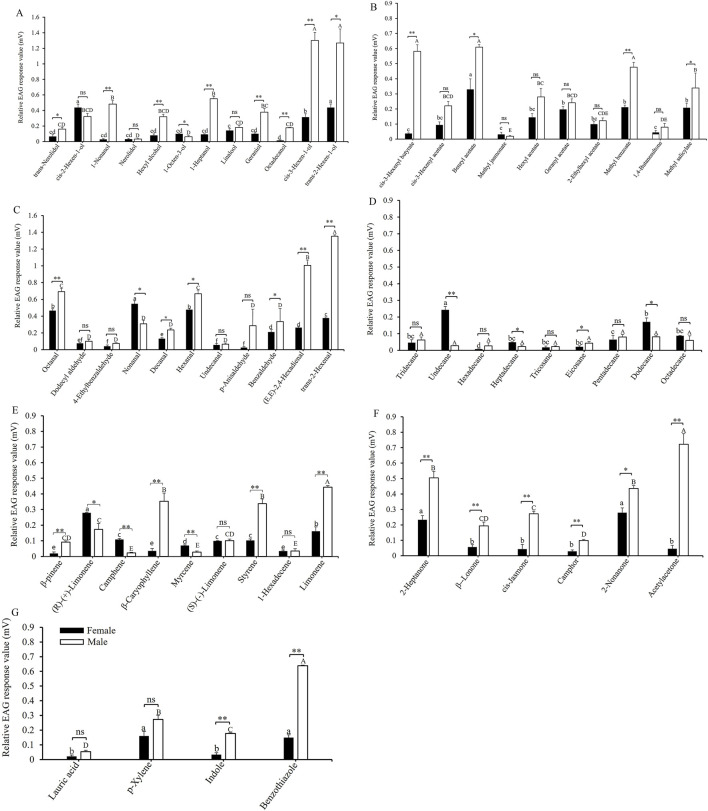 Figure 1
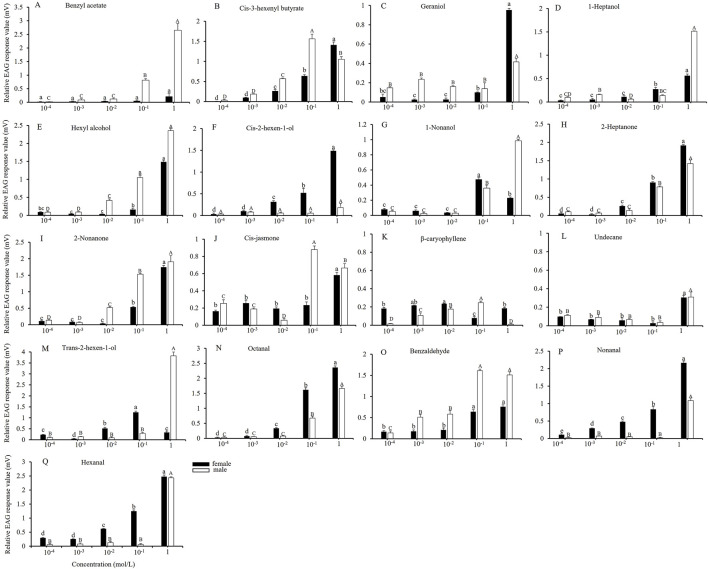 Figure 2
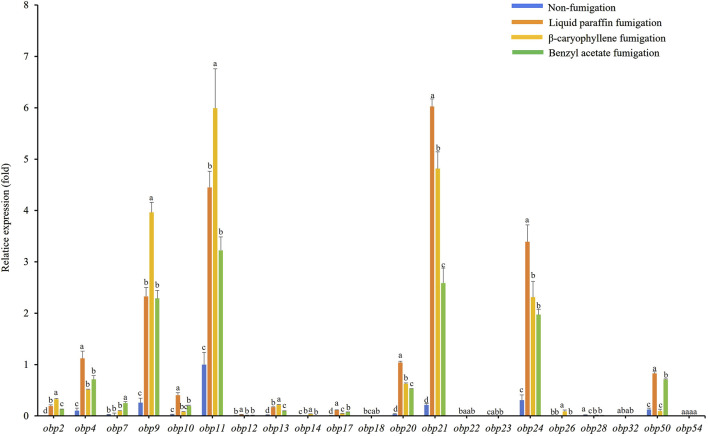 Figure 3
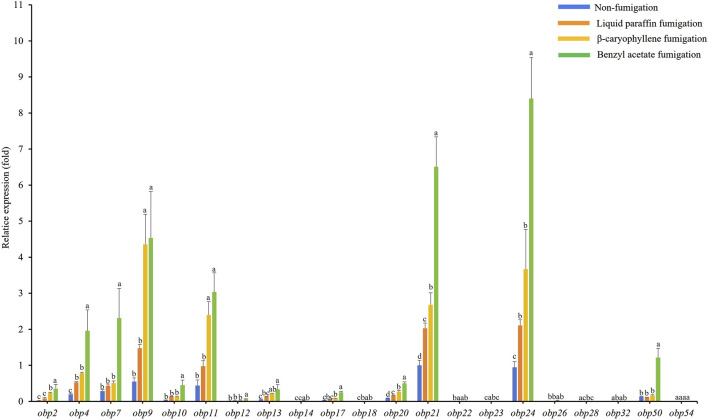 Figure 4
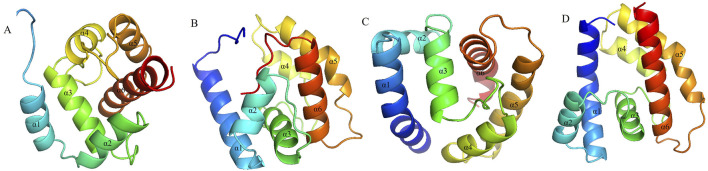 Figure 5
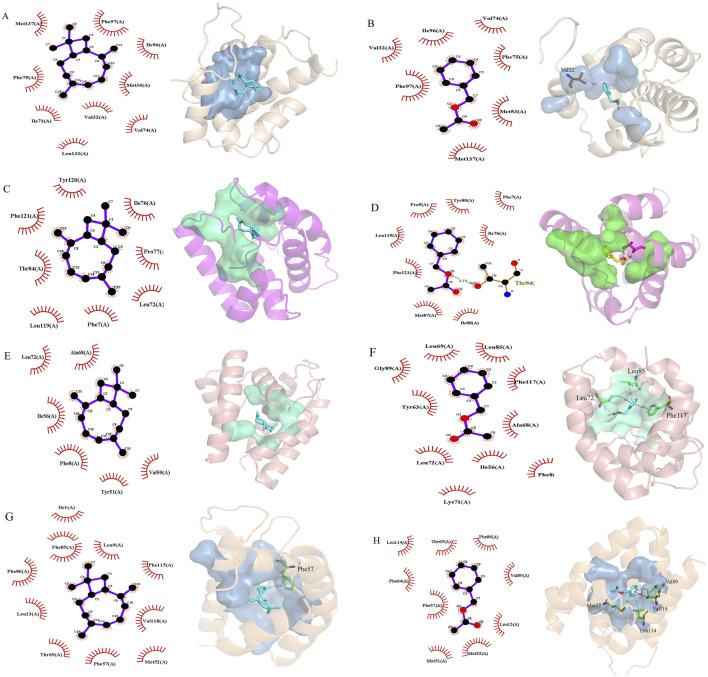 Figure 6
Peer Reviews
No public reviews on file for this paper yet. If you reviewed it on a platform where reviews are public (OpenReview, ICLR, NeurIPS, ICML), you can paste yours below so the community can read it here.
Videos
No videos yet. Explain this paper in a talk, walkthrough, or lecture? Add one.
Taxonomy
TopicsNeurobiology and Insect Physiology Research · Plant and animal studies · Insect Utilization and Effects