Clinical and epidemiological characteristics of influenza and SARS-CoV-2 virus among patients with acute febrile illness in selected sites of Ethiopia 2021–2022
Musse Tadesse Chekol, David Sugerman, Adamu Tayachew, Zelalem Mekuria, Neamin Tesfay, Aynalem Alemu, Andargachew Gashu, Wolde Shura, Melaku Gonta, Admikew Agune, Aster Hailemariam, Yonas Assefa, Mesfin Wossen, Abdulhafiz Hassen, Parsons Michele, Rachel Silver, Hulemenaw Delelegn

TL;DR
This study found that SARS-CoV-2 was the most common virus among febrile patients in Ethiopia, especially in older adults, compared to influenza.
Contribution
The study provides new insights into the prevalence and age-specific patterns of SARS-CoV-2 and influenza among AFI patients in Ethiopia.
Findings
SARS-CoV-2 had a positivity rate of 13.7% among AFI cases, higher than influenza A and B.
The positivity rate of SARS-CoV-2 peaked at 37.4% in September 2021.
Patients aged ≥65 years were three times more likely to test positive for SARS-CoV-2.
Abstract
Viral respiratory pathogens have become the leading cause of acute undifferentiated febrile illness (AFI). We determined the fraction of AFI attributable to influenza and SARS-CoV-2 in Ethiopia, along with an understanding of their epidemiological characteristics. From February 2021 to June 2022, we enrolled patients meeting an AFI case definition (age >5 years with fever ≥38°C) who presented at one of four selected sentinel hospital sites in Jimma, Harari, Addis Ababa, and Gonder. Clinical and epidemiological information was collected, Nasopharyngeal swab samples were collected and analyzed using real-time PCR for respiratory viruses (influenza and SARS-CoV-2). A quasi-binomial regression model and multivariable regression were performed to compute fractions and establish associations with the agent detected. A total of 737 AFI cases were enrolled. The overall proportion of…
Genes, proteins, chemicals, diseases, species, mutations and cell lines named across the full text — each resolved to its canonical identifier and authoritative record.
Click any figure to enlarge with its caption.
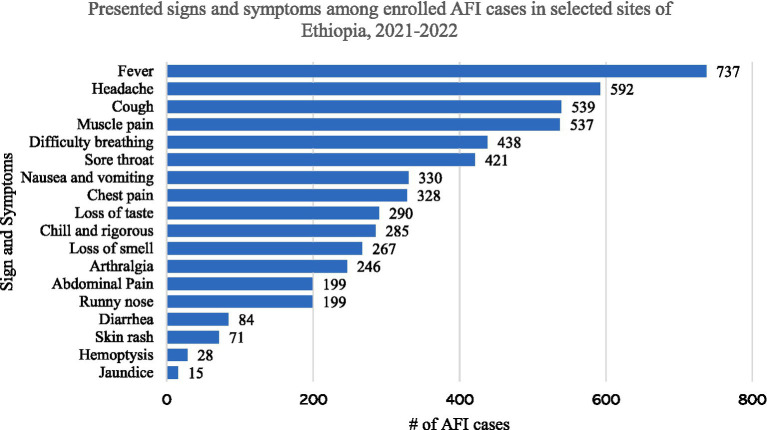 Figure 1
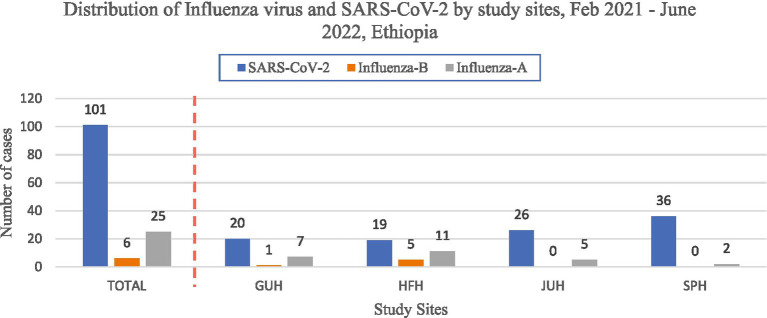 Figure 2
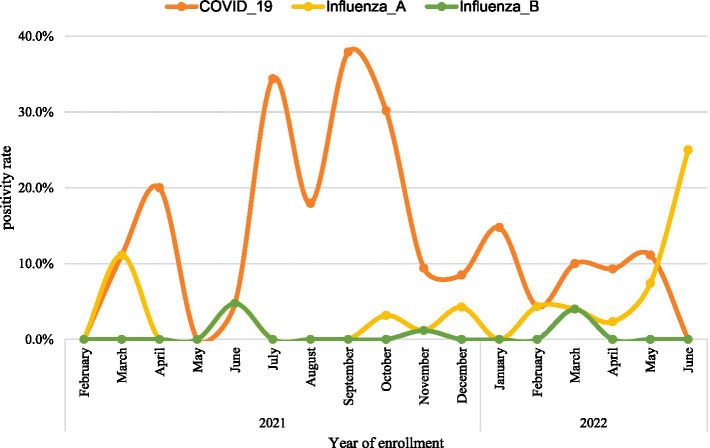 Figure 3
Peer Reviews
No public reviews on file for this paper yet. If you reviewed it on a platform where reviews are public (OpenReview, ICLR, NeurIPS, ICML), you can paste yours below so the community can read it here.
Videos
No videos yet. Explain this paper in a talk, walkthrough, or lecture? Add one.
Taxonomy
TopicsCOVID-19 Clinical Research Studies · Respiratory viral infections research · COVID-19 diagnosis using AI