Management and burden of disease in people with myelin oligodendrocyte glycoprotein antibody-associated disease: data from an international, cross-sectional survey
F. Paul, S. Zappacosta, S. Narduzzi, M. Khellaf, M. Unsworth, E. Trenholm, M. Levy

TL;DR
This study explores the challenges in diagnosing and managing a rare neurological disease called MOGAD, showing that patients face delays and suboptimal care, which affects their quality of life and work.
Contribution
The study provides real-world data on MOGAD diagnosis and management challenges, highlighting the need for better diagnostic and treatment approaches.
Findings
Patients with MOGAD often receive preliminary or alternative diagnoses before confirmation.
It takes an average of about two months from symptom onset to a definitive MOGAD diagnosis.
Most patients are prescribed treatments, but quality of life and work productivity remain impaired.
Abstract
There are challenges in the diagnosis of myelin-oligodendrocyte glycoprotein (MOG) antibody-associated disease (MOGAD), and a current lack of targeted treatments. This study investigated the disease management and burden of MOGAD in a real-world setting. Data were derived from the Adelphi MOGAD Disease Specific Programme (DSP)™, a cross-sectional survey of neurologists and their consulting patients with MOGAD, conducted in Europe and the United States in 2022. Neurologists reported on patient demographics, clinical characteristics, disease management history, treatments prescribed and burden of disease. Patients voluntarily reported on their perceptions on burden of disease. All analyses were descriptive. Overall, 74 neurologists provided data for 268 consecutively consulting patients with MOGAD, of whom 66 completed voluntary questionnaires. Sixty four percent of patients received a…
Genes, proteins, chemicals, diseases, species, mutations and cell lines named across the full text — each resolved to its canonical identifier and authoritative record.
Click any figure to enlarge with its caption.
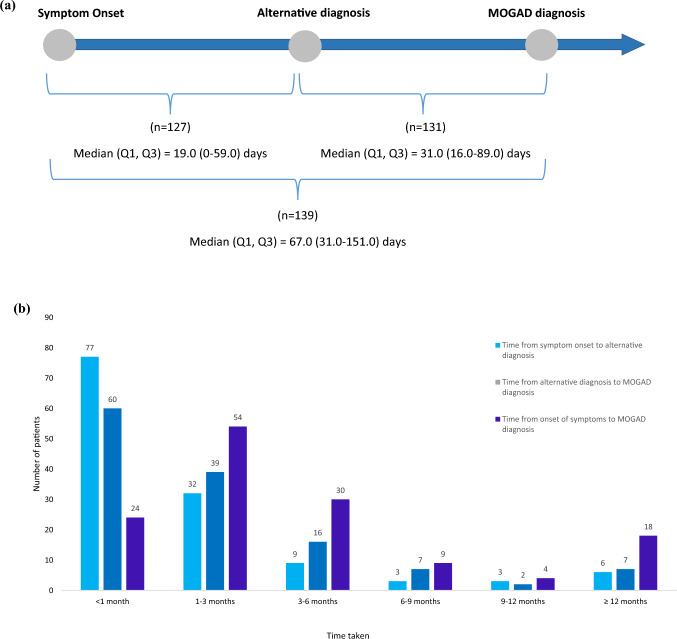 Figure 1
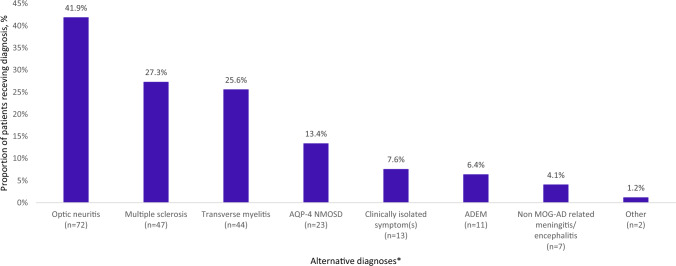 Figure 2
 Figure 3
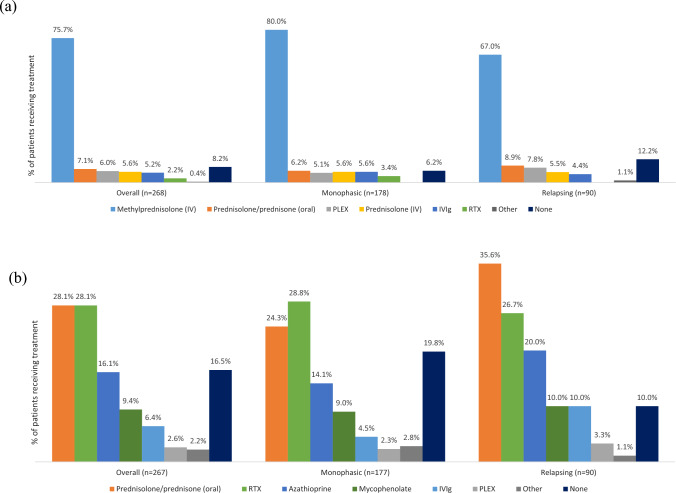 Figure 4
Peer Reviews
No public reviews on file for this paper yet. If you reviewed it on a platform where reviews are public (OpenReview, ICLR, NeurIPS, ICML), you can paste yours below so the community can read it here.
Videos
No videos yet. Explain this paper in a talk, walkthrough, or lecture? Add one.
Taxonomy
TopicsMultiple Sclerosis Research Studies · Hereditary Neurological Disorders · Neurogenesis and neuroplasticity mechanisms