Simulation approach for common female cancers: a brief review
Ying Shen, Chan Li, Mao-Yan Tang, Zhen-Yu Huang

TL;DR
This paper reviews how computer simulations are used to study and treat common cancers in women, like breast and cervical cancer.
Contribution
The paper introduces and reviews cancer simulation approaches specifically for common female cancers, offering new research and treatment directions.
Findings
Simulation approaches are widely used to study breast, cervical, ovarian, and endometrial cancers.
These simulations help predict cancer behavior and improve clinical treatment strategies.
The paper highlights new ideas for cancer research through simulation methods.
Abstract
Simulation approach involves the use of computers and mathematical models to simulate real systems for experimentation or tests that evaluate the behavior and performance of a system or predict the results of various hypothetical scenarios. Due to its rapid development in the context of cancer, we introduce commonly used cancer simulation approach, and review the application of these approach in common cancers of women, such as breast, cervical, ovarian and endometrial cancers, to provide new ideas and directions for cancer study as well as clinical treatment.
Genes, proteins, chemicals, diseases, species, mutations and cell lines named across the full text — each resolved to its canonical identifier and authoritative record.
Click any figure to enlarge with its caption.
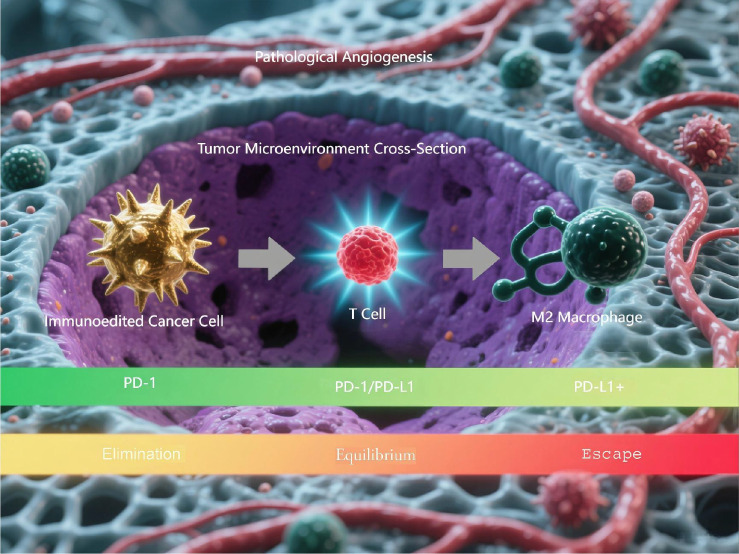 Figure 1
 Figure 2
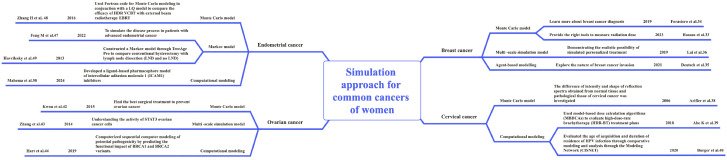 Figure 3
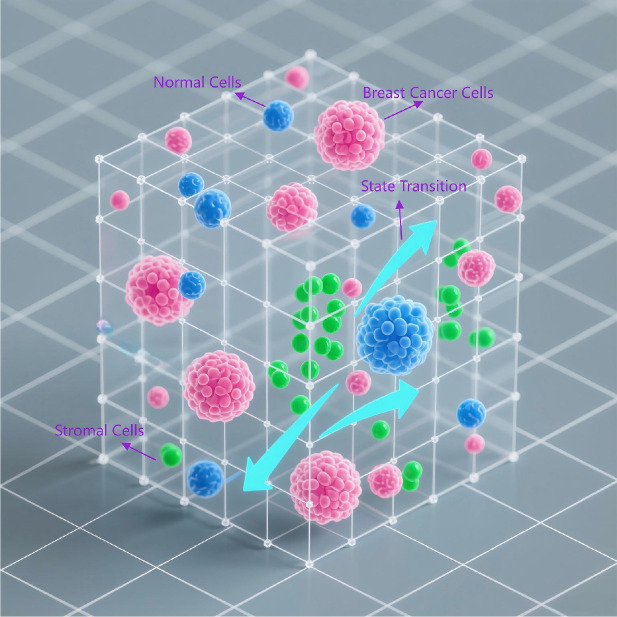 Figure 4
Peer Reviews
No public reviews on file for this paper yet. If you reviewed it on a platform where reviews are public (OpenReview, ICLR, NeurIPS, ICML), you can paste yours below so the community can read it here.
Videos
No videos yet. Explain this paper in a talk, walkthrough, or lecture? Add one.
Taxonomy
TopicsCancer Genomics and Diagnostics · Mathematical Biology Tumor Growth · Statistical Methods in Clinical Trials