Identification of a PATL2 missense variant (c.877G>T) disrupting canonical splicing and contributing to female infertility
Hongyan Li, Yue Lin, Weixu Ma, Ting Yu, Lingfeng Dong, Yankun Chen, Shuming Fan, Guoqun Luo, Jingwen Zhang, Ge Song

TL;DR
A specific missense variant in the PATL2 gene disrupts splicing and contributes to female infertility, providing new insights into its role in reproductive health.
Contribution
First experimental evidence that the PATL2 c.877G>T missense variant causes pathogenic splicing, enabling its reclassification.
Findings
The PATL2 c.877G>T variant disrupts canonical splicing, leading to exon 12 skipping.
Biallelic PATL2 variants co-segregate with infertility in the studied family.
Functional assays confirm the pathogenicity of the c.877G>T variant.
Abstract
PATL2 deficiency is a significant cause of female infertility. Although multiple PATL2 missense variants have been reported in prior studies, a number of these variants remain classified as variants of uncertain significance (VUS). We present a patient of primary infertility characterized by oocyte maturation disorders and fertilization failure. Comprehensive genetic analysis was conducted through whole-exome sequencing (WES) to identify pathogenic variants, followed by Sanger sequencing for familial co-segregation analysis. Reverse transcription (RT-PCR), cDNA sequencing and quantitative RT-PCR were performed to validate the effect of the variant on pre-mRNA splicing. We identified compound heterozygous variants in the PATL2 gene by WES: a pathogenic splice-site splicing variant (c.223-14_223-2del) and a missense variant (c.877G>T) initially classified as a VUS. Sanger sequencing…
Genes, proteins, chemicals, diseases, species, mutations and cell lines named across the full text — each resolved to its canonical identifier and authoritative record.
Click any figure to enlarge with its caption.
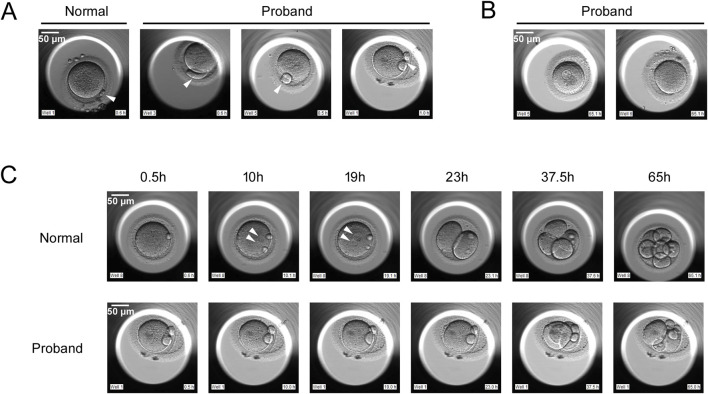 Figure 1
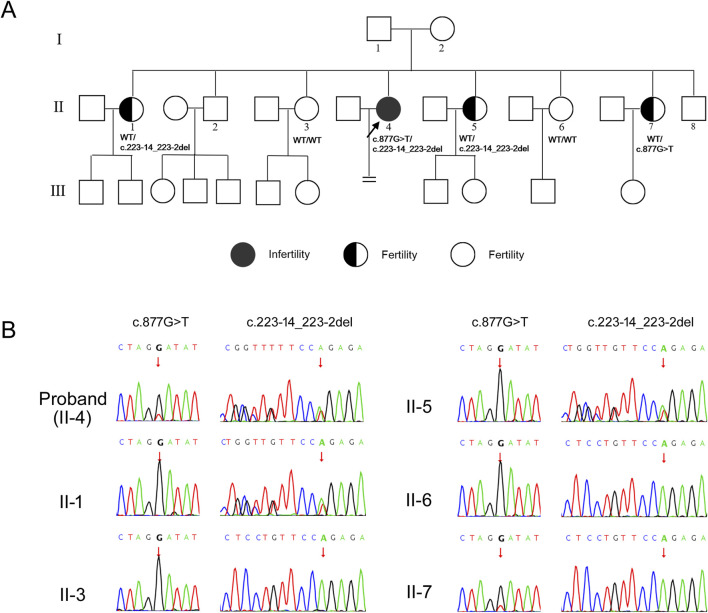 Figure 2
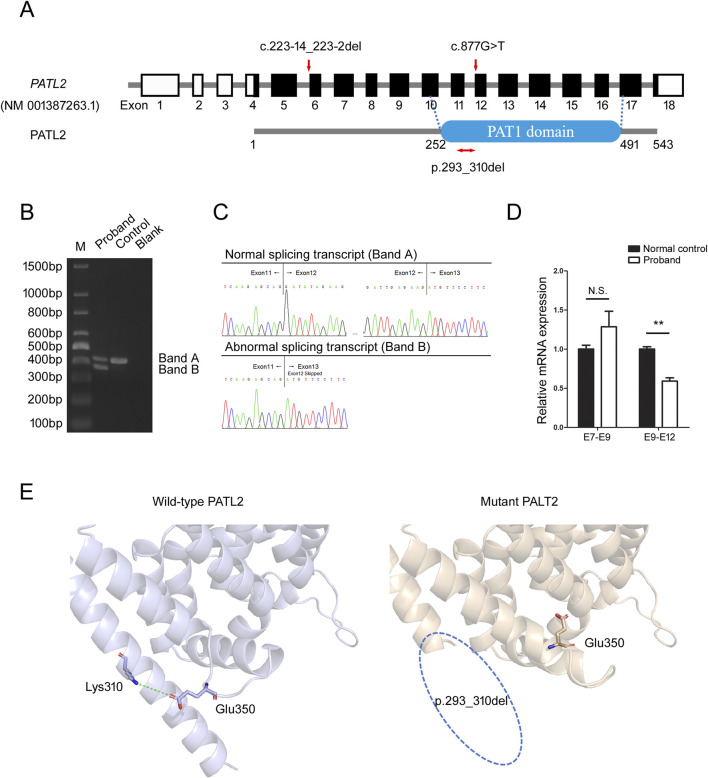 Figure 3
Peer Reviews
No public reviews on file for this paper yet. If you reviewed it on a platform where reviews are public (OpenReview, ICLR, NeurIPS, ICML), you can paste yours below so the community can read it here.
Videos
No videos yet. Explain this paper in a talk, walkthrough, or lecture? Add one.
Taxonomy
TopicsGenetic factors in colorectal cancer · Nuclear Structure and Function · Cancer Genomics and Diagnostics