Case Report: Coadministration of TNF-α blockade as an effective adjunctive strategy in the treatment of ANCA-negative EGPA with refractory peripheral neuropathy
Dabin Tang, Yubao Jiang, Shuo Yang, Jiaxin Wei, Jingjing Xie, Jianyong Zhang

TL;DR
This case report shows that adding TNF-α blockade helped treat a severe EGPA case unresponsive to standard therapies.
Contribution
Demonstrates the potential effectiveness of TNF-α blockade in refractory EGPA cases not responding to conventional treatments.
Findings
A patient with EGPA unresponsive to glucocorticoids and cyclophosphamide was controlled with etanercept.
TNF-α blockade may serve as an effective adjunctive treatment for refractory EGPA.
This case suggests a new therapeutic approach for EGPA when standard treatments fail.
Abstract
Eosinophilic granulomatosis with polyangiitis (EGPA) is characterized by abnormal eosinophilia and extravascular eosinophilic granuloma formation. Conventional treatments combining glucocorticoids and immunosuppressants can alleviate the condition in most patients with EGPA. However, the efficacy of blocking tumor necrosis factor (TNF)-α-mediated inflammatory reactions in managing EGPA remains controversial. Here, we report a case of refractory EGPA that did not respond to glucocorticoid pulse therapy and adequate cyclophosphamide. The disease was ultimately controlled through the coadministration of etanercept.
Genes, proteins, chemicals, diseases, species, mutations and cell lines named across the full text — each resolved to its canonical identifier and authoritative record.
Click any figure to enlarge with its caption.
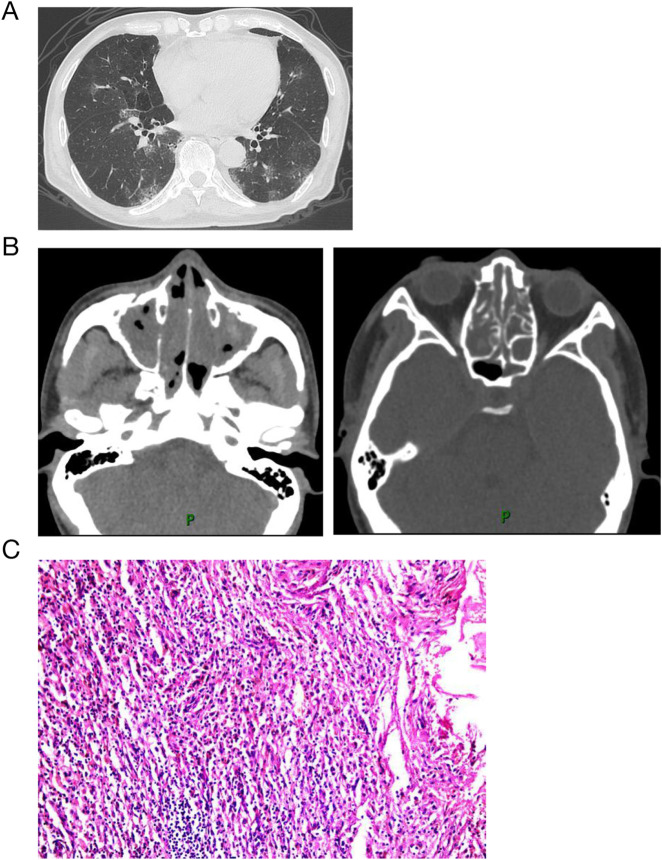 Figure 1
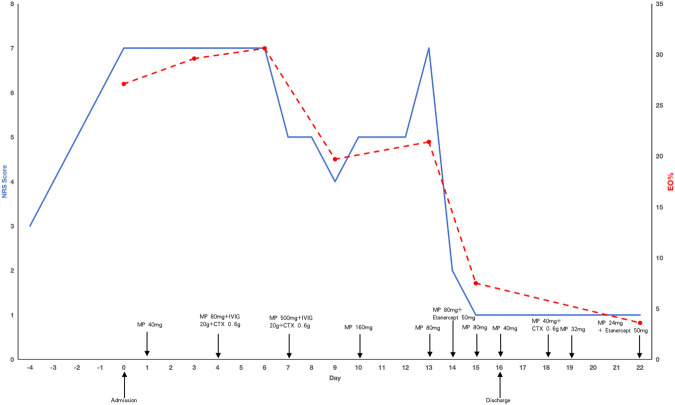 Figure 2
Peer Reviews
No public reviews on file for this paper yet. If you reviewed it on a platform where reviews are public (OpenReview, ICLR, NeurIPS, ICML), you can paste yours below so the community can read it here.
Videos
No videos yet. Explain this paper in a talk, walkthrough, or lecture? Add one.
Taxonomy
TopicsVasculitis and related conditions · Urticaria and Related Conditions · Coagulation, Bradykinin, Polyphosphates, and Angioedema