Comparative Analysis of Signature Sequences from Adenylation Domains Situated within Bacterial-Origin Nonribosomal Peptide Synthetase Modules
Weina Gao, Zhishen Zhang, Huiying Yu, Xin Li, Chunshan Quan, Yun Xue, Pengchao Zhao

TL;DR
This study analyzes adenylation domains in bacterial nonribosomal peptide synthetases to identify sequences that determine amino acid specificity and modification patterns.
Contribution
The study identifies 508 signature sequences and their associations with specific amino acid modifications in bacterial NRPS modules.
Findings
Over 80% of the identified signature sequences show distinct specificity for 36 α-amino acid moieties.
Modifications like N-methylation and β-hydroxylation show strong preferences for certain amino acid moieties.
41 modules were found to be used iteratively, aiding in the prediction of uncharacterized NRPS systems.
Abstract
Nonribosomal peptides are assembled by large enzymes that contain multiple active sites, which function in a modular manner. The adenylation (A) domains present within typical nonribosomal peptide synthetase (NRPS) modules contain specificity-conferring codes or signature sequences (SNSs). In this study, we obtained 2051 A domain sequences from 67 bacterial species. Their alignment and clustering identified 508 SNSs. Over 80% of the SNSs displayed distinct specificity for 36 proteinogenic and nonproteinogenic α-amino acid moieties (α-AAMs). Furthermore, modifications such as N-methylation, monooxygenase activity, and oxidation contributed to the elongation of the A domains, while conferring pronounced affinities for certain α-AAMs. Notably, β-hydroxylation demonstrated particular preferences. Specifically, ornithine, threonine, tyrosine, and phenylalanine moieties frequently underwent…
Genes, proteins, chemicals, diseases, species, mutations and cell lines named across the full text — each resolved to its canonical identifier and authoritative record.
Click any figure to enlarge with its caption.
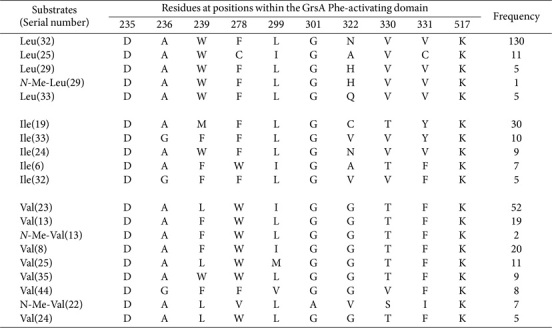 Figure 1
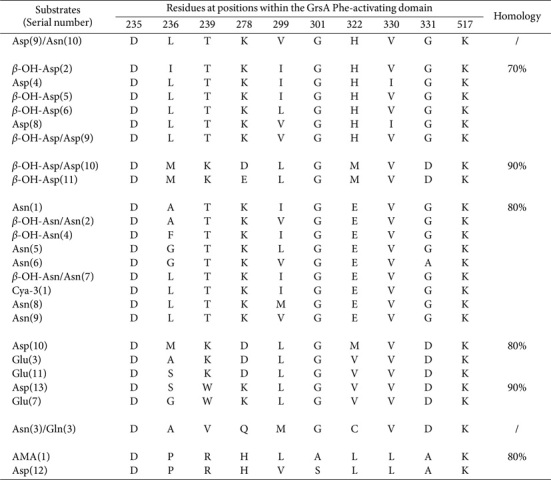 Figure 2
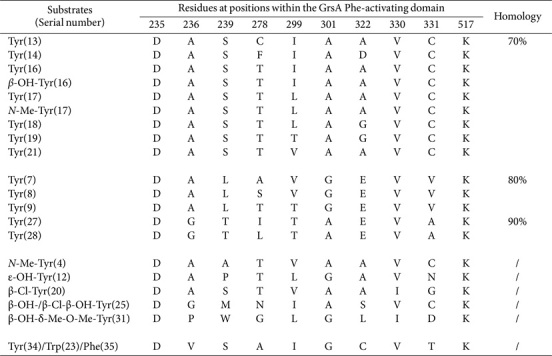 Figure 3
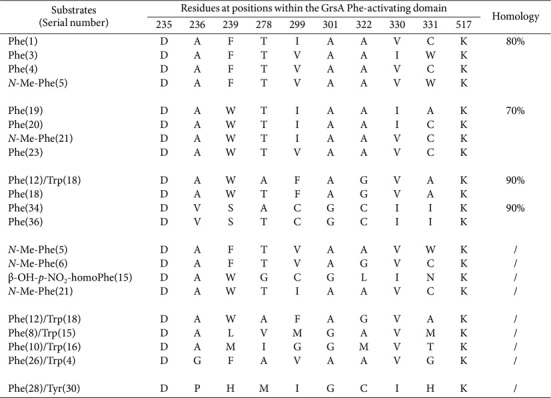 Figure 4
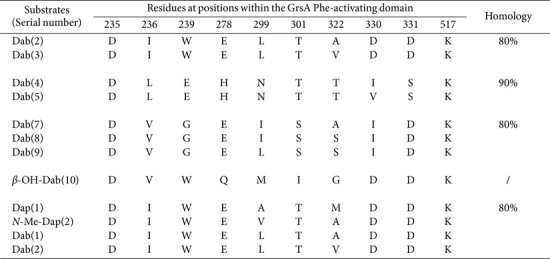 Figure 5
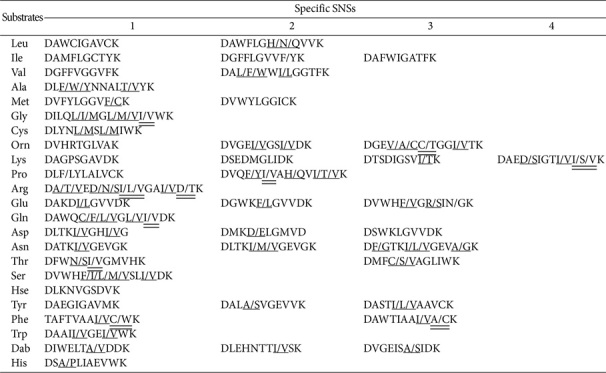 Figure 6
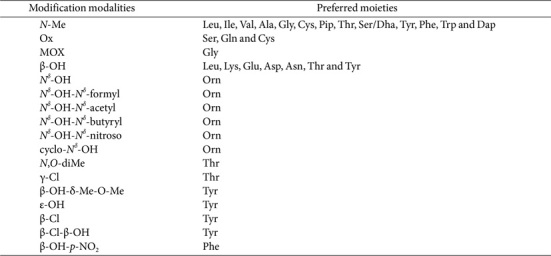 Figure 7
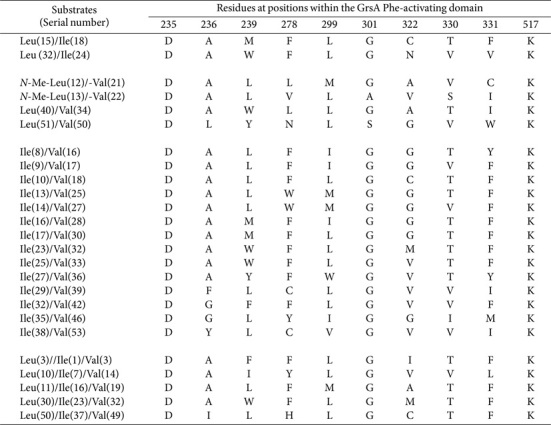 Figure 8
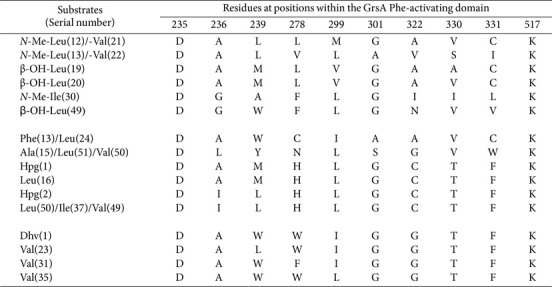 Figure 9
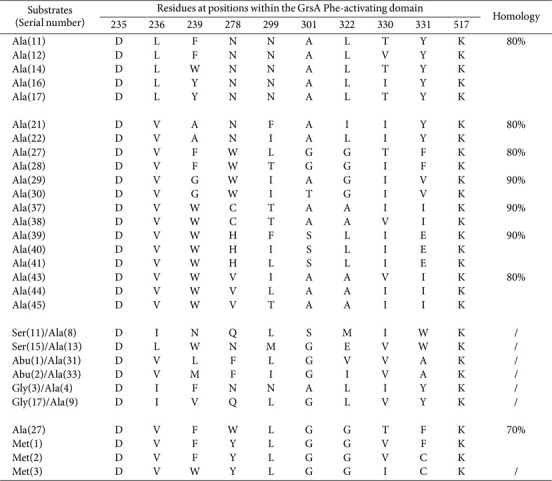 Figure 10
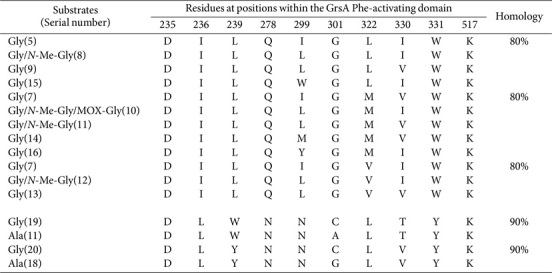 Figure 11
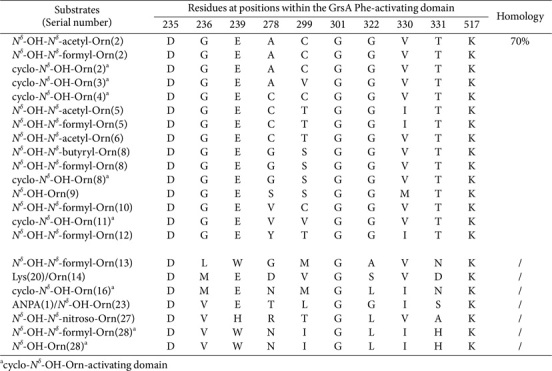 Figure 12
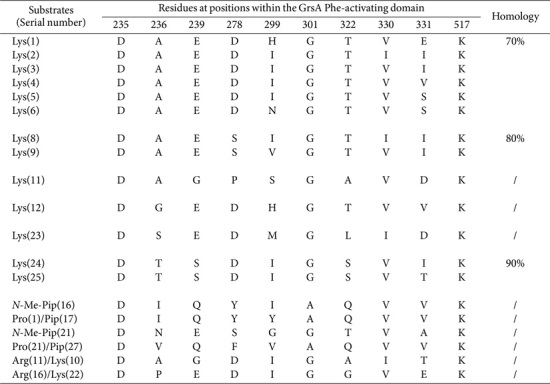 Figure 13
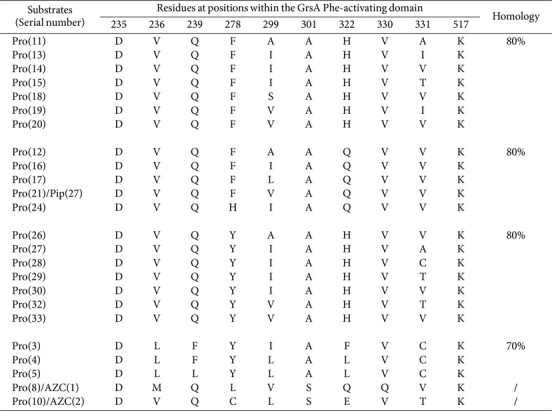 Figure 14
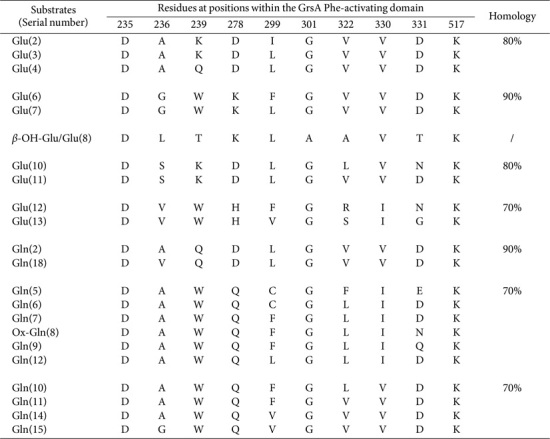 Figure 15
Peer Reviews
No public reviews on file for this paper yet. If you reviewed it on a platform where reviews are public (OpenReview, ICLR, NeurIPS, ICML), you can paste yours below so the community can read it here.
Videos
No videos yet. Explain this paper in a talk, walkthrough, or lecture? Add one.
Taxonomy
TopicsMachine Learning in Bioinformatics · Genomics and Phylogenetic Studies · Bacteriophages and microbial interactions