Highly Conserved Genetic Factors Regulating blaNDM Gene Expression
Jianfen Xu, Jinnuo Zhu, Changqing Mei, Xiaopeng Liu, Zhiming Gong, Jiansheng Huang, Hui Chai

TL;DR
This study identifies a key 110 bp DNA sequence that controls the expression of the NDM antibiotic resistance gene in bacteria.
Contribution
The discovery of a conserved regulatory sequence and its role in blaNDM gene expression provides new insights for combating antibiotic resistance.
Findings
A conserved 110 bp sequence upstream of the blaNDM gene was identified across 80 bacterial species.
Mutating the core promoter in this sequence reduced blaNDM expression by over 90% and restored carbapenem susceptibility.
ArcA and ArgR2 binding sites within the sequence were confirmed to regulate blaNDM expression, though with less impact than the core promoter.
Abstract
The New Delhi metallo-β-lactamase (NDM; EC 3.5.2.6) poses significant challenges to carbapenem treatment, yet the regulatory mechanisms governing blaNDM gene expression remain poorly understood. In this study, we identified a highly conserved 110 bp sequence located upstream of the blaNDM gene by comparative analysis of 109 clinical isolates and 2,706 nucleotide sequences from the NCBI database. This conserved sequence was characterized in all available NDM variants spanning 80 bacterial species. Bioinformatics analysis revealed a core promoter (PNDM) and two transcription factor binding sites (ArcA and ArgR2) within the sequence. Mutations of the PNDM promoter significantly reduced blaNDM expression (mRNA and protein) by more than 90% (P < 0.01) and completely restored carbapenem susceptibility. Electrophoretic mobility shift assays (EMSA) confirmed the specific binding of ArcA and…
Genes, proteins, chemicals, diseases, species, mutations and cell lines named across the full text — each resolved to its canonical identifier and authoritative record.
Click any figure to enlarge with its caption.
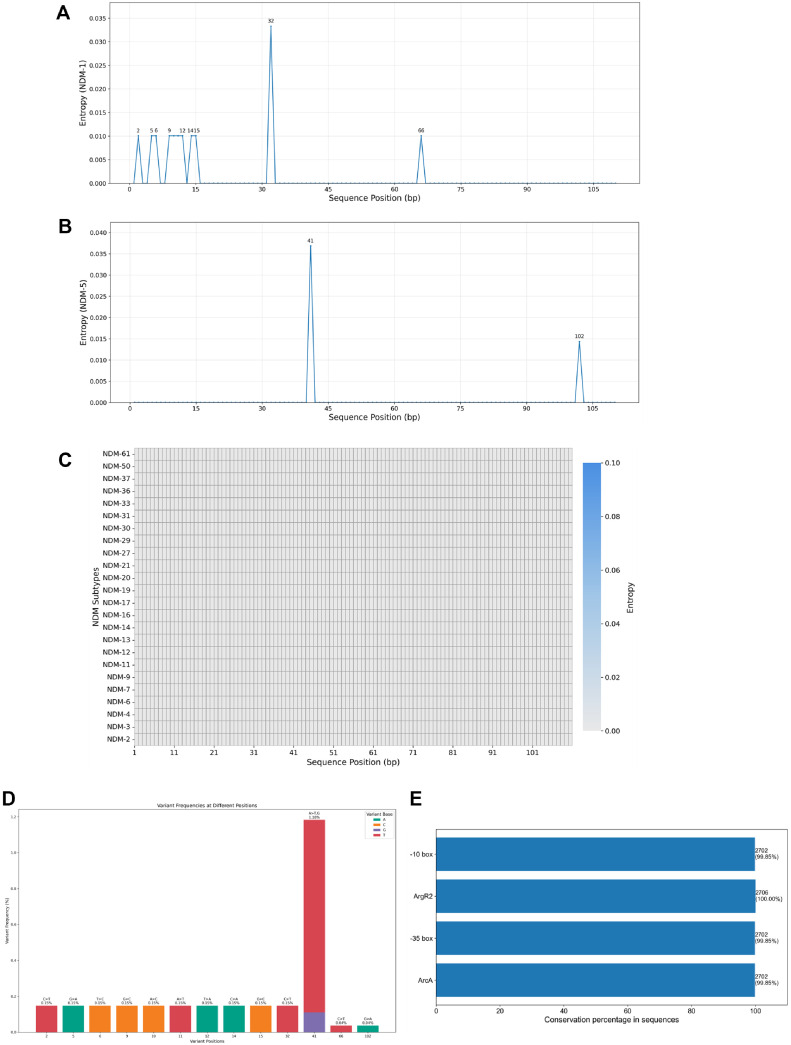 Figure 1
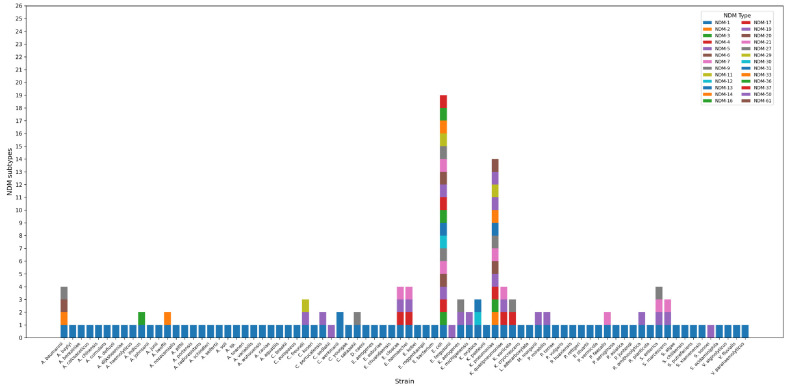 Figure 2
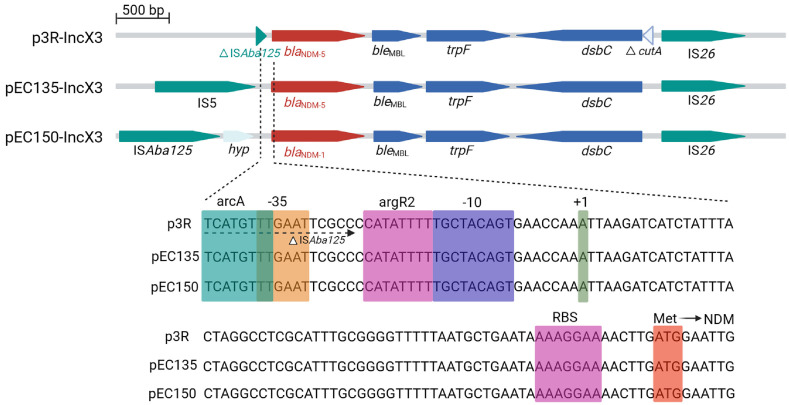 Figure 3
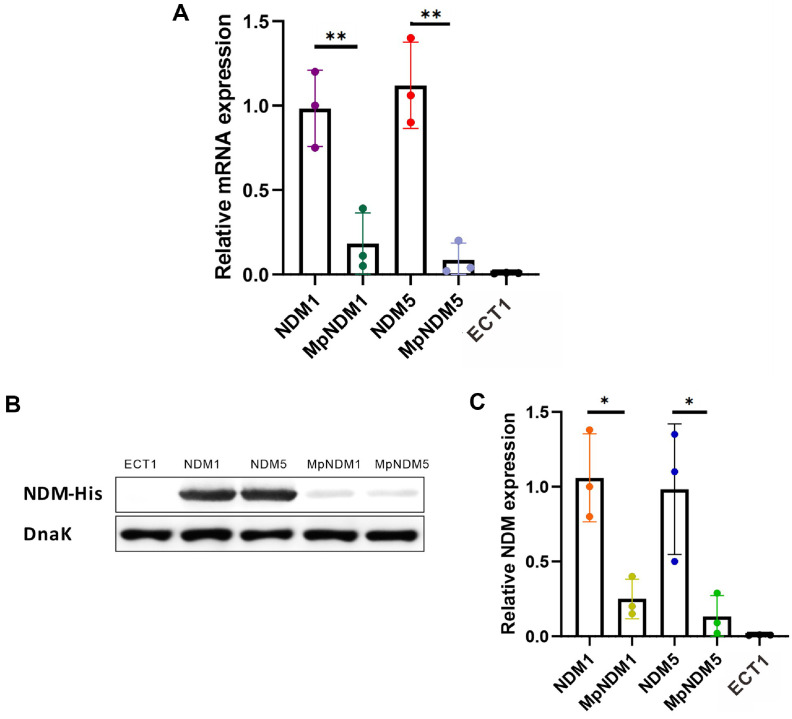 Figure 4
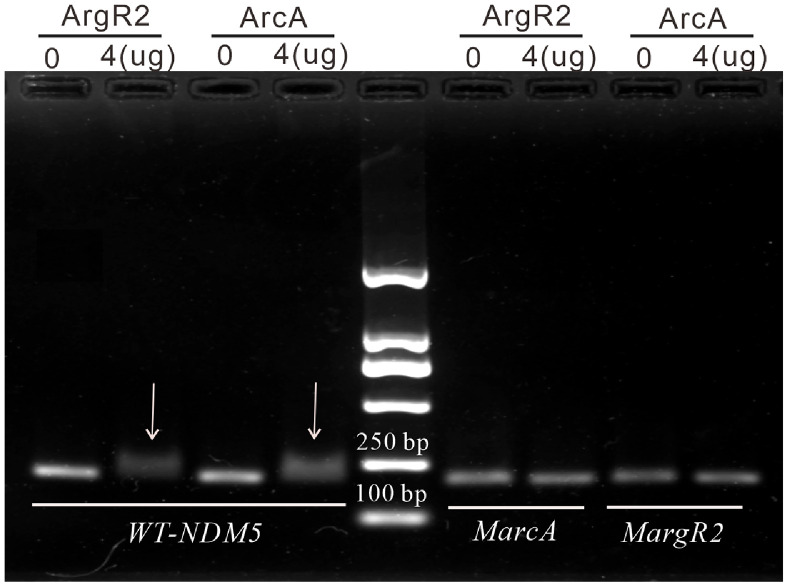 Figure 5
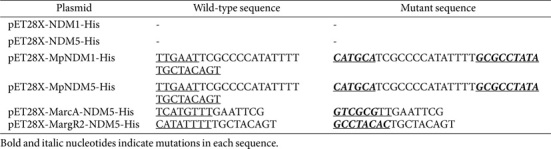 Figure 6
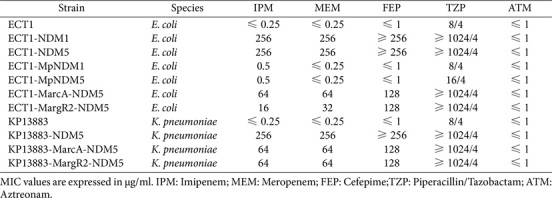 Figure 7
Peer Reviews
No public reviews on file for this paper yet. If you reviewed it on a platform where reviews are public (OpenReview, ICLR, NeurIPS, ICML), you can paste yours below so the community can read it here.
Videos
No videos yet. Explain this paper in a talk, walkthrough, or lecture? Add one.
Taxonomy
TopicsViral Infectious Diseases and Gene Expression in Insects · CRISPR and Genetic Engineering · Virus-based gene therapy research