Using Open Science Tools to Teach Environmental Sciences
Mario Zuliani, C. J. Lortie

TL;DR
This paper explores how open science tools can be used to teach environmental science courses, enhancing transparency and collaboration.
Contribution
The paper proposes a framework for using open science concepts in undergraduate environmental science education.
Findings
Open science tools support eight pillars of open science, enhancing transparency and inclusivity in education.
Using open science tools in courses provides students with skills relevant to professional research activities.
Abstract
Open science, work and knowledge that are developed in full, offers critical resources that provide students with insights into the process of research in many fields. There are extensive opportunities within environmental sciences to incorporate open science into undergraduate level courses. There are seven major open science concepts that could be used to teach undergraduate environmental science courses that align with professional research activities, including open‐access papers, pre‐prints, open data, open‐source software, published code, collaborative tools for version control, and open notebooks. Here, we assessed the use of these open science concepts in connection to the European Union pillars of open science, outlining key benefits, challenges, and how these tools can be used in undergraduate environmental science courses. Specifically, these tools support a framework for…
Click any figure to enlarge with its caption.
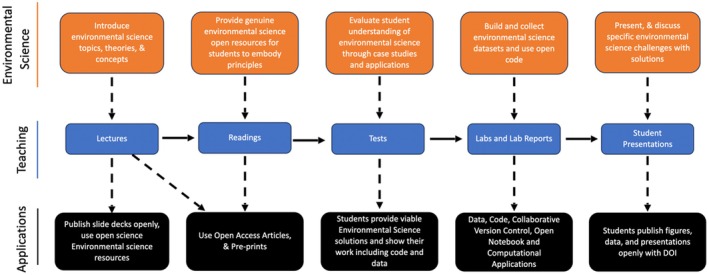 Figure 1
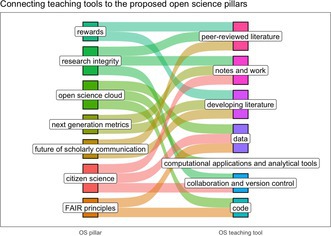 Figure 2
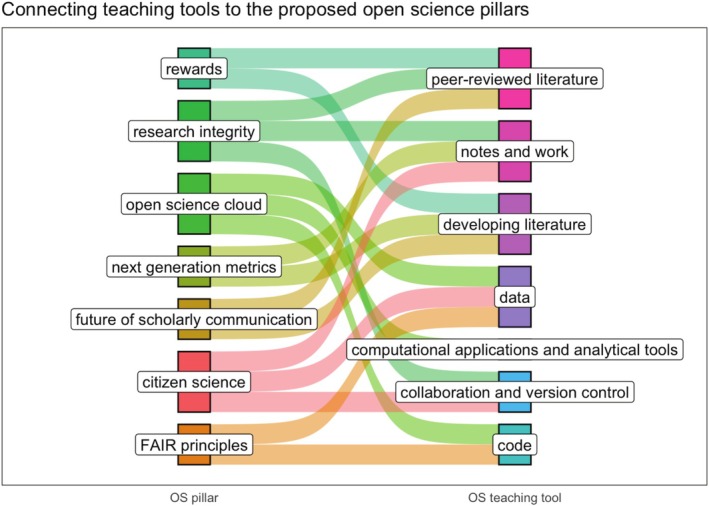 Figure 3
Peer Reviews
No public reviews on file for this paper yet. If you reviewed it on a platform where reviews are public (OpenReview, ICLR, NeurIPS, ICML), you can paste yours below so the community can read it here.
Videos
No videos yet. Explain this paper in a talk, walkthrough, or lecture? Add one.
Taxonomy
TopicsResearch Data Management Practices · Scientific Computing and Data Management · Species Distribution and Climate Change