Contrasting Phylogeographic Patterns of Sandy vs. Rocky Sympatric Sister Species of Supralittoral Tylos Isopods in Chile
Luis A. Hurtado, Mariana Mateos, Chang Wang, Violet M. Ndeda, Jorge Pérez‐Schultheiss, Martin Thiel

TL;DR
Two closely related isopod species in Chile show very different genetic patterns despite living in similar areas, likely due to their different habitats and life histories.
Contribution
This study reveals contrasting phylogeographic patterns in sympatric sister isopod species linked to habitat differences.
Findings
Tylos chilensis shows deep genetic divergence and geographically restricted lineages.
Tylos spinulosus experienced a recent population bottleneck and expansion.
Both species exhibit high population isolation due to limited dispersal.
Abstract
Sister taxa that have diverged and persisted in sympatry have likely been exposed to the same general environmental changes throughout their evolutionary history and may thus exhibit similar phylogeographies. Here, we compare the phylogeographic patterns of two sister species of isopods (genus Tylos) that have broadly overlapping distributions but distinct habitat preferences in the supralittoral zone of Chile. The dynamic geoclimatic history of this region during the Quaternary has been implicated in shaping the evolutionary histories of other coastal taxa. Tylos spinulosus is found in sandy beaches at latitudes ~27°–30° S, whereas Tylos chilensis has been found in rocky shores at ~27°–33° S and at ~39°–42° S. We sampled both species across their ranges (collectively from 20 localities) and obtained sequences from at least one mitochondrial gene for 95 T. chilensis and 41 T.…
Genes, proteins, chemicals, diseases, species, mutations and cell lines named across the full text — each resolved to its canonical identifier and authoritative record.
Click any figure to enlarge with its caption.
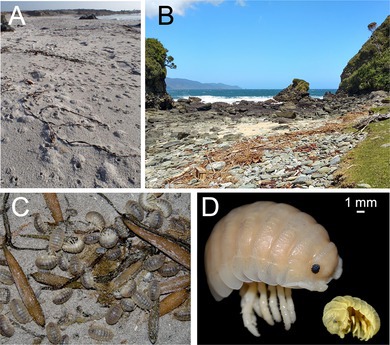 Figure 1
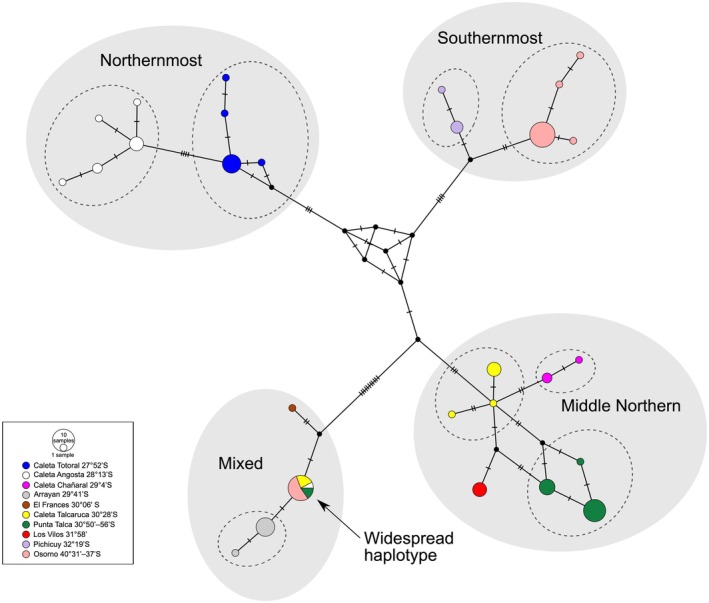 Figure 2
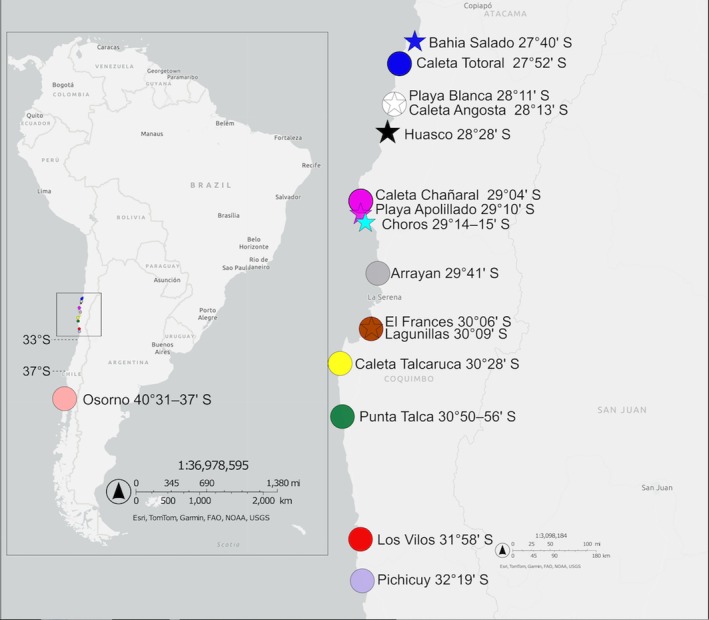 Figure 3
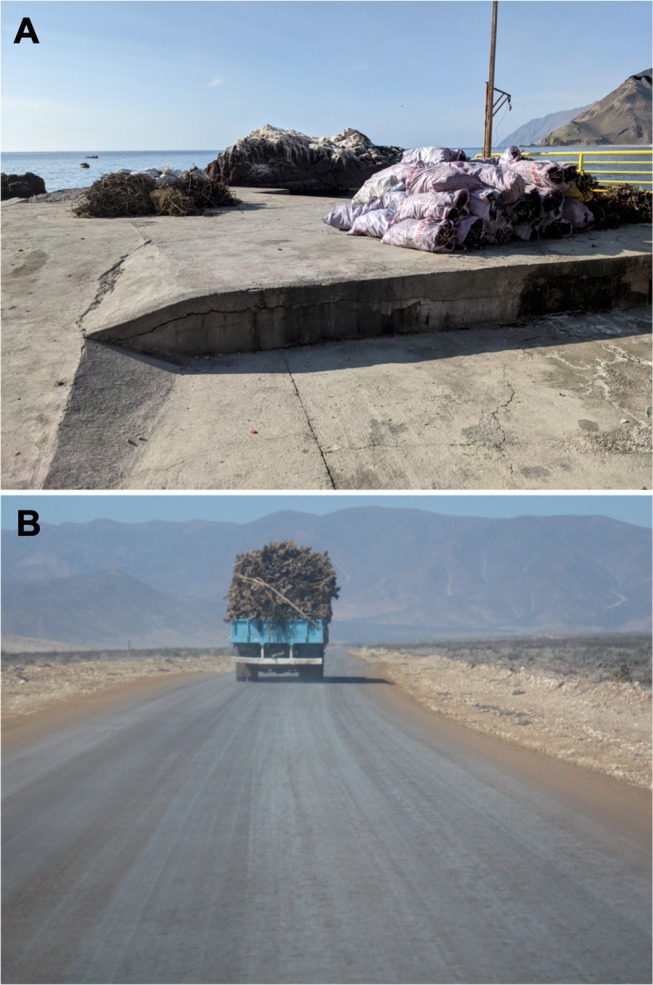 Figure 4
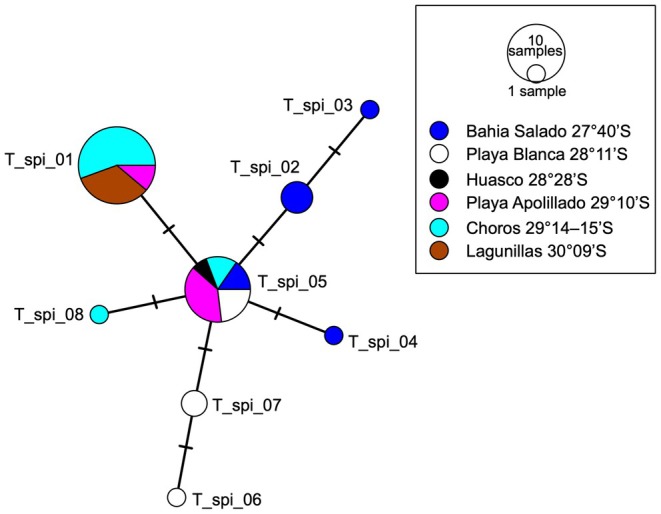 Figure 5
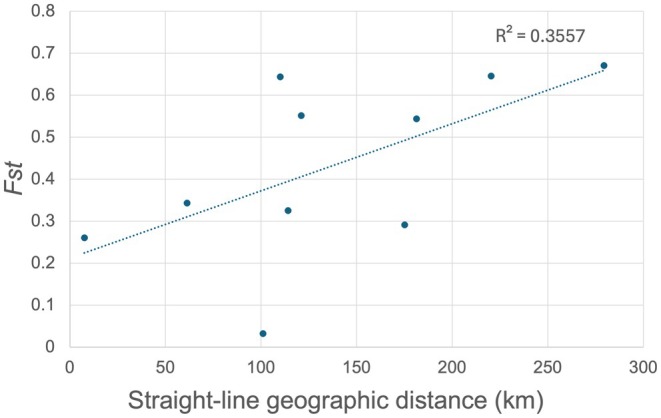 Figure 6
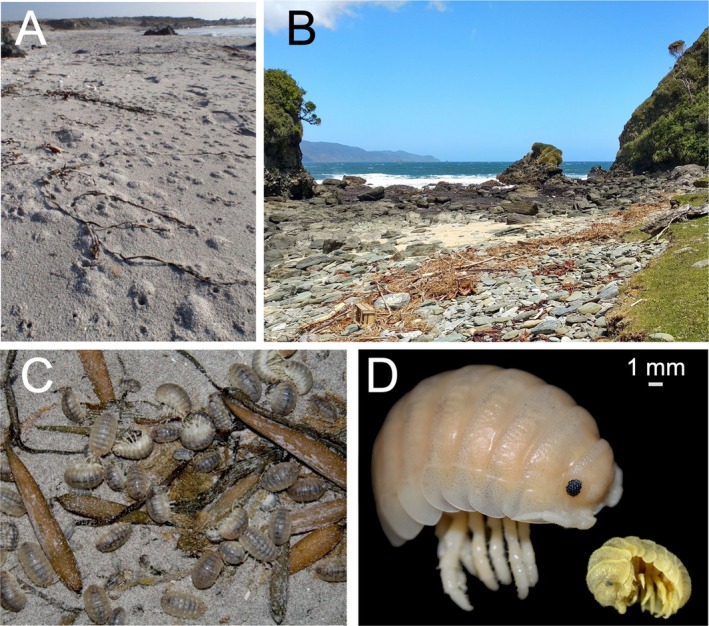 Figure 7
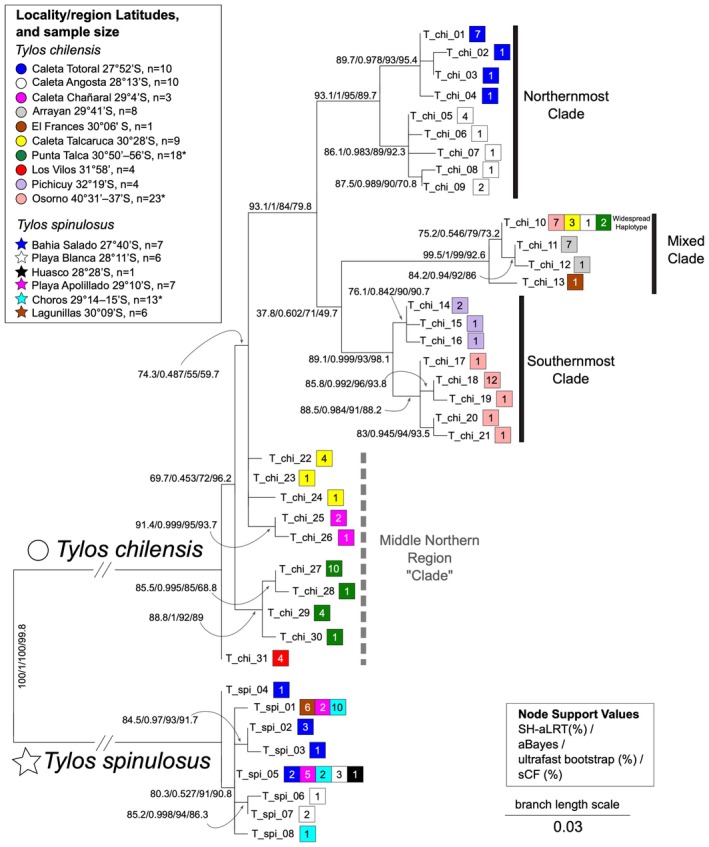 Figure 8
Peer Reviews
No public reviews on file for this paper yet. If you reviewed it on a platform where reviews are public (OpenReview, ICLR, NeurIPS, ICML), you can paste yours below so the community can read it here.
Videos
No videos yet. Explain this paper in a talk, walkthrough, or lecture? Add one.
Taxonomy
TopicsParasite Biology and Host Interactions · Marine Biology and Ecology Research · Aquatic Invertebrate Ecology and Behavior