Magnetic resonance imaging in the diagnosis of HTLV-1-associated myelopathy
João Marcos Carvalho, Sheila Nunes Ferraz, José Abraão Neto, Saul Schnitman, Augusto M. Carvalho, Edgar M. Carvalho

TL;DR
MRI scans reveal spinal cord atrophy in HTLV-1 patients with urinary symptoms but no motor issues, suggesting early signs of HAM.
Contribution
This study identifies lumbar spinal cord atrophy in probable HAM patients using MRI metrics, indicating subclinical disease progression.
Findings
HTLV-1 carriers showed progressive reduction in spinal cord area across all segments.
48.3% of probable HAM patients exhibited lumbar spinal cord atrophy.
MRI metrics can detect spinal cord changes in patients without motor dysfunction.
Abstract
The main neurologic manifestation of definitive human T-lymphotropic virus 1 (HTLV-1)-associated myelopathy (HAM) is spastic paraparesis, but it only occurs in 5% of the patients. In contrast, about 40% of HTLV-1-infected subjects present symptoms of urologic dysfunction, including nocturia, urgency, and incontinence, which may progress to an inability to void urine. As these patients do not present motor dysfunction, they are classified as probable HAM . Atrophy of the thoracic spinal cord (SC) is the main abnormality found on magnetic resonance image (MRI) scans of patients with definitive HAM, but damage to the SC has not been reported in patients with probable HAM. To determine if, through an evaluation of the metrics of conventional MRI, we can detect a decrease in the area of the SC in patients with probable HAM. Infection by HTLV-1 was herein diagnosed by a Western blot, and…
Genes, proteins, chemicals, diseases, species, mutations and cell lines named across the full text — each resolved to its canonical identifier and authoritative record.
Click any figure to enlarge with its caption.
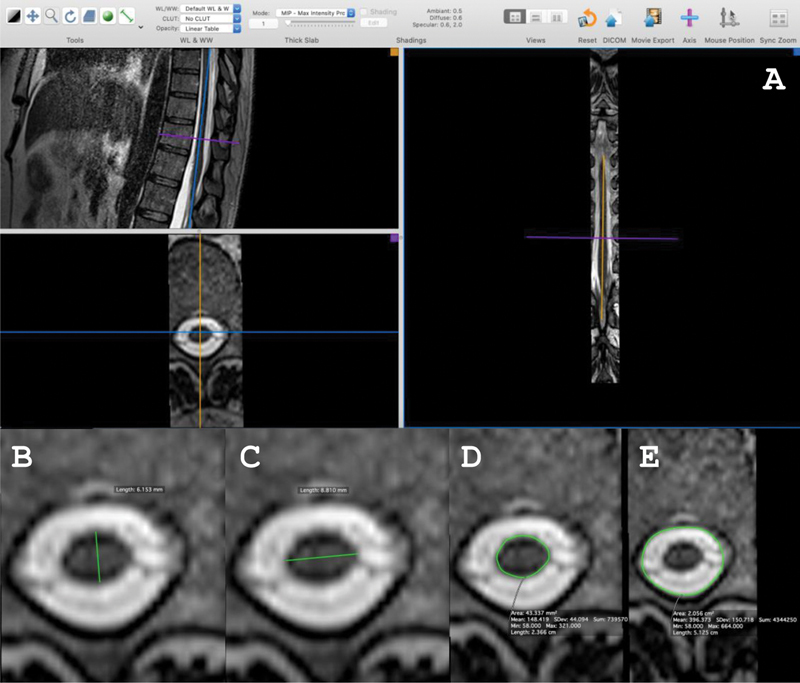 Figure 1
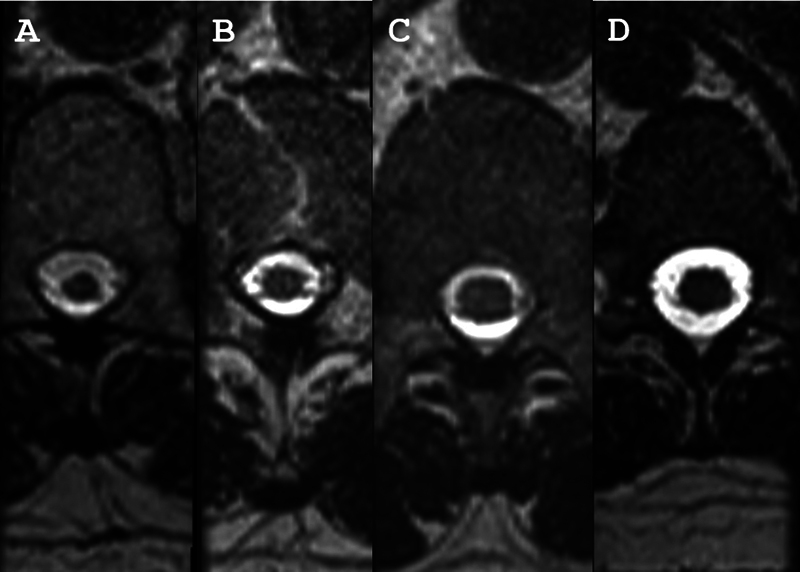 Figure 2
Peer Reviews
No public reviews on file for this paper yet. If you reviewed it on a platform where reviews are public (OpenReview, ICLR, NeurIPS, ICML), you can paste yours below so the community can read it here.
Videos
No videos yet. Explain this paper in a talk, walkthrough, or lecture? Add one.
Taxonomy
TopicsT-cell and Retrovirus Studies