How Does Virtual Reality Exposure Treatment Change the Brain Function of Acrophobia Patients? A Randomized Controlled Trial
Meilin Guo, Yongjun Chen, Ya Xie, Yumin Zhang, Aoran Xu, Guojia Zhang, Jingya Kong, Yuan Zhong, Chun Wang

TL;DR
This study explores how virtual reality exposure therapy (VRET) changes brain activity in people with acrophobia, comparing it to traditional therapy.
Contribution
The study provides new insights into the neural mechanisms of VRET in treating acrophobia using resting-state fMRI.
Findings
VRET decreased degree centrality in the right calcarine, MTG, cuneus, and precuneus.
Reduced functional connectivity between the right MTG and other brain regions was observed after VRET.
AQ score changes correlated with brain activity in the right middle temporal gyrus.
Abstract
Background: Virtual reality exposure therapy (VRET), an innovative form of exposure therapy (ET), has been demonstrated to be effective in treating acrophobia. However, its neural mechanisms of action and how it differs from traditional imaginal exposure therapy (IET) remain unclear. This study utilized resting-state functional magnetic resonance imaging (fMRI) to investigate the effects of VRET on brain activity in acrophobic patients and to explore the potential mechanisms underlying its therapeutic action. Method: Fifty patients with acrophobia were randomly assigned to either an experimental group (25 patients) or a control group (25 patients) based on different treatments. The experimental group received VRET, while the control group received conventional IET. A mixed-design repeated-measures analysis of variance (ANOVA) was performed on the whole brain to identify brain regions…
Genes, proteins, chemicals, diseases, species, mutations and cell lines named across the full text — each resolved to its canonical identifier and authoritative record.
Click any figure to enlarge with its caption.
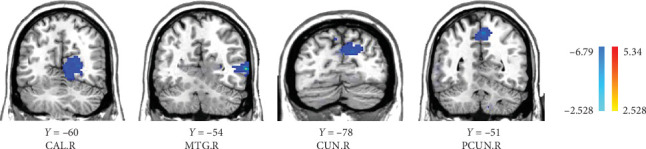 Figure 1
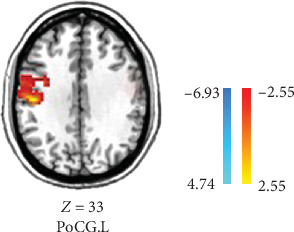 Figure 2
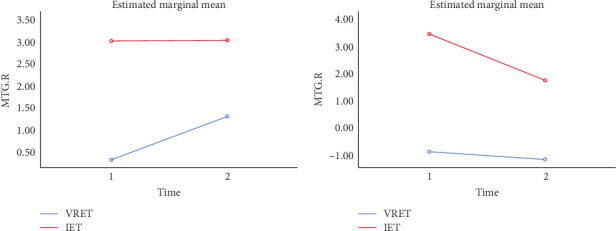 Figure 3
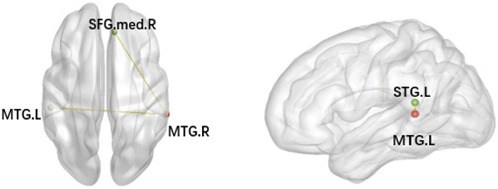 Figure 4
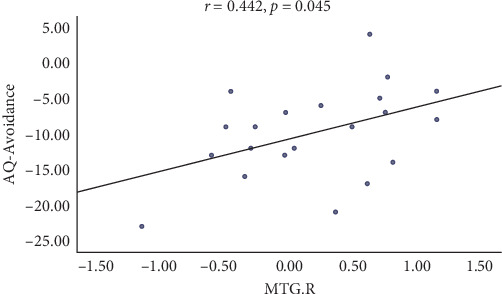 Figure 5
Peer Reviews
No public reviews on file for this paper yet. If you reviewed it on a platform where reviews are public (OpenReview, ICLR, NeurIPS, ICML), you can paste yours below so the community can read it here.
Videos
No videos yet. Explain this paper in a talk, walkthrough, or lecture? Add one.
Taxonomy
TopicsFunctional Brain Connectivity Studies · Psychosomatic Disorders and Their Treatments · Mental Health Research Topics