The Effects of Transcranial Direct Current Stimulation During Extended Reality Exercises for Cortical, Neuromuscular, and Clinical Recovery of Stroke Survivors
Cassio V. Ruas, Bruna M. Carlos, Saulo Feitosa, Márcio Vinícius Silva, Pedro Vazquez, Larissa L. Pontes, Jayne Silvestre, Sara R. M. Almeida, Alexandre F. Brandão, Gabriela Castellano

TL;DR
This study shows that using transcranial direct current stimulation during extended reality exercises can improve muscle activity and brain symmetry in stroke survivors.
Contribution
The study demonstrates how atDCS during XR exercises enhances neuromuscular and cortical recovery in stroke patients.
Findings
Active atDCS increased paretic hip flexion muscle activity by ~31% during XR exercises.
Hip flexion range of motion improved by ~26% and brain symmetry improved by ~72% in the tDCS group.
Timed up and go test improved by ~11% in the tDCS group after the rehabilitation program.
Abstract
Background: Rehabilitation methods that include anodal transcranial direct current stimulation (atDCS) and extended reality (XR) exercises have been used to enhance neural networks and improve functional performance in stroke patients, but the neuromuscular and neurophysiological mechanisms underlying these improvements are not fully understood. The purpose of this study was to examine the effects of atDCS during XR rehabilitation exercises on cortical, neuromuscular, and clinical outcomes of stroke survivors. Methods: Nineteen chronic stroke survivors were placed into either a transcranial direct current stimulation (tDCS) or a Sham group, without significant (p > 0.73) differences in the baseline levels of disability between groups. The tDCS group received active atDCS and the Sham group received sham atDCS applied on the ipsilesional primary motor cortex (M1) while performing a…
Genes, proteins, chemicals, diseases, species, mutations and cell lines named across the full text — each resolved to its canonical identifier and authoritative record.
Click any figure to enlarge with its caption.
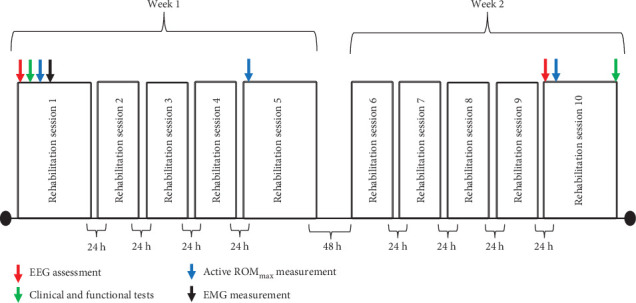 Figure 1
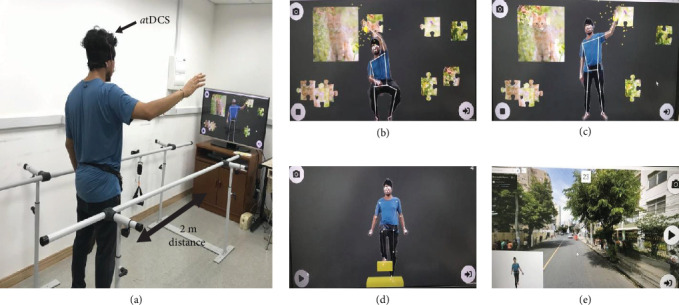 Figure 2
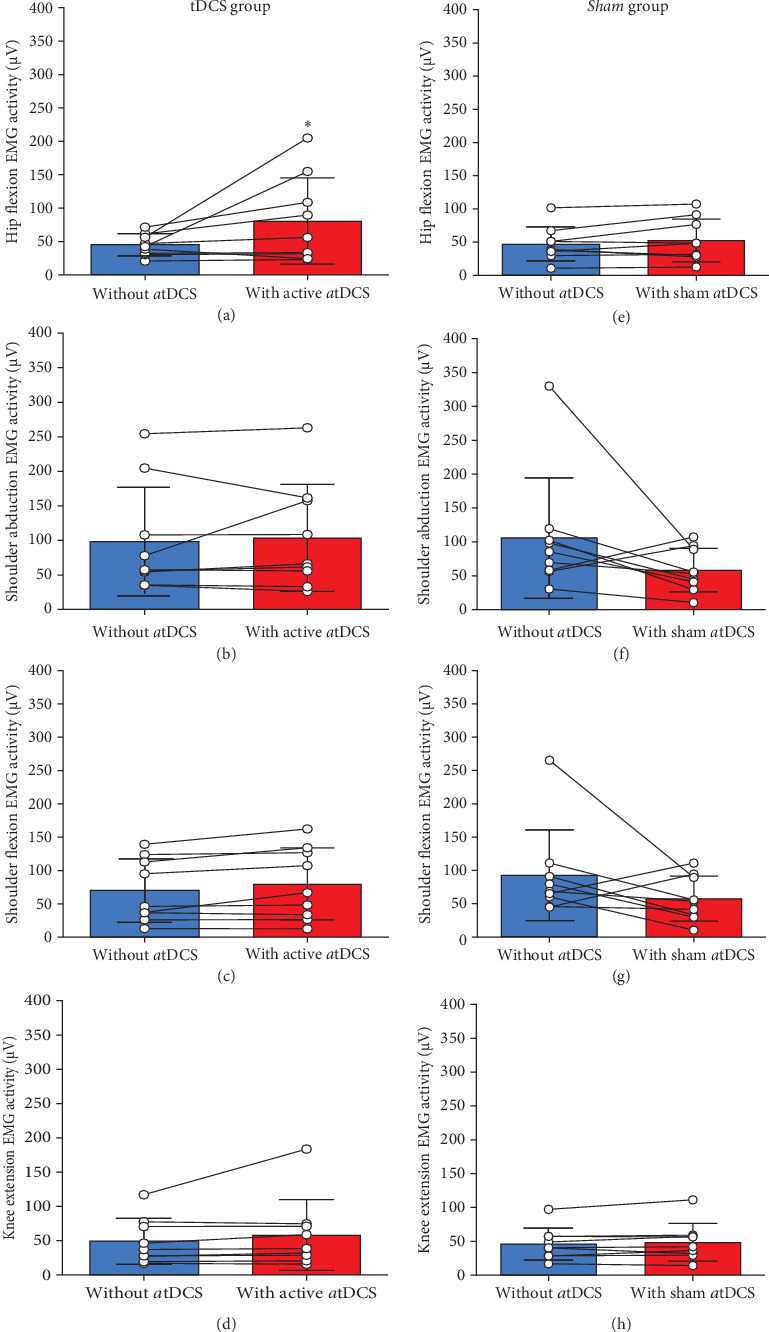 Figure 3
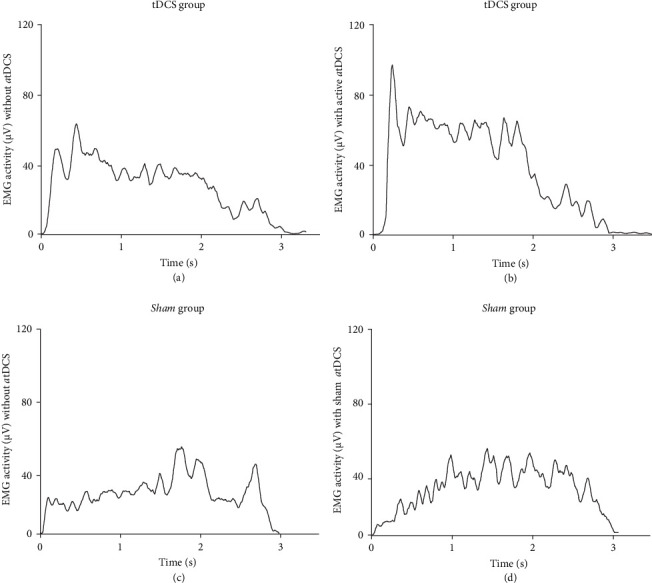 Figure 4
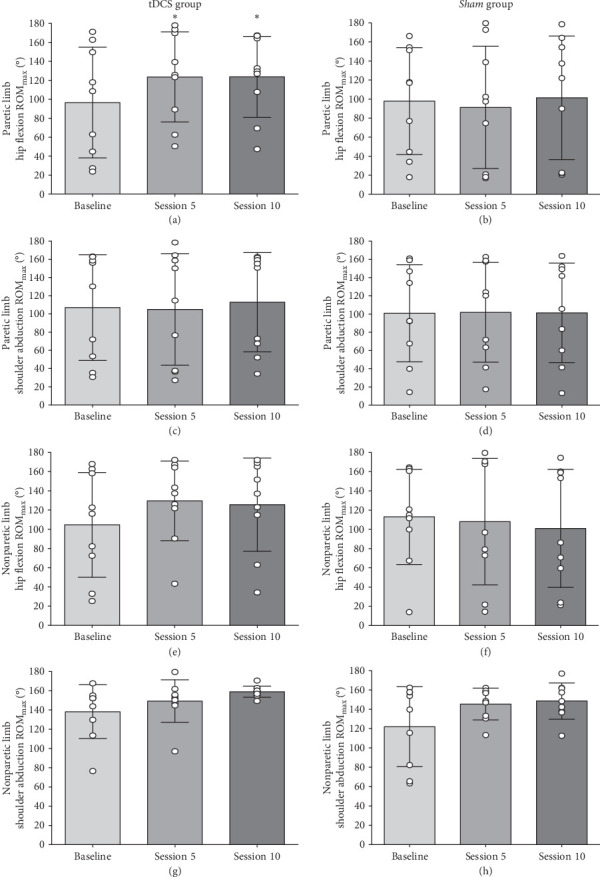 Figure 5
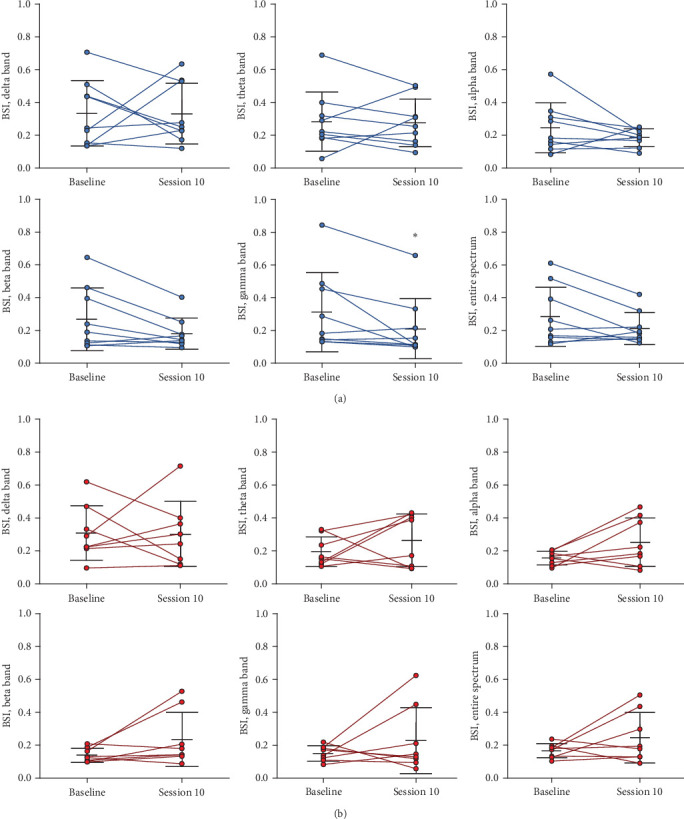 Figure 6
Peer Reviews
No public reviews on file for this paper yet. If you reviewed it on a platform where reviews are public (OpenReview, ICLR, NeurIPS, ICML), you can paste yours below so the community can read it here.
Videos
No videos yet. Explain this paper in a talk, walkthrough, or lecture? Add one.
Taxonomy
TopicsTranscranial Magnetic Stimulation Studies · Stroke Rehabilitation and Recovery · Muscle activation and electromyography studies