Partial Phallectomy and Penile Retroversion as a Surgical Approach for Severe Preputial Laceration in a Donkey (Equus asinus)
Letícia Paranhos Rios Andrade, Helena Tavares Dutra, Jéssyca Ataíde Ferreira, Jéssica Sola Quirino da Silva, Mariana Quinan Bittar, Paulo José Bastos Queiroz

TL;DR
A donkey with severe penile injuries was successfully treated using a surgical approach involving partial phallectomy and penile retroversion, leading to long-term recovery.
Contribution
This case report introduces the use of partial phallectomy combined with penile retroversion for treating severe penile trauma in donkeys, a technique previously undocumented in this species.
Findings
The surgical technique successfully restored normal urination in the donkey four years post-surgery.
Postoperative complications were managed effectively, leading to complete recovery.
The procedure is proposed as a viable option for treating extensive penile and preputial lacerations in donkeys.
Abstract
Penile trauma in equines can cause injuries of varying severity, potentially leading to temporary or permanent dysfunction. In severe cases, various surgical techniques can be employed to restore the animal's quality of life, such as partial phallectomy combined with penile retroversion. However, descriptions of the application of this technique in donkeys are lacking. This report describes the surgical treatment of a donkey with extensive preputial and penile laceration using the technique of partial phallectomy combined with penile retroversion. An 18-month-old intact male donkey presented with extensive preputial and penile lacerations, resulting in the complete rupture of the preputial lamina, permanent penile protrusion, tissue necrosis, and urethral rupture with urine leakage. The donkey underwent a partial phallectomy and penile retroversion after a 2-week preoperative period,…
Genes, proteins, chemicals, diseases, species, mutations and cell lines named across the full text — each resolved to its canonical identifier and authoritative record.
Click any figure to enlarge with its caption.
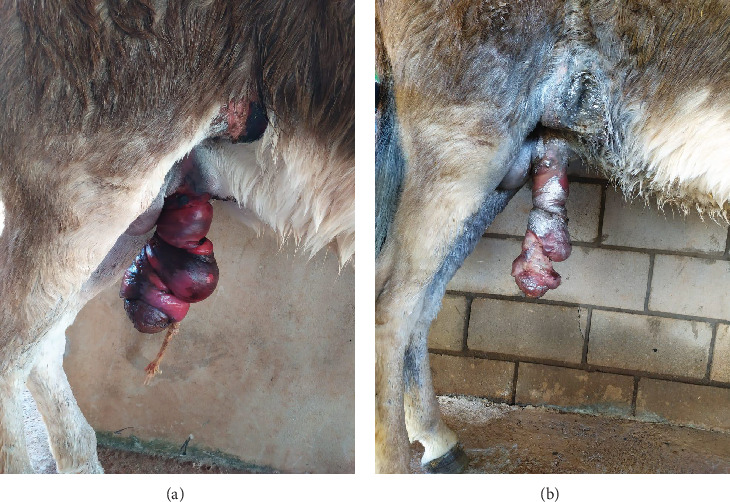 Figure 1
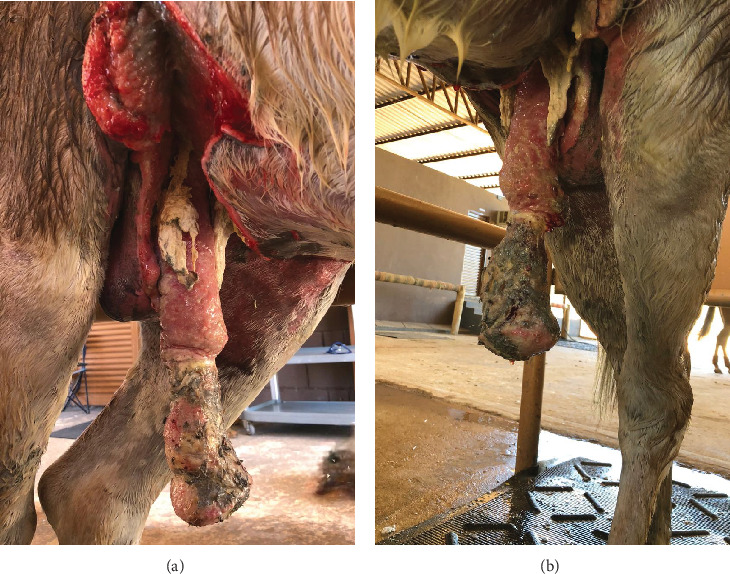 Figure 2
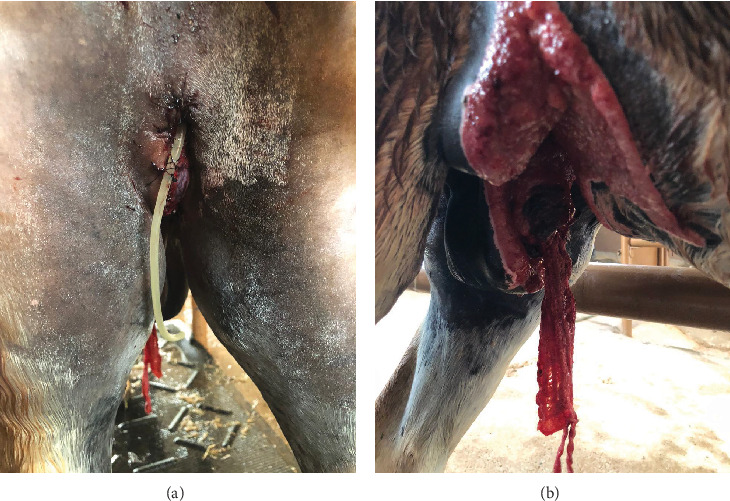 Figure 3
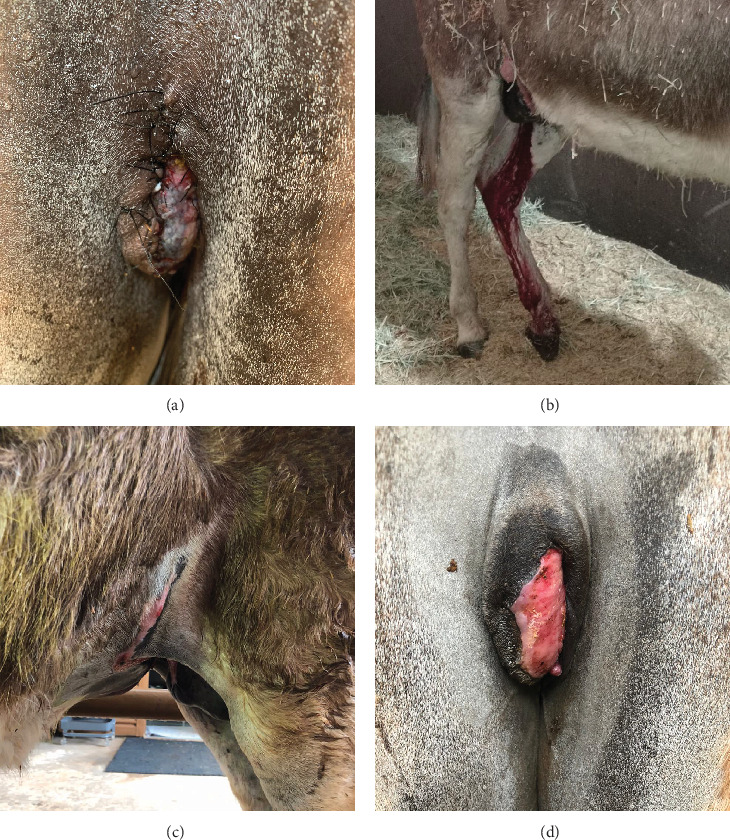 Figure 4
Peer Reviews
No public reviews on file for this paper yet. If you reviewed it on a platform where reviews are public (OpenReview, ICLR, NeurIPS, ICML), you can paste yours below so the community can read it here.
Videos
No videos yet. Explain this paper in a talk, walkthrough, or lecture? Add one.
Taxonomy
TopicsVeterinary Equine Medical Research · Genital Health and Disease · Veterinary Medicine and Surgery