Coping and positive mental health in Canada among youth and adults: findings from a population-based nationally representative survey
Mihojana Jhumi, Laura L. Ooi, Karen C. Roberts, Melanie Varin

TL;DR
This study explores how coping abilities relate to positive mental health in Canadian youth and adults, finding that strong coping skills are consistently linked to better mental health outcomes across age groups.
Contribution
The study provides new insights into how coping patterns and mental health outcomes vary across age groups in a nationally representative Canadian population.
Findings
High coping was significantly associated with better self-rated mental health, happiness, and life satisfaction across all age groups.
Individuals with high coping were 4 to 6 times more likely to report high levels of happiness and mental health compared to those with lower coping.
Life satisfaction scores were notably higher for individuals with high coping abilities.
Abstract
Coping is a protective factor for positive mental health (PMH) and an asset for population health. While there is evidence demonstrating a strong association between coping and PMH, less is known about how coping patterns differ across age groups. Given that age can impact coping ability, addressing this knowledge gap is warranted. We analyzed data from the 2019 Canadian Community Health Survey on the self-rated ability of adults and youth (N= 60 643; 12+ years) to cope with unexpected or difficult problems and day-to-day demands along with three PMH outcomes: self-rated mental health (SRMH), happiness and life satisfaction. All estimates were disaggregated by sociodemographic variables (sex, gender, household income quintile, immigration status, ethnocultural background, place of residence), stratified by five age groups, and age-specific regression analyses were conducted.…
Genes, proteins, chemicals, diseases, species, mutations and cell lines named across the full text — each resolved to its canonical identifier and authoritative record.
Click any figure to enlarge with its caption.
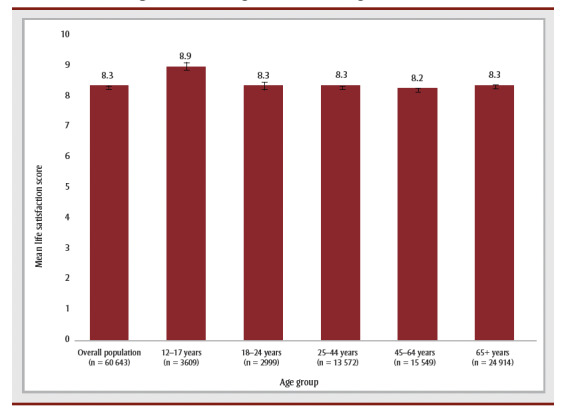 Figure 1
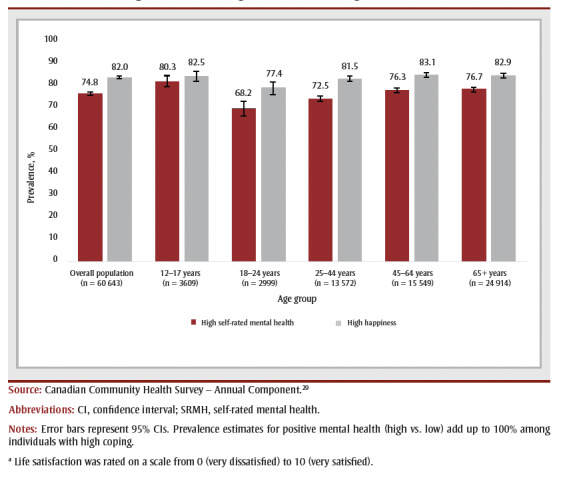 Figure 2
Peer Reviews
No public reviews on file for this paper yet. If you reviewed it on a platform where reviews are public (OpenReview, ICLR, NeurIPS, ICML), you can paste yours below so the community can read it here.
Videos
No videos yet. Explain this paper in a talk, walkthrough, or lecture? Add one.
Taxonomy
TopicsHealth, psychology, and well-being · Health disparities and outcomes · Healthcare Systems and Public Health