Insights into the genome of Azotobacter sp. strain CWF10, isolated from an agricultural field in Central India
Arindam Roy, Anwesha Ghosh, Prateeksha Mehra, Sumit Roy, Punyasloke Bhadury

TL;DR
A new Azotobacter strain from Indian soil has a genome that suggests it can boost plant growth and soil health.
Contribution
The study identifies a potential novel Azotobacter species with plant growth-promoting traits through genome analysis.
Findings
The genome of Azotobacter sp. strain CWF10 is 5.7 Mb with 65.09% G+C content.
The strain contains genes for nitrogen enhancement and folic acid biosynthesis.
Siderophore genes like vibrioferrin and crochelin A are present for iron regulation.
Abstract
Azotobacter sp. strain CWF10, an aerobic gram-negative, oval-shaped and motile bacterium, was isolated from the lateritic agricultural soil of Madhya Pradesh, India. The draft genome of the isolate is 5.7 Mb in size, consisting of 14 contigs with 65.09% G+C content. Average nucleotide identity (94.66%) and digital DNA–DNA hybridization (62%) calculation with the closest reference strains underpin the bacterium as a potential novel species. The bacterium has a plethora of plant growth-promoting genes that point towards the potential ability to enhance available nitrogen and biosynthesis of folic acid, among others. Siderophores such as vibrioferrin and crochelin A are also present in the genome and are known to regulate iron uptake. Overall, mining the genome of Azotobacter sp. strain CWF10 has revealed the potential of this strain for application in regenerative agriculture and…
Genes, proteins, chemicals, diseases, species, mutations and cell lines named across the full text — each resolved to its canonical identifier and authoritative record.
Click any figure to enlarge with its caption.
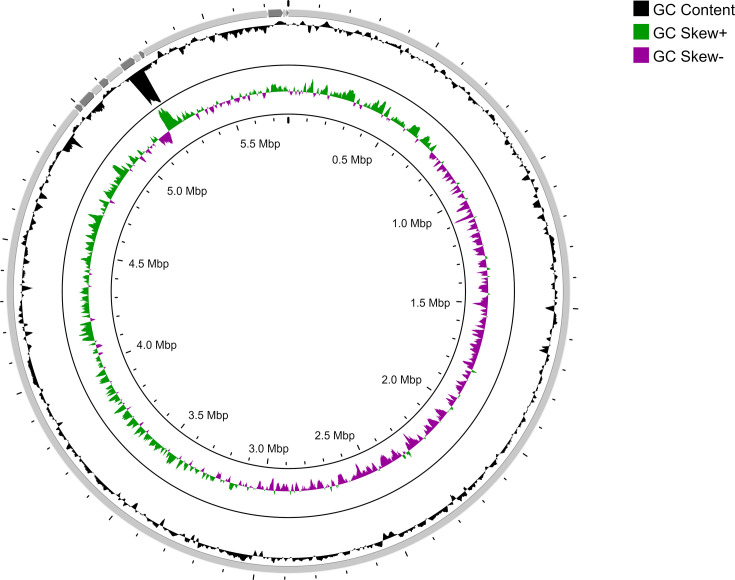 Fig. 1
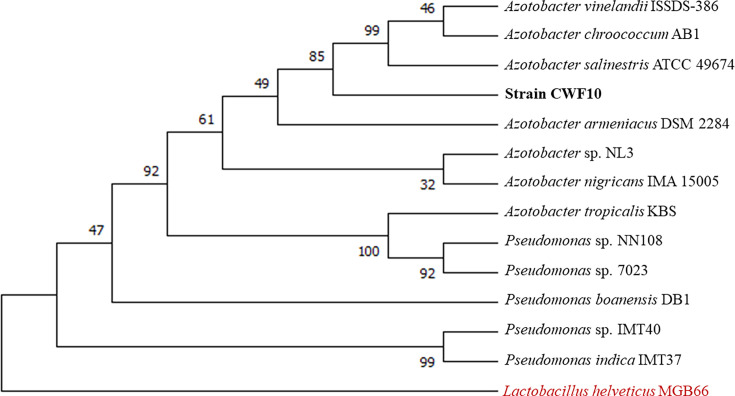 Fig. 2
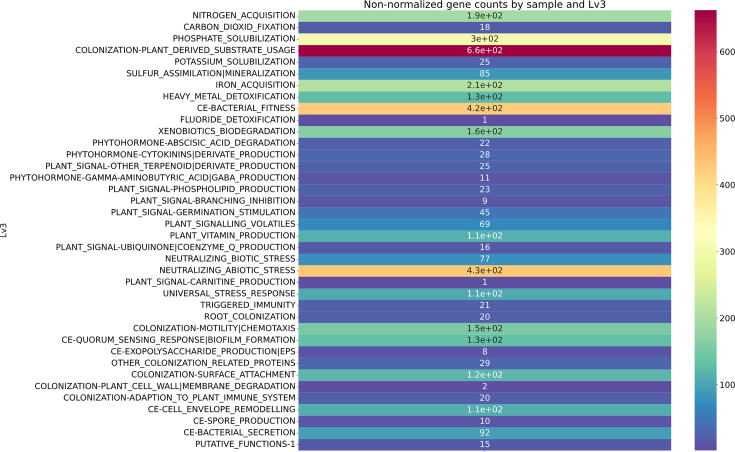 Fig. 3
| Genomic features | No. or length (bp) |
|---|---|
| G+C content (%) | 65.09 |
| No. of all contigs | 14 |
| No. of large contigs (>1000 bp) | 14 |
| Contig N50 | 4 986 236 |
| Contig N90 | 433 960 |
| L50 | 1 |
| L90 | 2 |
| Total length | 5 777 240 |
| Species | ANIb (%) | Distance | DNA–DNA hybridization (%) | G+C (%) |
|---|---|---|---|---|
|
| 94.66 | 0.0483 | 62 | 65.6 |
|
| 88.34 | 0.1038 | 38.7 | 65.7 |
|
| 90.39 | 0.1110 | 42 | 65.7 |
|
| 87.45 | 0.0929 | 36.8 | 65.6 |
Peer Reviews
No public reviews on file for this paper yet. If you reviewed it on a platform where reviews are public (OpenReview, ICLR, NeurIPS, ICML), you can paste yours below so the community can read it here.
Videos
No videos yet. Explain this paper in a talk, walkthrough, or lecture? Add one.
Taxonomy
TopicsGenomics and Phylogenetic Studies · Studies on Chitinases and Chitosanases · Plant-Microbe Interactions and Immunity
Data Summary
The whole-genome sequence data are available on NCBI (BioProject Accession Number PRJNA1159111 and BioSample Accession Number SAMN43561090).
Introduction
Biological nitrogen fixation is a crucial ecological phenomenon and is largely driven by free-living as well as symbiotic microbes [1]. The fixation of atmospheric nitrogen in the soil, as an alternative to Haber–Bosch industrial production of nitrogen fertilisers for boosting agricultural productivity, is more economical and environmentally sustainable. Members of the genus Azotobacter, belonging to the family Pseudomonadaceae, are ubiquitous across soil ecosystems globally. Since the 20th century, various strains of Azotobacter have been exploited as bioinoculants to solve the problem of nitrogen deficiency-associated plant growth [2].
Methods
The strain CWF10 was isolated from nutrient-deficient agricultural soil in the Chhindwara district of Madhya Pradesh, India. Briefly, 1 g of soil (top 0–5 cm) was serially diluted 10^6^ times, and 100 µl was plated on nitrogen-free agar medium (glucose 20 g l^–1^, CaCO_3_ 20 g l^–1^, K_2_HPO_4_ 1 g l^–1^, MgSO_4_.7H_2_O 0.5 g l^–1^, agar 15 g l^–1^, pH 7.2) [34]. The pale brown colony was subsequently inoculated in liquid medium and incubated under the following conditions (30 °C, 80 r.p.m.). Genomic DNA was extracted following the published methods [56]; quality and quantity were ascertained following the published protocol [7]. To undertake phylogeny based on 16S rRNA, FC27 and RC1492 [8] were used. Whole-genome sequencing was undertaken on a MinION platform using Oxford Nanopore Technologies sequencing chemistry following published protocols [7]. Porechop (v0.2.0) was used to remove adapters from long reads. Subsequently, assembly into the draft genome was undertaken using Flye (v2.9.3) [9]. The quality of the assembled genome was verified using QUAST (v5.2.0) [10] and CheckM [11]. The genome map was visualized using Proksee [12]. FastME 2.1.6.1 [13] was used to calculate inter-genomic distance as well as for SPR post-processing [14]. To ascertain the closest taxonomic affiliation, 16S rRNA sequence taxonomic relatives were retrieved from databases (GenBank/ENA/DDBJ) using the blastn tool and aligned using clustalW [15]. The maximum likelihood-based best-fit nucleotide substitution model for aligned sequences was inferred by jModeltest (v2.1.6) [16]. Further, an ML tree was constructed using the Tamura–Nei model (BIC=8175.2576) with 1000 bootstrap replicates in mega11 [17]. Digital DNA–DNA hybridization (dDDH) was calculated using Genome-to-Genome Distance Calculator [18], and the average nucleotide identity (ANI) was calculated using the ANIb algorithm [19] on the JSpeciesWS server [20] for demarcation of pecies rank (e.g. novel). BlastKOALA [21] was used for functional annotation of the assembled genome [22]. Antibiotic resistance genes were annotated and identified using the Resistance Gene Identifier module of the Comprehensive Antibiotic Resistance Database [23]. The program antiSMASH 7.0 [24] was used to investigate the presence of biosynthetic gene clusters. The presence of plant growth-promoting traits in the CWF10 strain was predicted using the PLant-associated BActeria web resource (PLaBAse)-based PGPr_finder program [2526].
Results and discussion
The isolated bacterium CWF10 appears pale brown, slimy, produces a halo zone and forms cysts on nitrogen-free medium within 4–5 days, whereas, on nitrogen-rich Luria–Bertani medium, the bacterium grows overnight, and cells become aggregated and do not form any cyst (Fig. S2, available in the online version of this article). Genome sequencing of strain CWF10 resulted in the generation of 34 602 raw reads with 144 316 267 bp. De novo assembly with QC-ed reads achieved a coverage of 25X; 14 contigs were present and covered a length of 5 777 240 bp. The G+C content was calculated to be 65.09%, with the largest contig measuring 4 986 236 bp (Fig. 1). The completeness score of the genome was found to be 92.64%, reflecting an acceptable benchmark for a high-quality genome [27]. The statistics reflecting genome assembly are provided in Table 1. The draft assembly consists of 95 transfer RNAs, 19 ribosomal RNAs and 6710 coding sequences (Table S1). The strain possesses flagellar biosynthesis protein (FlhB, FliP, FliQ and FliR), basal-body rod protein (FlgB, FlgC, FlgG and FlgF), motor switch protein (FliG and FliM) and L, M, P ring protein and further support the genome level evidence of motility. The 16S rRNA (1535 bp)-based phylogenetic analysis revealed that strain CWF10 shares a phyletic lineage with Azotobacter vinelandii ISSDS-386 (99.33%), Azotobacter salinestris ATCC 49674 (99.39 %) and Azotobacter chroococcum AB1 (99.22%). This supports the taxonomic affiliation of CWF10 to Azotobacter (Fig. 2). The calculation of inter-genomic distance from pairwise comparison via FastME 2.1.6.1 also supports the taxonomic affiliation of strain CWF10 with Azotobacter (Fig. S1). The dDDH and ANI are particularly important for genome-wide comparison of two closely related taxonomic relatives based on shared orthologous gene clusters. ANI <95–96 % corresponds to dDDH value <70 %. Based on dDDH and ANIb calculations, it can be concluded that this strain represents a novel species of Azotobacter (Table 2); values were found to be below the acceptable threshold (ANI <95–96 %, dDDH <70 %) considered for species delineation [19,2830]. The genome possesses information for heavy metal resistance, including copper (CopA, CopB and MmcO), arsenic (Acr3), cobalt–zinc–cadmium resistance protein (CzcA and CzcB) and nickel and cobalt resistance protein (CnrA). Interestingly, the genome encodes for arsenical pump-driving ATPase which is crucial for arsenic detoxification. Strain CWF10 is resistant to fluoroquinolone, tetracycline and diaminopyrimidine antimicrobial drug classes. The genetic blueprint of Azotobacter sp. strain CWF10 contains abaQ, rsmA, adeF and qacG genes linked to antimicrobial resistance. AntiSMASH results confirmed the presence of seven biosynthetic gene clusters in contigs 1 and 3. The presence of NRPS-independent vibrioferrin siderophore (100% similarity) in Azotobacter sp. strain CWF10 may help in iron acquisition during episodic fluctuations of metal availability. The isolated bacterium can putatively synthesize amphibactin and crochelin A siderophores, as reported previously [3132]. The low-affinity vibrioferrin siderophore and the other two high-affinity siderophores together can combat iron starvation through the bucket brigade mechanism for continuous iron supply to the bacterium [33]. The genome also harbours carotenoid and type III polyketide synthase BGCs. The investigated strain encodes a wide array of plant growth-promoting genes, including nitrogen fixation and phosphate solubilization (Fig. 3). The genome possesses the complete pathway for nitrogen fixation, including nitrogenase molybdenum-iron protein (nifDK) and dinitrogenase reductase (nifH), as well as single copies of PhoB, PhoR, PstA, PstB and PstS for phosphorous metabolism. Phosphate-specific transporter and phosphate-import permease protein play a major role in the solubilization of inorganic phosphate and can make it bioavailable to plants. The investigated strain can putatively transform nitrate to ammonia due to the presence of NasAB and NasBDE. It also encodes for anthranilate synthase and anthranilate phosphoribosyltransferase, crucial for tryptophan biosynthesis and linked to auxin production [34]. The presence of chemotaxis proteins (CheA and CheY) and methyl-accepting chemotaxis proteins can regulate the phosphorylation process of the basal body and play a role in flagellar movement [35]. The genome also contains XerC and XerD, which play a putative role in rhizosphere colonization, along with 4-hydroxybenzoate transporter (PcaK). Aminodeoxychorismate lyase, crucial for folate biosynthesis, is present in the genome, indicating its importance towards plant growth. The bacterium can also biosynthesize trehalose through the maltooligosyl trehalose synthase enzyme and thus can help towards combat drought stress [36]. The rapid use of pesticides and fertilisers acts as a source of heavy metals, disrupting the functioning of soil microbiome, fertility and ecological balance [3738]. Azotobacter spp. maintains soil stability, increases food crop production and is pivotal in facilitating availability of nutrients required by plants [3940]. Strain CWF10 possesses a repertoire of metal resistance gene clusters along with other beneficial genes proving cues to environmental adaptation, which could lead to less accumulation of metals in the food chain. Nonetheless, genome-wide function-rich plant growth traits of Azotobacter sp. CWF10 suggest that it can augment agricultural productivity and need to be further evaluated based on robust on-field application. In-depth in silico investigation of Azotobacter sp. strain CWF10 indicates a potential new species with a broad range of plant growth-promoting traits and genetic signatures for bioremediation. This new isolate could be a potential candidate as biofertilizer to achieve regenerative climate-smart agriculture and improve agricultural soil health.
Circular genome map of Azotobacter sp. strain CWF10.
Phylogenetic analysis based on 16S rRNA sequence from maximum likelihood-based phylogenetic tree with the Tamura–Nei model (1000 bootstrap replicates, bold font marks investigated strain and red font as out group).
Plant growth-promoting gene categories and count from the identified genome of Azotobacter sp. strain CWF10.
Supplementary material
10.1099/acmi.0.000930.v4Uncited Supplementary Material 1.
The reference list from the paper itself. Each links out to its DOI / PubMed record.
- 1Soumare A Diedhiou AG Thuita M Hafidi M Ouhdouch Y et al Exploiting biological nitrogen fixation: a route towards a sustainable agriculture Plants 20209101110.3390/plants 908101132796519 PMC 7464700 · doi ↗ · pubmed ↗
- 2Das HK Azotobacters as biofertilizer Adv Appl Microbiol 201910814310.1016/bs.aambs.2019.07.00131495403 · doi ↗ · pubmed ↗
- 3Beijerinck MW On oligonitrophilous bacteria Proceedings of the Koninklijke Nederlandse Akademie van Wetenschappen 19013586595
- 4Beijerinck MW Ueber Oligonitrophile Mikroben Zentralblatt Für Bakteriologie, Parasitenkunde Und Infektionskrankheiten. Abt 1901 b 561582
- 5Boström KH Simu K HagströmÅ Riemann L Optimization of DNA extraction for quantitative marine bacterioplankton community analysis Limnol Oceanogr Methods 2004236537310.4319/lom.2004.2.365 · doi ↗
- 6Ghosh A Bhadury P Insights into bacterioplankton community structure from Sundarbans mangrove ecoregion using Sanger and Illumina Mi Seq sequencing approaches: a comparative analysis Genom Data 201711394210.1016/j.gdata.2016.11.01727942457 PMC 5133466 · doi ↗ · pubmed ↗
- 7Roy A Ghosh A Bhadury P Delving deep into the draft genome of Mangrovibacter sp. SLW 1, isolated from Sundarbans mangrove Access Microbiol 2024610.1099/acmi.0.000847.v 3PMC 1165273239697668 · doi ↗ · pubmed ↗
- 8Lane DJ 16S/23S r RNA sequencing Stackebrandt E Goodfellow M Nucleic Acid Techniques in Bacterial Systematic New York John Wiley and Sons 1991115175