Peptidomimetics Targeting the Amyloidogenicity of Nucleophosmin 1 Mutations in Acute Myeloid Leukemia
Daniele Florio, Sara La Manna, Giada Raffaella Fiore, Valentina Roviello, Giuliano Castellano, Sossio Fabio Graziano, Anna Maria Malfitano, Daniela Marasco

TL;DR
This paper explores how engineered peptides can enhance amyloid aggregation in mutated NPM1 proteins linked to AML, potentially reducing toxicity and improving cell survival.
Contribution
The study introduces novel peptides designed to modulate amyloid aggregation in mutated NPM1, offering a new therapeutic strategy for AML.
Findings
Peptides with conservative mutations in NPM1264-277 enhance amyloid aggregation propensity.
The K267R mutation in NPM1264-277 reduces toxicity and rescues cell viability in OCI-AML3 cells.
Biophysical assays confirm structural and functional changes in modified peptides.
Abstract
Nucleophosmin 1(NPM1) is an abundant human protein endowed with many functions where whose dysregulation leads to various cancers and mutations are relevant in acute myeloid leukemia (AML). In the wild‐type form, pentameric NPM1 resides mainly in the nucleolus even if it shuttles toward the cytosol exerting its chaperon function; conversely in AML‐mutated versions, it has mainly a cytoplasmic localization, hence the name NPMc+. All types of AML mutations determine an important amyloid aggregation propensity of the C‐terminal domains (CTD) of NPMc+ and to exploit this amyloidogenicity for therapeutical purposes; herein, this study presents the design and structural and functional investigations of a series of peptides analogs of the sequence of the second helix of the three‐helix bundle of the wt CTD as potential enhancers of amyloid aggregation. Peptides are designed by introducing…
Genes, proteins, chemicals, diseases, species, mutations and cell lines named across the full text — each resolved to its canonical identifier and authoritative record.
Click any figure to enlarge with its caption.
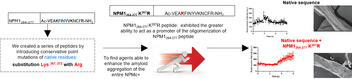 Figure 1
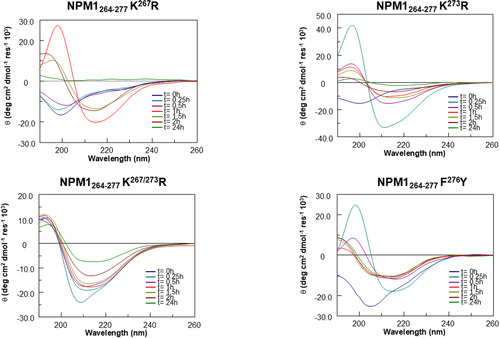 Figure 2
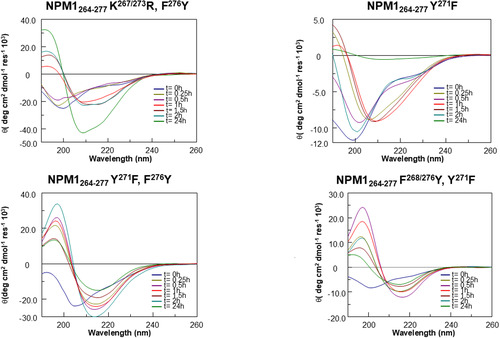 Figure 3
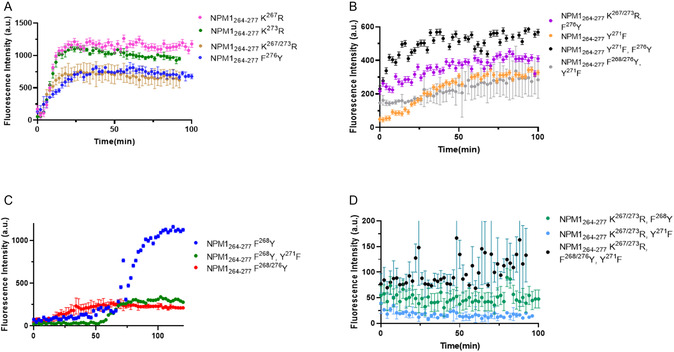 Figure 4
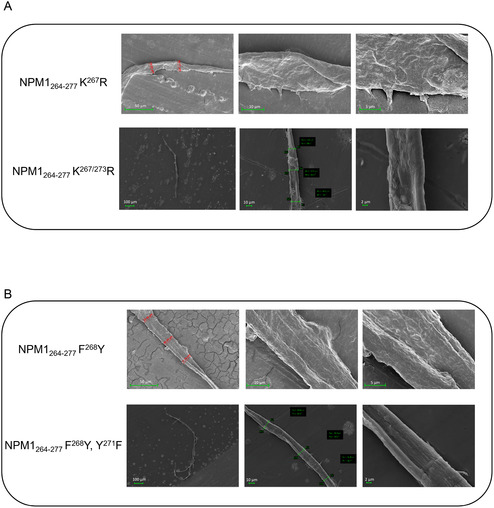 Figure 5
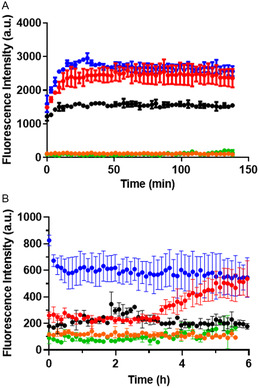 Figure 6
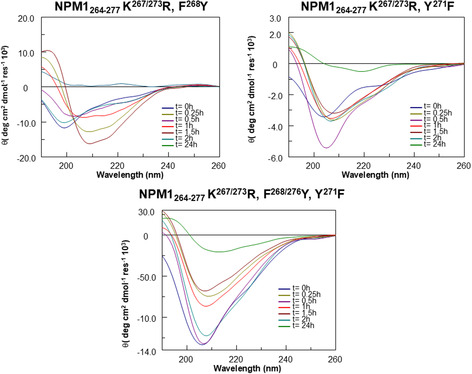 Figure 7
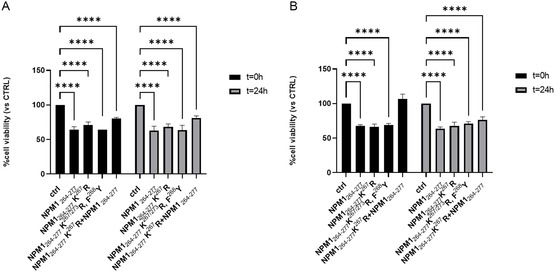 Figure 8
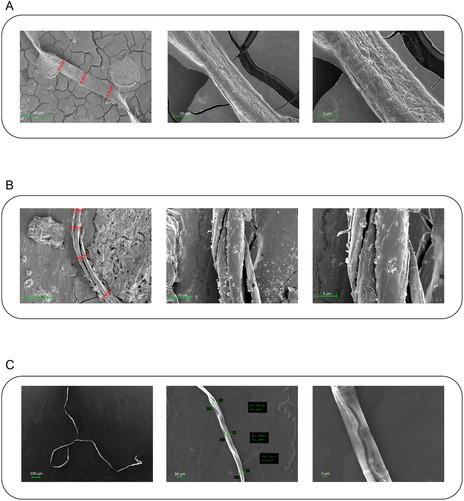 Figure 9
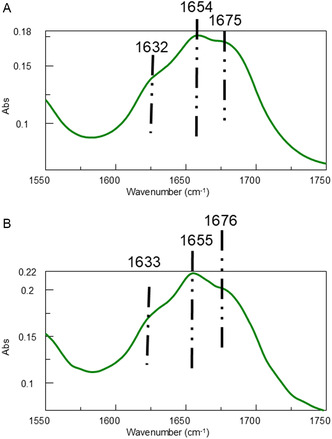 Figure 10
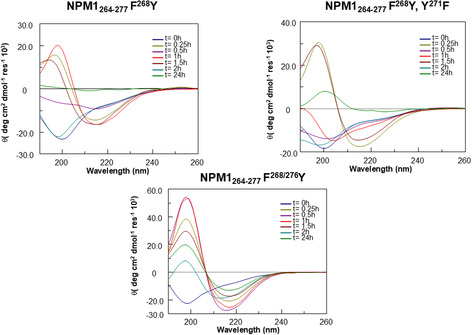 Figure 11
Peer Reviews
No public reviews on file for this paper yet. If you reviewed it on a platform where reviews are public (OpenReview, ICLR, NeurIPS, ICML), you can paste yours below so the community can read it here.
Videos
No videos yet. Explain this paper in a talk, walkthrough, or lecture? Add one.
Taxonomy
TopicsHIV/AIDS drug development and treatment · DNA and Nucleic Acid Chemistry · Advanced biosensing and bioanalysis techniques