A De Novo Designed Metalloprotein Displays Variable Thermal Stability and Binding Stoichiometry with Transition Metal Ions
Britt Rooijakkers, Gaya Verhagen, Anneloes Cramer‐Blok, Ed Zuidinga, Aimee L. Boyle

TL;DR
A newly designed protein folds when bound to specific metal ions and shows different stability and metal binding depending on the metal type.
Contribution
A de novo protein that folds upon binding transition metals and exhibits variable thermal stability and metal stoichiometry is presented.
Findings
The protein folds into an α-helical bundle when bound to Co(II), Ni(II), Cu(II), or Zn(II).
Cu(II) forms the least stable complex, and higher metal concentrations reduce secondary structure.
Metal binding affects protein stability through coordination geometry and backbone distortion.
Abstract
Metal‐binding selectivity in natural proteins is determined by multiple factors such as the protein's structure, metal concentration within cellular compartments, and the presence of metallochaperones. The in vitro selectivity of proteins for transition metal ions is largely governed by the Irving–Williams series, which states protein‐metal complex stability follows the order Co(II) < Ni(II) < Cu(II) > Zn(II). A de novo protein has been designed that folds in the presence of certain transition metal ions into a monomeric α‐helical bundle, with the least stable protein‐metal complex being formed with Cu(II). Moreover, when increasing the metal concentration of Cu(II) or Zn(II), more metal ions are incorporated into the protein accompanied by a concurrent decrease in the amount of secondary structure. One reason may be that there is a balance between stability conferred by the…
Genes, proteins, chemicals, diseases, species, mutations and cell lines named across the full text — each resolved to its canonical identifier and authoritative record.
Click any figure to enlarge with its caption.
 Figure 1
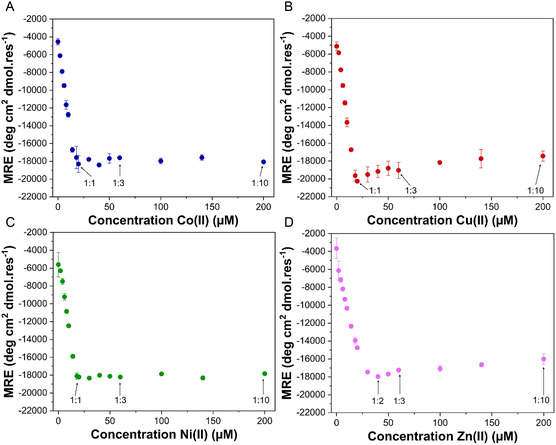 Figure 2
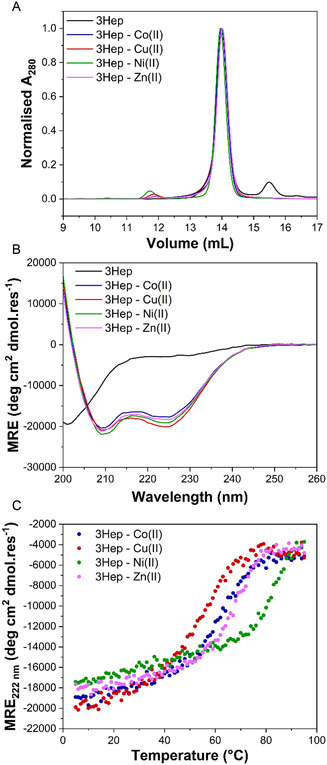 Figure 3
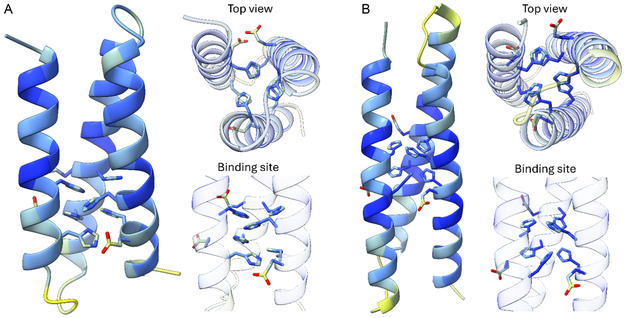 Figure 4
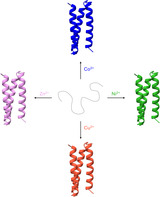 Figure 5
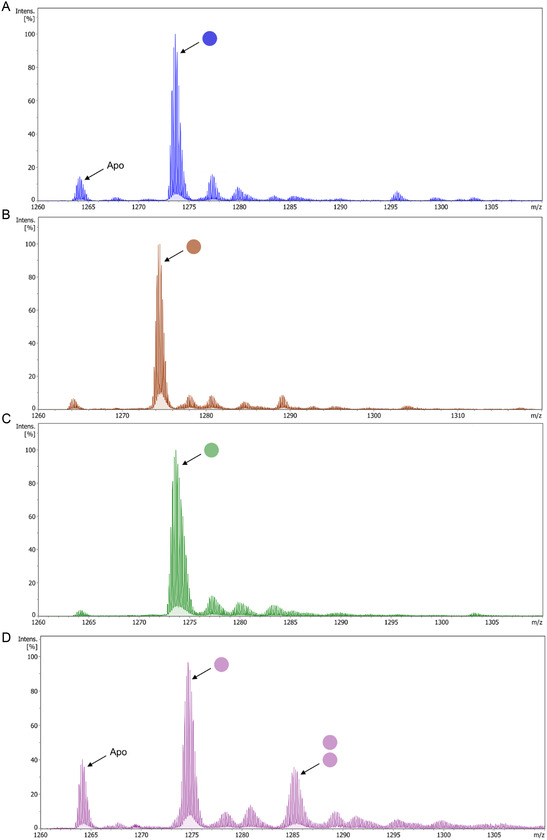 Figure 6
Peer Reviews
No public reviews on file for this paper yet. If you reviewed it on a platform where reviews are public (OpenReview, ICLR, NeurIPS, ICML), you can paste yours below so the community can read it here.
Videos
No videos yet. Explain this paper in a talk, walkthrough, or lecture? Add one.
Taxonomy
TopicsTrace Elements in Health · Protein Structure and Dynamics · Enzyme Structure and Function