Metastable Monolayer Formation through a Connector Structure
Simon B. Hollweger, Anna Werkovits, Oliver T. Hofmann

TL;DR
This paper presents a computational method to intentionally grow metastable surface structures of organic molecules on inorganic substrates using a connector structure.
Contribution
A novel computational procedure is introduced to achieve metastable surface structures through controlled temperature and pressure changes.
Findings
A connector structure enables the growth of metastable surface polymorphs from thermodynamic equilibrium.
Specific temperature and pressure changes significantly increase the yield of the target metastable structure.
The method is demonstrated using kinetic Monte Carlo simulations on a simplified interface system.
Abstract
The intentional growth of metastable surface structures of organic molecules adsorbed on inorganic substrates is a challenging task. It is usually unclear which kinetic mechanism leads to the metastable surface polymorph after a deposition experiment. In this work, we computationally investigate a growth procedure that allows to intentionally grow a defined metastable surface structure starting from thermodynamic equilibrium. This procedure is applicable to organic–inorganic interface systems that exhibit a thermodynamically stable connector structure that can be exploited to grow the metastable target structure. With specific temperature and pressure changes in the system, a significant yield of the target polymorph can be achieved. We demonstrate this procedure on a simplified microscopic interface system of rectangular molecules adsorbing on a square lattice substrate with kinetic…
Genes, proteins, chemicals, diseases, species, mutations and cell lines named across the full text — each resolved to its canonical identifier and authoritative record.
Click any figure to enlarge with its caption.
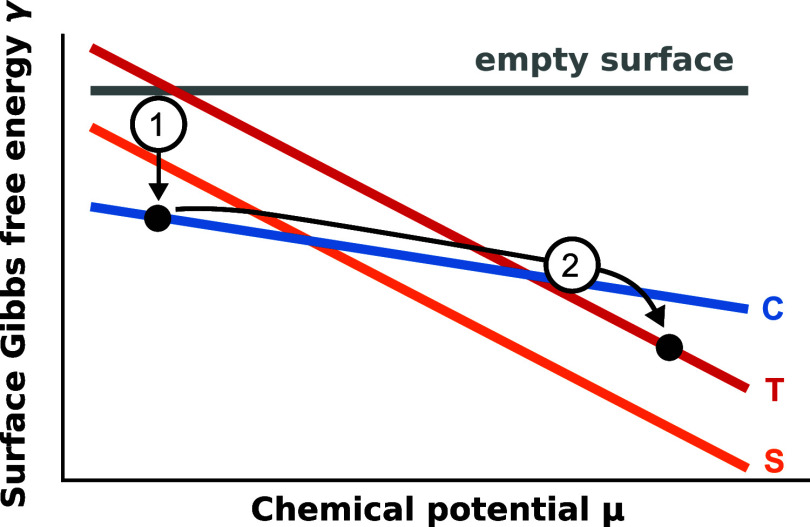 Figure 1
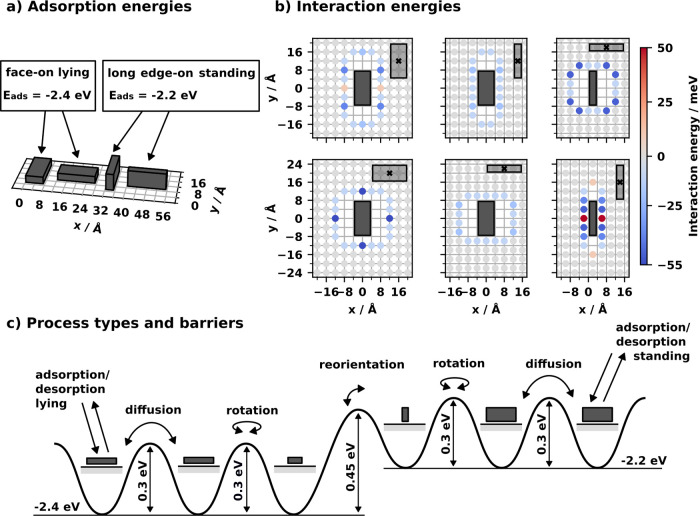 Figure 2
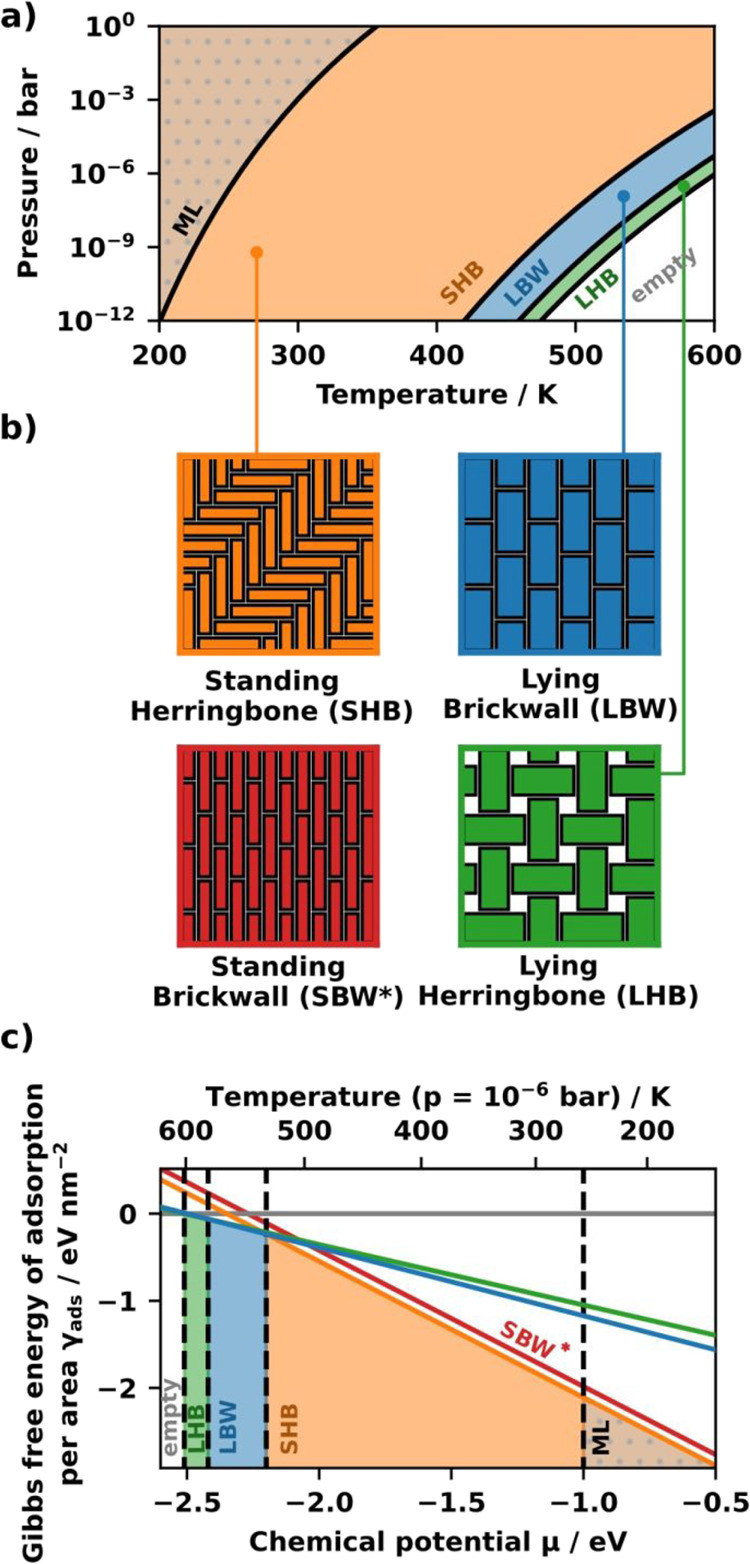 Figure 3
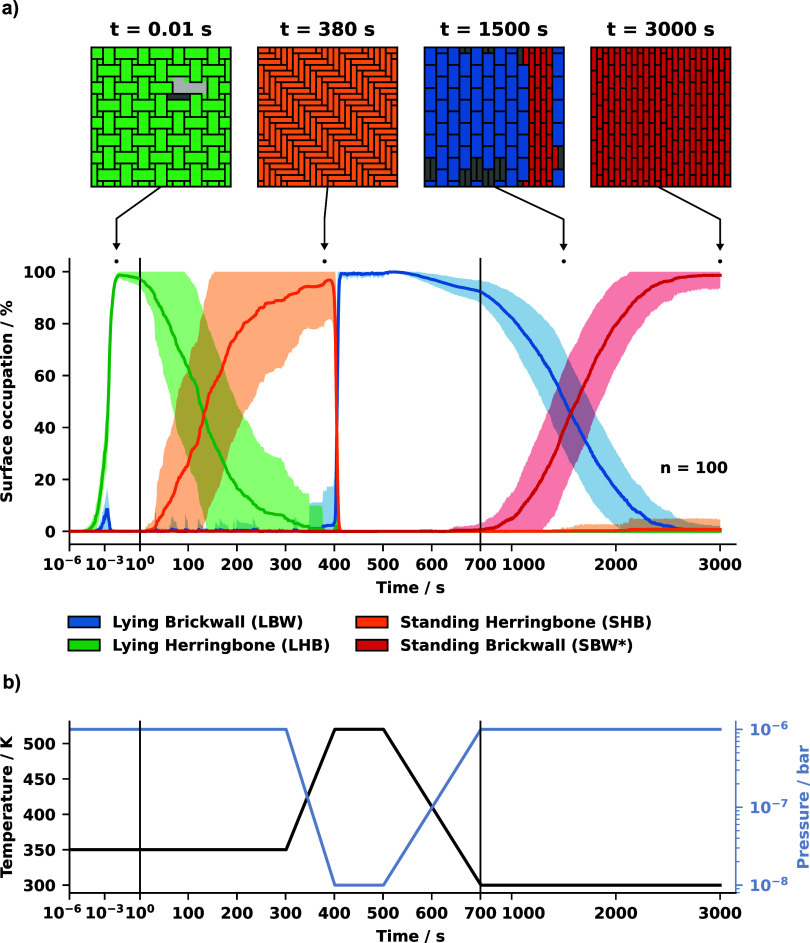 Figure 4
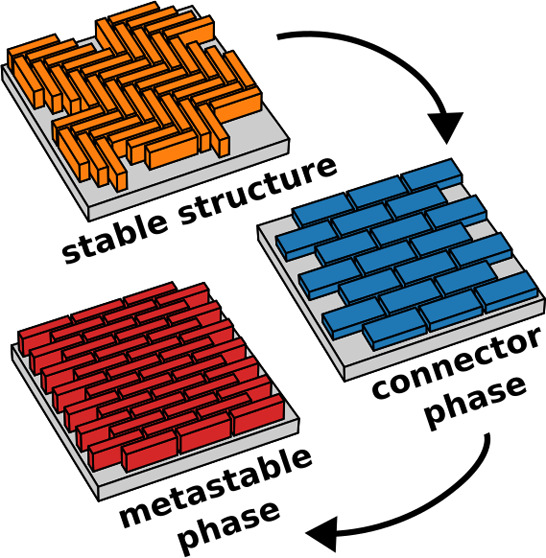 Figure 5
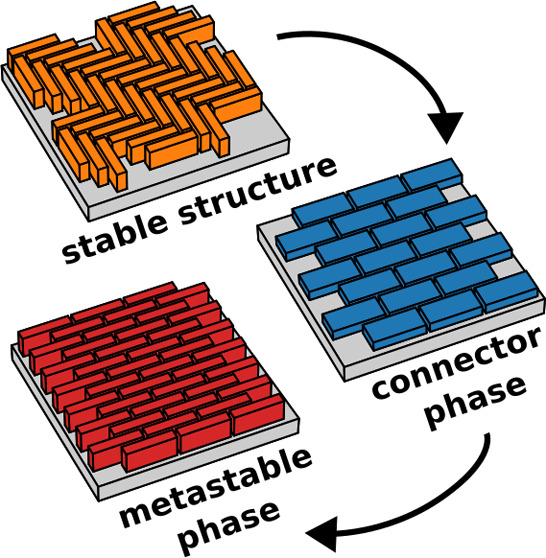 Figure 6
 Figure 7
 Figure 8
 Figure 9
 Figure 10
 Figure 11
 Figure 12
 Figure 13
 Figure 14
 Figure 15
 Figure 16
 Figure 17
 Figure 18
 Figure 19
 Figure 20
 Figure 21
 Figure 22
 Figure 23
Peer Reviews
No public reviews on file for this paper yet. If you reviewed it on a platform where reviews are public (OpenReview, ICLR, NeurIPS, ICML), you can paste yours below so the community can read it here.
Videos
No videos yet. Explain this paper in a talk, walkthrough, or lecture? Add one.
Taxonomy
TopicsMolecular Junctions and Nanostructures · nanoparticles nucleation surface interactions · Force Microscopy Techniques and Applications