Legume lectin phytohemagglutinin reduces transepithelial electrical resistance by counteracting the chaperone function of heat shock protein-70
Karol Dokladny, Prashanth Setty, Pope L. Moseley, Henry C. Lin

TL;DR
This study shows that a lectin in red kidney beans harms intestinal barriers by disrupting the protective function of a key cellular chaperone protein.
Contribution
The study reveals a novel mechanism by which legume lectins impair epithelial barrier function through interference with HSP70.
Findings
PHA lectin reduces transepithelial electrical resistance in Caco-2 cells.
PHA treatment lowers HSP70 levels and protein folding activity in Caco-2 cells.
Rats fed red kidney beans show reduced HSP70 and heat shock factor 1 in the small intestine.
Abstract
Legume lectins represent a broad class of environmental toxicants that bind to cell surface glycoproteins. Raw red kidney beans (RRKB), a widely consumed common source of dietary protein, are rich in the lectin phytohemagglutinin (PHA). Consumption of improperly cooked (which may require overnight presoaking and boiling at least at 100°C for 45 min) red kidney beans causes severe gastrointestinal symptoms. Since the relationship between lectin toxicity and the cellular chaperone machinery remains unknown, the study aimed to determine the effects of heat-denatured PHA on epithelial barrier function and heat shock protein 70 (HSP70) expression and its function as a molecular chaperone in PHA-treated Caco-2 cells and animals. Twelve male Sprague-Dawley rats were randomised to an ad libitum diet of either standard rat chow or chow containing 26% crude red kidney beans. We measured HSP70 and…
Genes, proteins, chemicals, diseases, species, mutations and cell lines named across the full text — each resolved to its canonical identifier and authoritative record.
Click any figure to enlarge with its caption.
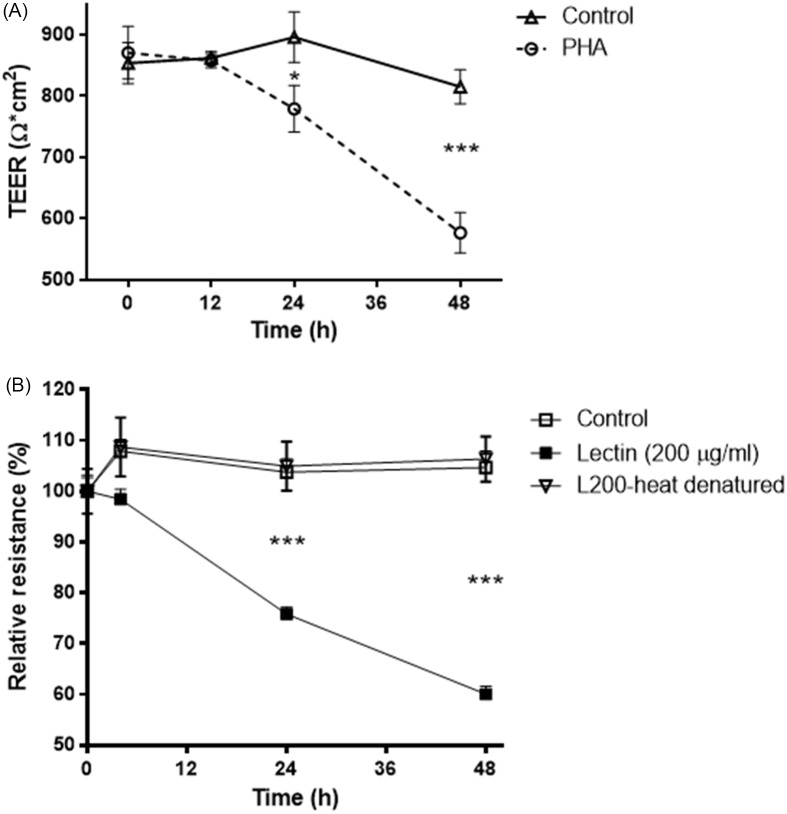 Figure 1
 Figure 2
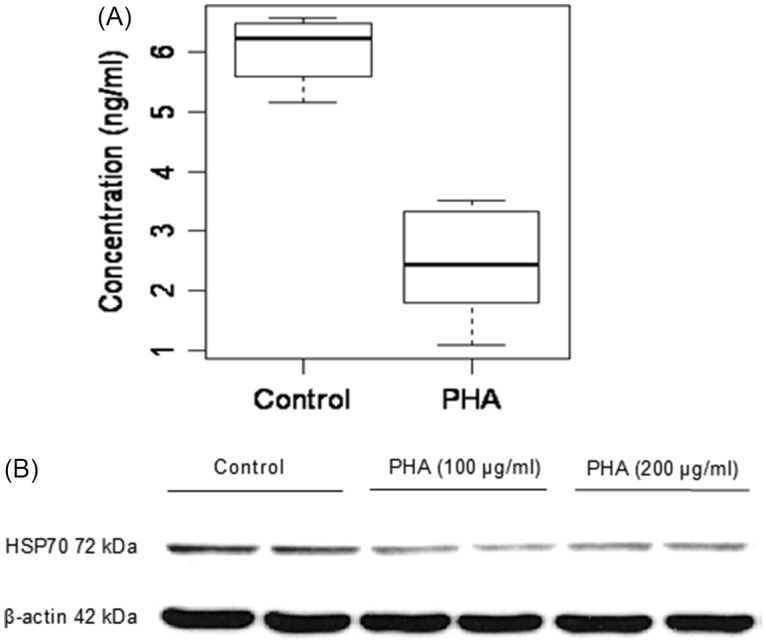 Figure 3
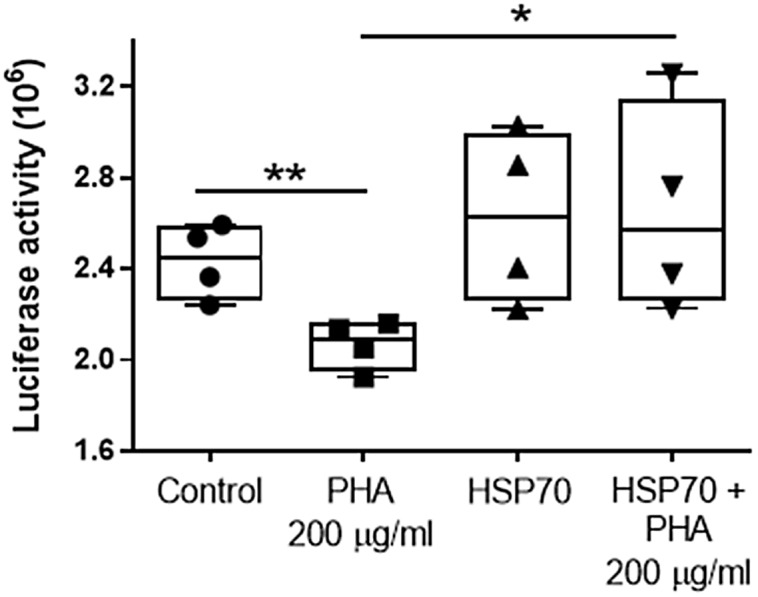 Figure 4
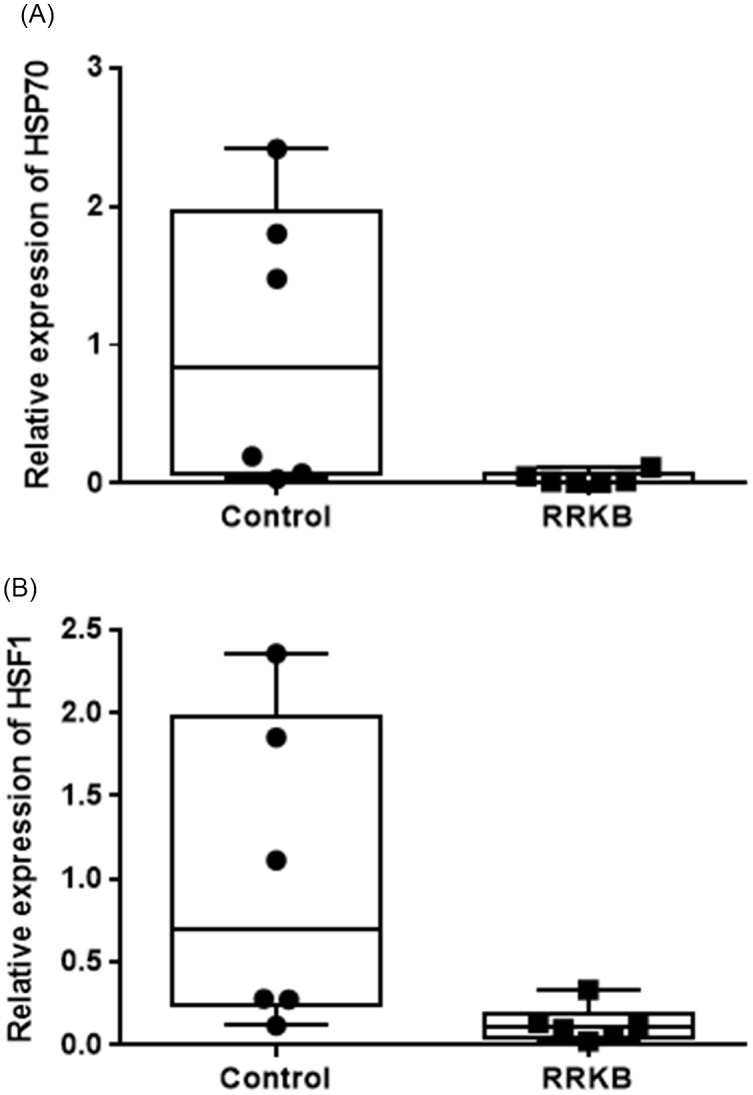 Figure 5
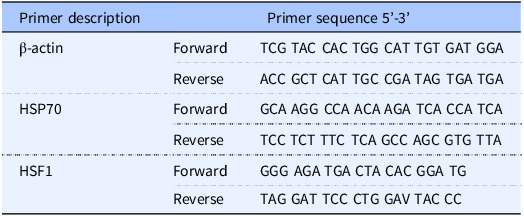 Figure 6
Peer Reviews
No public reviews on file for this paper yet. If you reviewed it on a platform where reviews are public (OpenReview, ICLR, NeurIPS, ICML), you can paste yours below so the community can read it here.
Videos
No videos yet. Explain this paper in a talk, walkthrough, or lecture? Add one.
Taxonomy
TopicsHeat shock proteins research · Toxin Mechanisms and Immunotoxins · Endoplasmic Reticulum Stress and Disease