Understanding Australian adults’ preferences for setting goals to reduce unhealthy food and beverage intake: a cross-sectional study
Chelsea E. Mauch, Ashlee Fuchs, Caitlin A. Howlett, Gilly A. Hendrie

TL;DR
This study explores how Australian adults prefer to set goals to reduce unhealthy food and drink consumption, finding that habits, age, and gender influence their preferences.
Contribution
The study introduces a novel approach to dietary interventions by considering individual preferences for goal setting.
Findings
Participants with stronger habits found short-term, gradual, and collaborative goals more helpful.
Age and gender significantly influenced preferences for long-term and elimination goals.
Tailoring interventions based on goal-setting preferences could improve dietary outcomes.
Abstract
Overconsumption of unhealthy, discretionary, foods and beverages are associated with an increased risk of weight gain and non-communicable diseases, including diabetes, heart disease, and cancer. This cross-sectional study explored preferences for setting goals to reduce discretionary food and beverage consumption. The online survey included items about discretionary food and beverage intake, goal setting preferences to reduce intake, habit strength, personality traits, and demographic characteristics. A total of 2664 Australian adults completed the survey. The sample was mostly female (65.9%), half (52.8%) were aged between 30–49 years, and the median intake of discretionary food and beverages was 4.9 (IQR: 3.6 to 7.2) serves per day. Multinomial logistic regression and ordinal logistic regression models were used to explore demographic and psychological predictors of the helpfulness…
Genes, proteins, chemicals, diseases, species, mutations and cell lines named across the full text — each resolved to its canonical identifier and authoritative record.
Click any figure to enlarge with its caption.
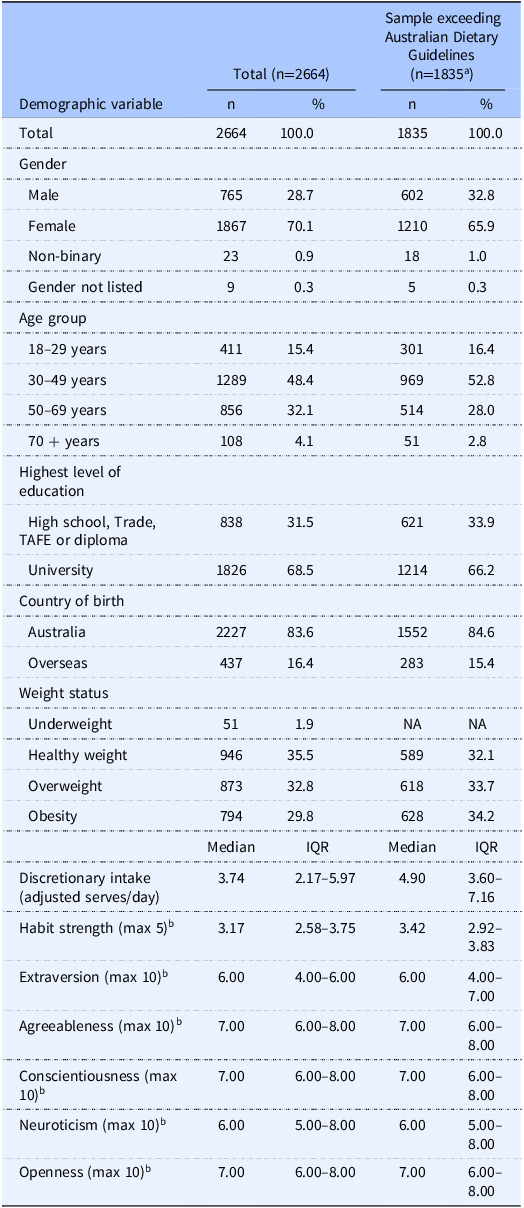 Figure 1
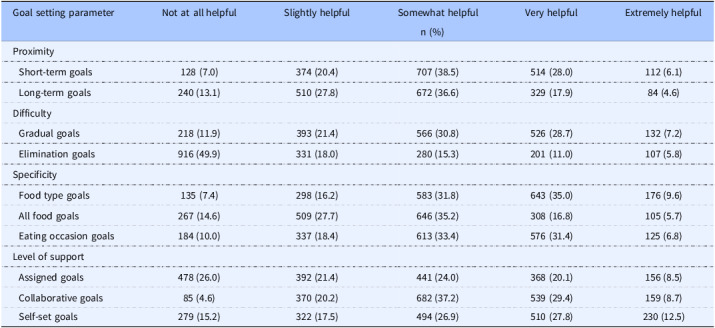 Figure 2
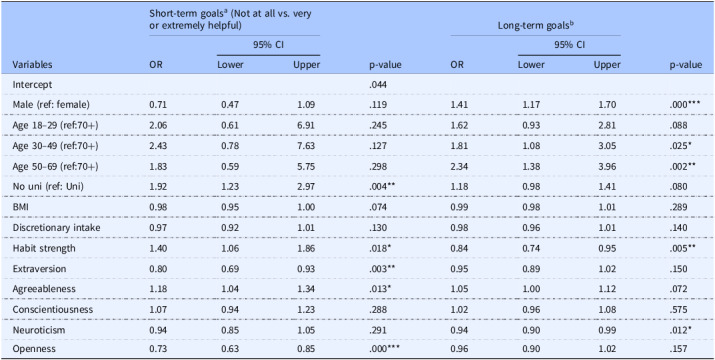 Figure 3
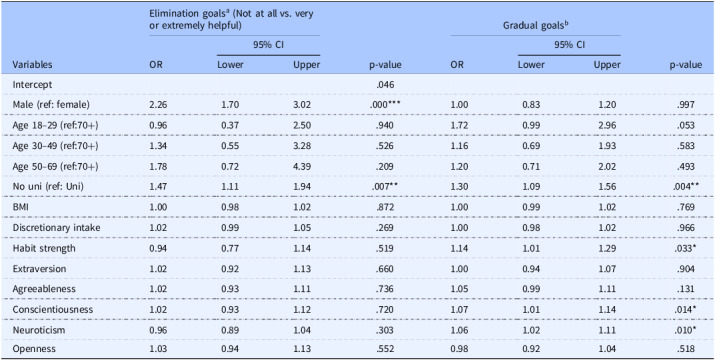 Figure 4
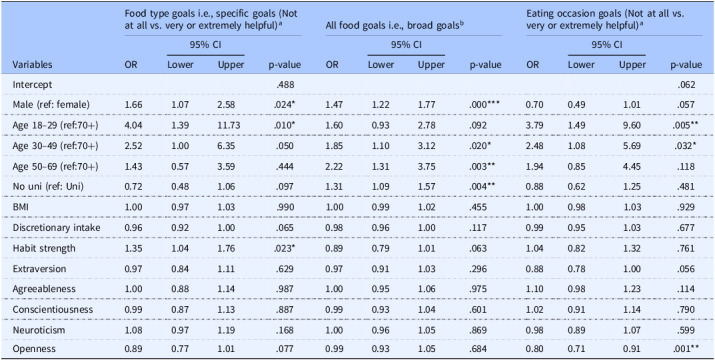 Figure 5
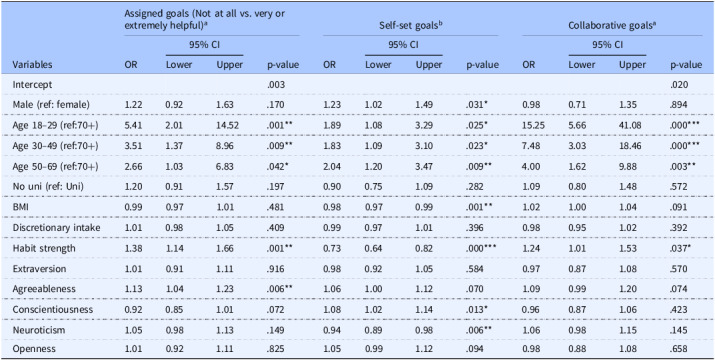 Figure 6
Peer Reviews
No public reviews on file for this paper yet. If you reviewed it on a platform where reviews are public (OpenReview, ICLR, NeurIPS, ICML), you can paste yours below so the community can read it here.
Videos
No videos yet. Explain this paper in a talk, walkthrough, or lecture? Add one.
Taxonomy
TopicsObesity, Physical Activity, Diet · Behavioral Health and Interventions · Eating Disorders and Behaviors