Proteomic Investigation of Human Dental Pulp to Identify Individuals Who Are Pregnant
Takumi Tsutaya, Kana Fujimoto, Yusuke Nakai, Naana Mori, Ran Iguchi, Akinori Moroi, Kunio Yoshizawa, Koichiro Ueki, Yayoi Kimura, Noboru Adachi

TL;DR
This study explored whether proteins in dental pulp could reveal if a person was pregnant, but found no evidence of pregnancy-specific proteins in postpartum individuals.
Contribution
The study is the first to investigate pregnancy-specific proteins in dental pulp for forensic identification.
Findings
Pregnancy-specific proteins were not detected in the dental pulp of postpartum individuals.
PCA showed some differences in proteomes from individuals postpartum ≤6 months, but no clear driving proteins were identified.
The study highlights the need for improved methods to explore dental pulp for forensic applications.
Abstract
Biomolecules preserved in dental pulp are increasingly being used to identify individuals in the context of forensics and archaeology. Despite the vast amount of research into host and pathogen DNA, the potential use of physiologically informative proteins preserved in dental pulp has rarely been studied. Here, we hypothesized that pregnancy‐specific proteins circulating in the blood could be identified from the dental pulp of postpartum individuals and this was investigated using eight human third molars extracted from four postpartum and three control individuals during clinical treatment. A total of 885 proteins were identified from these eight dental pulp samples using liquid chromatography coupled tandem mass spectrometry, whose gene ontology compositions were similar to previous studies. However, despite our hypothesis, pregnancy‐specific proteins were not identified from the…
Genes, proteins, chemicals, diseases, species, mutations and cell lines named across the full text — each resolved to its canonical identifier and authoritative record.
Click any figure to enlarge with its caption.
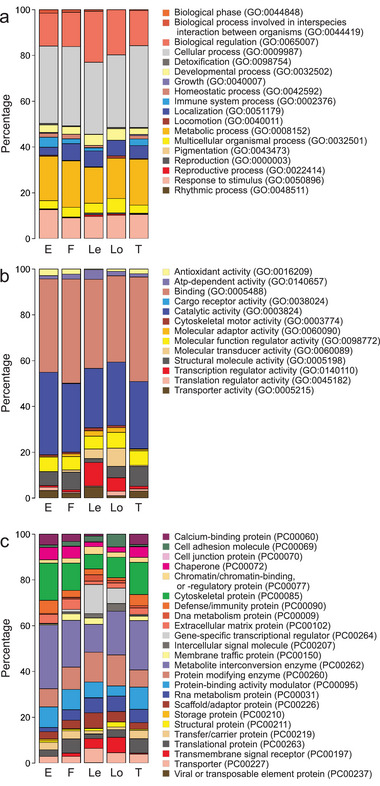 Figure 1
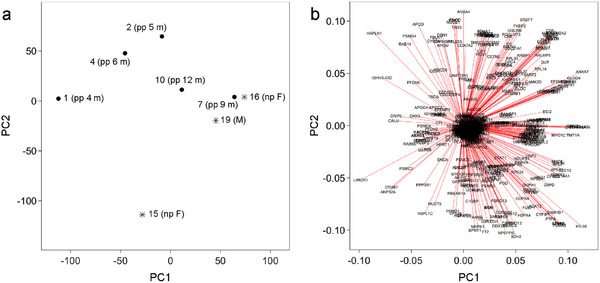 Figure 2
 Figure 3
Peer Reviews
No public reviews on file for this paper yet. If you reviewed it on a platform where reviews are public (OpenReview, ICLR, NeurIPS, ICML), you can paste yours below so the community can read it here.
Videos
No videos yet. Explain this paper in a talk, walkthrough, or lecture? Add one.
Taxonomy
TopicsForensic Anthropology and Bioarchaeology Studies · Oral microbiology and periodontitis research · Forensic and Genetic Research