Orbital venous lymphatic malformations: case series on minimally invasive treatment approach
Ankita Ranjan1, Apjit Kaur Chhabra, Manoj Kumar

TL;DR
This paper presents a minimally invasive treatment approach for orbital venous lymphatic malformations, focusing on complete excision after sclerosant injections.
Contribution
The paper introduces a minimal manipulative approach for complete excision of lymphangiomas after sclerosant injections.
Findings
Lymphangiomas can be completely excised using a minimally invasive approach.
Sclerosant injections followed by excision are effective in reducing lesion size and improving outcomes.
This method minimizes complications and improves ocular function.
Abstract
Orbital venous lymphatic malformations or lymphangiomas are choristomas of the orbit. Common in the pediatric population, the lesion is notorious for spreading into various anatomical spaces due to its infiltrative nature. Additionally, the vascular nature poses challenges to complete removal. Hemorrhages are not uncommon in the lesion, which may result in permanently compromised ocular function. Medical management involves injecting sclerosant into the cystic areas of the lesion, resulting in shrinkage and collapse, followed by total excision, which is the most suitable treatment option. The authors present a series of cases in which lymphangiomas have been completely excised using this minimal manipulative approach.
Genes, proteins, chemicals, diseases, species, mutations and cell lines named across the full text — each resolved to its canonical identifier and authoritative record.
Click any figure to enlarge with its caption.
 Figure 1
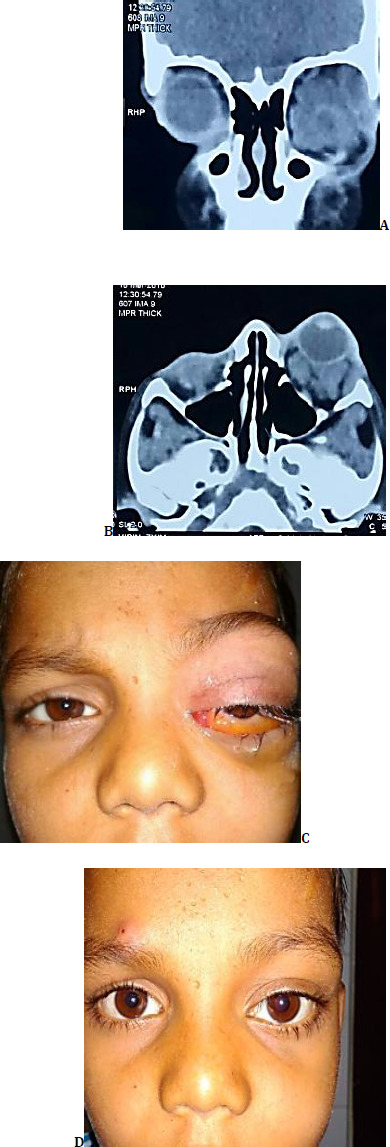 Figure 2
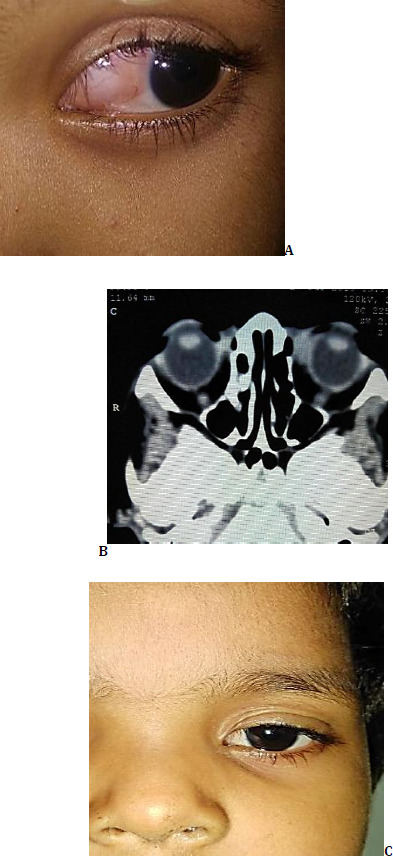 Figure 3
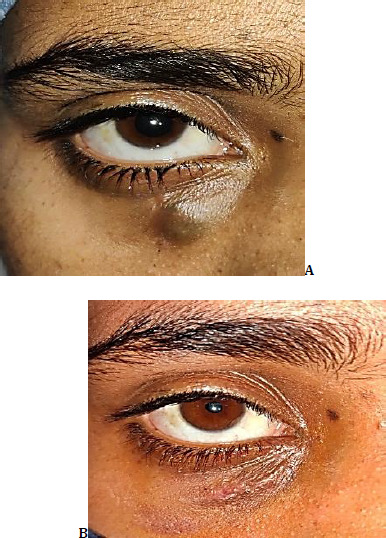 Figure 4
Peer Reviews
No public reviews on file for this paper yet. If you reviewed it on a platform where reviews are public (OpenReview, ICLR, NeurIPS, ICML), you can paste yours below so the community can read it here.
Videos
No videos yet. Explain this paper in a talk, walkthrough, or lecture? Add one.
Taxonomy
TopicsVascular Malformations and Hemangiomas · Tumors and Oncological Cases · Vascular Tumors and Angiosarcomas