Homozygosity for the Common IL23R R381Q Variant Associates with Increased Susceptibility to Chronic Mucocutaneous Candidiasis
Margaux Gerbaux, Frederik Staels, Mathijs Willemsen, Julika Neumann, Leoni Bücken, Lize Van Meerbeeck, Willem Roosens, Adrian Liston, Stéphanie Humblet‐Baron, Rik Schrijvers

TL;DR
This study shows that carrying two copies of a common IL23R gene variant increases the risk of chronic fungal infections due to weakened immune responses.
Contribution
The study identifies a specific genetic variant (p.R381Q IL-23R) associated with impaired immunity and susceptibility to chronic mucocutaneous candidiasis.
Findings
Homozygosity for the IL23R R381Q variant is linked to chronic mucocutaneous candidiasis.
The variant disrupts IL-23-mediated IL-17 immunity, impairing antifungal defenses.
Abstract
Chronic mucocutaneous candidiasis can be caused by an Inborn Error of Immunity, especially those affecting TH‐17 / IL‐17 responses. Through in‐depth immunophenotyping and functional assays, we reveal the association between homozygous carriage of the common p.R381Q IL‐23R genetic variant and increased candidiasis susceptibility, relying on disrupted IL‐23‐mediated IL‐17 immunity.
Genes, proteins, chemicals, diseases, species, mutations and cell lines named across the full text — each resolved to its canonical identifier and authoritative record.
Click any figure to enlarge with its caption.
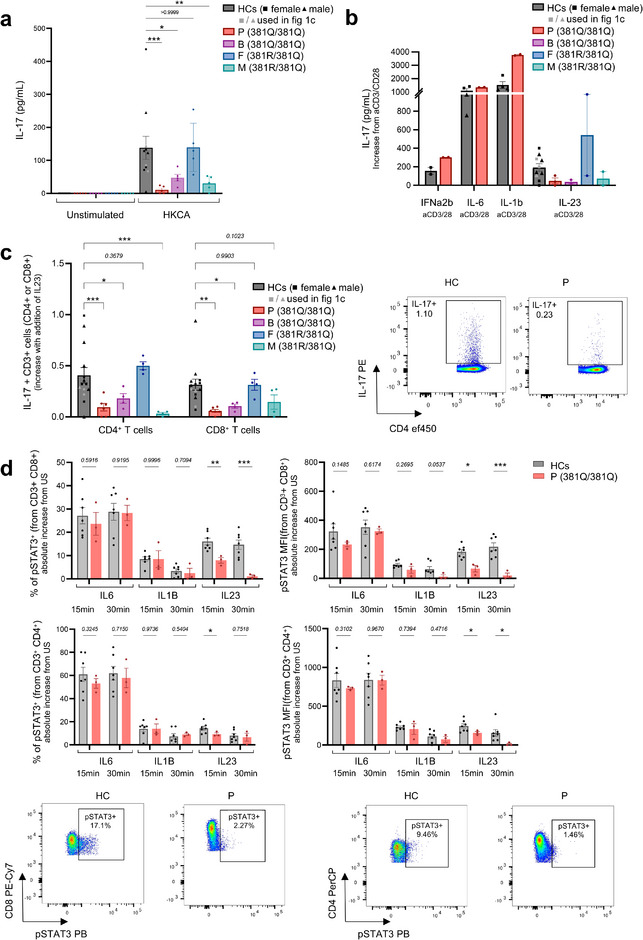 Figure 1
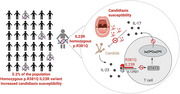 Figure 2
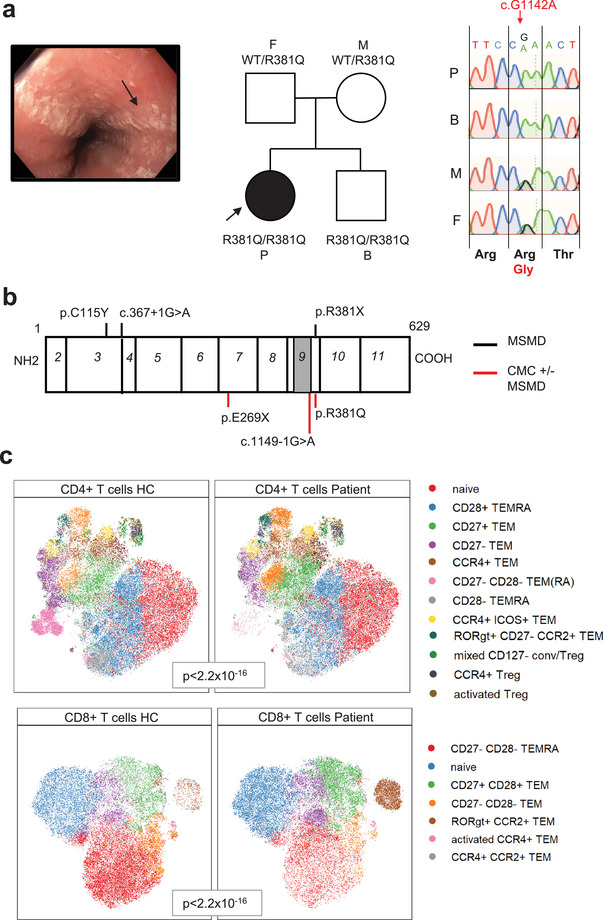 Figure 3
Peer Reviews
No public reviews on file for this paper yet. If you reviewed it on a platform where reviews are public (OpenReview, ICLR, NeurIPS, ICML), you can paste yours below so the community can read it here.
Videos
No videos yet. Explain this paper in a talk, walkthrough, or lecture? Add one.
Taxonomy
TopicsAntifungal resistance and susceptibility · Fungal Infections and Studies · Psoriasis: Treatment and Pathogenesis