3D Electron Microscopy Reveals the Structural Complexity of the Intravacuolar Membranous Network in Cyrilia lignieresi‐Infected Erythrocytes of the Fish Synbranchus marmoratus
Brenda Santarém Fachetti, Maíra Turiel‐Silva, Camila Wendt, Hilton Tulio Costi, Edilene Oliveira da Silva, Ana Paula Drummond Rodrigues, Wanderley de Souza, Kildare Miranda, José Antonio Picanço Diniz

TL;DR
3D electron microscopy reveals complex membrane structures inside fish red blood cells infected by a parasite, offering new insights into host-parasite interactions.
Contribution
The study provides the first detailed 3D visualization of the intravacuolar membranous network in Cyrilia lignieresi-infected erythrocytes.
Findings
The intravacuolar network includes vesicles, tubules, and interconnected membranes with diverse sizes and electron densities.
Three-dimensional reconstructions reveal spatial organization of the membranous structures within the parasitophorous vacuole.
The findings suggest dynamic functional roles of the membranous network in parasite-host interactions.
Abstract
This study employs advanced three‐dimensional electron microscopy techniques, including Transmission Electron Microscopy (TEM) tomography and freeze‐fracture imaging via scanning electron microscopy (SEM), to investigate the ultrastructural organization of Cyrilia lignieresi‐infected red blood cells (iRBCs) in the host fish Synbranchus marmoratus . The analysis focuses on the parasitophorous vacuole (PV) and reveals a highly complex intravacuolar membranous network (IVN) composed of vesicles, tubules, and interconnected membranous structures. These elements exhibit considerable diversity in size, morphology, and electron density, suggesting dynamic functional roles in the parasite–host interaction. The electron tomography and three‐dimensional reconstructions data provide unprecedented insights into the spatial organization and potential functional significance of these membranous…
Genes, proteins, chemicals, diseases, species, mutations and cell lines named across the full text — each resolved to its canonical identifier and authoritative record.
Click any figure to enlarge with its caption.
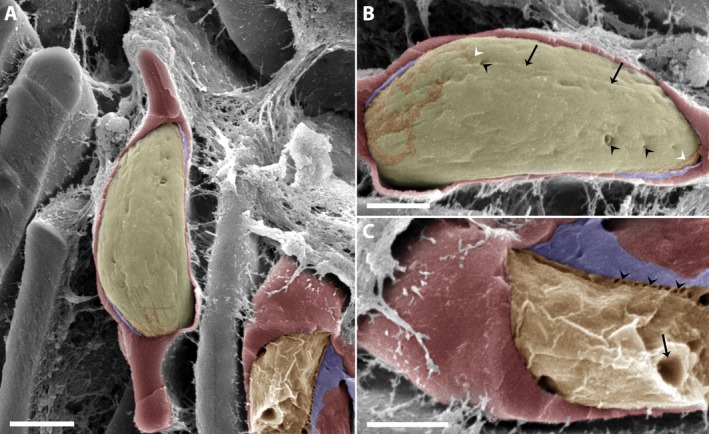 Figure 1
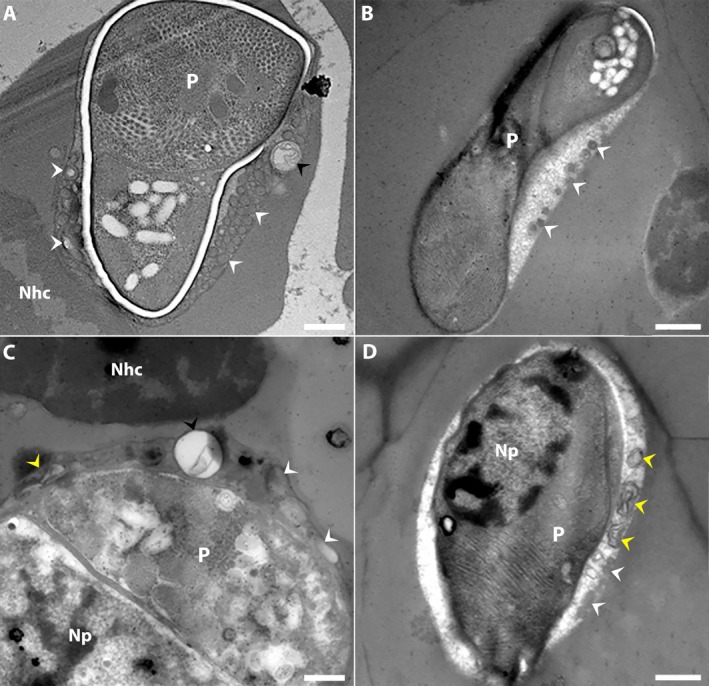 Figure 2
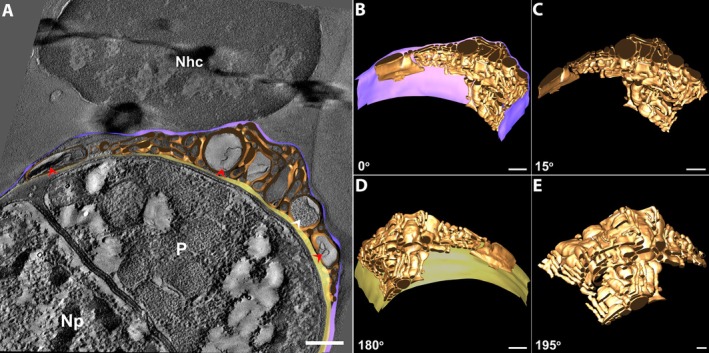 Figure 3
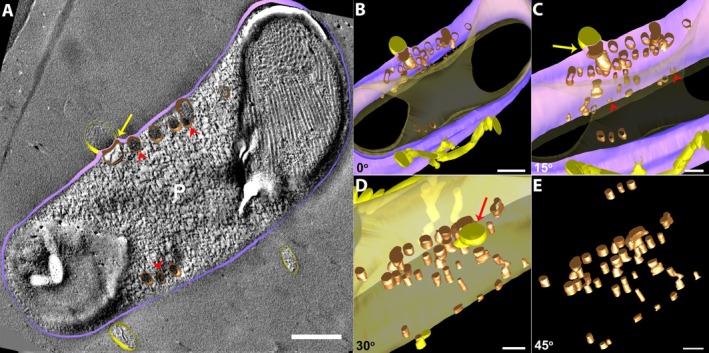 Figure 4
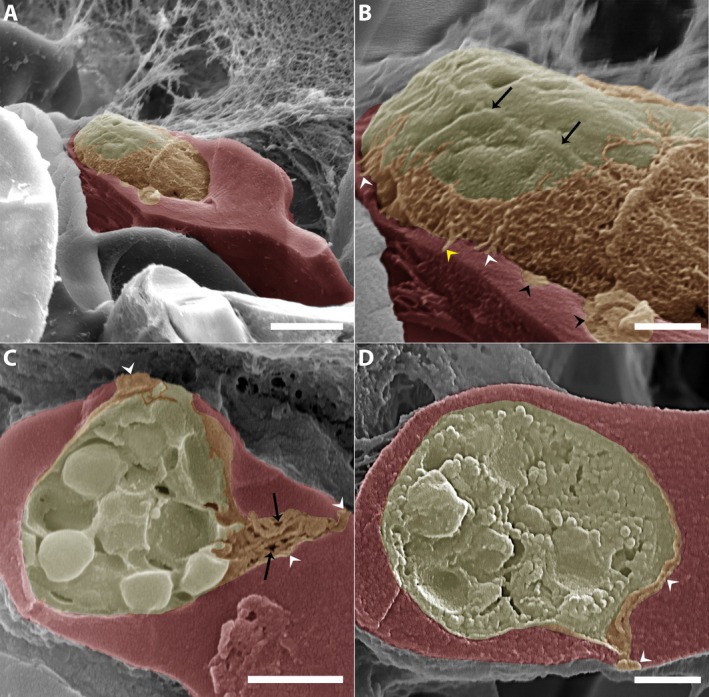 Figure 5
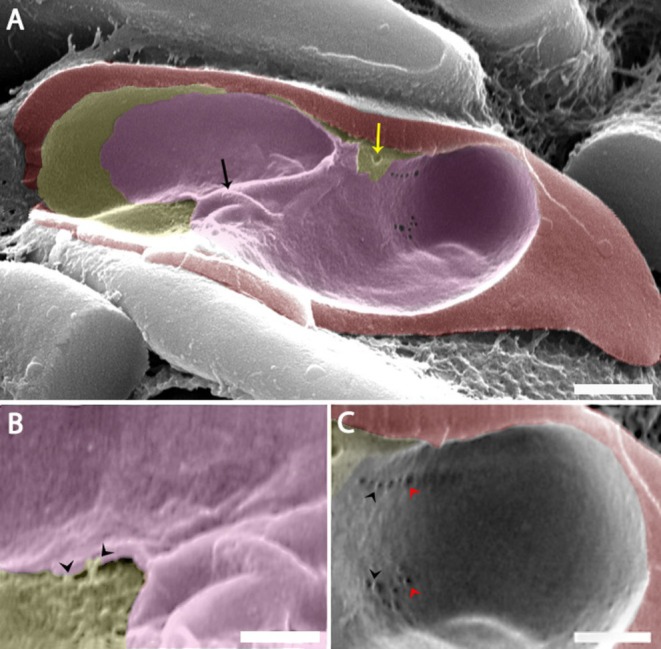 Figure 6
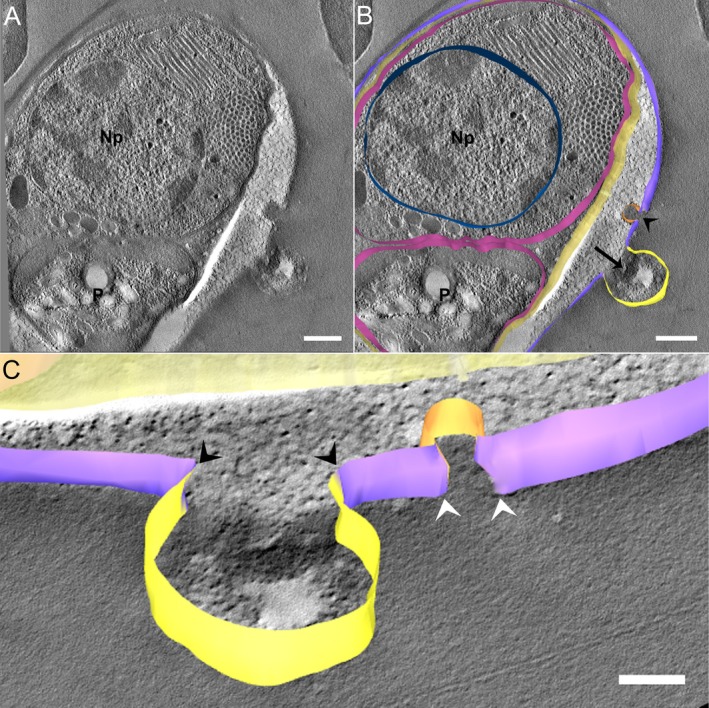 Figure 7
Peer Reviews
No public reviews on file for this paper yet. If you reviewed it on a platform where reviews are public (OpenReview, ICLR, NeurIPS, ICML), you can paste yours below so the community can read it here.
Videos
No videos yet. Explain this paper in a talk, walkthrough, or lecture? Add one.
Taxonomy
TopicsLipid Membrane Structure and Behavior · Aquaculture disease management and microbiota · Mosquito-borne diseases and control