Comparative Evaluation of Fracture Resistance in Implant-Supported Provisional Crowns Fabricated by Computer-Aided Design and Manufacturing, Three-Dimensional Printing, and Conventional Self-Curing
Abhinav Shekhar, Akshim Rana, Shitij Srivastava, Love K Bhatia, Anshuman Chaturvedi, Abhishek Singh

TL;DR
This study compares how different fabrication methods affect the durability of temporary dental crowns, finding that 3D printing produces the strongest ones.
Contribution
The study provides a direct comparison of fracture resistance in implant-supported provisional crowns made using CAD-CAM, 3D printing, and conventional methods.
Findings
3D-printed crowns showed the highest fracture resistance compared to CAD-CAM and conventional methods.
Conventional self-curing crowns had the lowest fracture resistance and may only be suitable for low-load situations.
CAD-CAM milled crowns had intermediate strength, acceptable for clinical use.
Abstract
Aim and objectives This study aimed to assess the influence of three fabrication techniques, computer-aided design (CAD) and computer-aided manufacturing (CAM) milling, three-dimensional (3D) printing, and conventional self-curing, on the fracture resistance of implant-supported polymethyl methacrylate (PMMA) resin-based provisional crowns. Methods An in vitro comparative study was conducted using 45 implant analogs with straight titanium abutments, equally distributed into three groups. Each analog was embedded vertically in custom acrylic resin blocks (20 × 20 × 20 mm). Abutments were torqued to 25 Ncm, and screw access channels were sealed with Teflon pellets and composite resin. Provisional crowns were fabricated using CAD-CAM milling, 3D printing, and conventional self-curing methods. All crowns were cemented and subjected to axial loading in a universal testing machine until…
Genes, proteins, chemicals, diseases, species, mutations and cell lines named across the full text — each resolved to its canonical identifier and authoritative record.
Click any figure to enlarge with its caption.
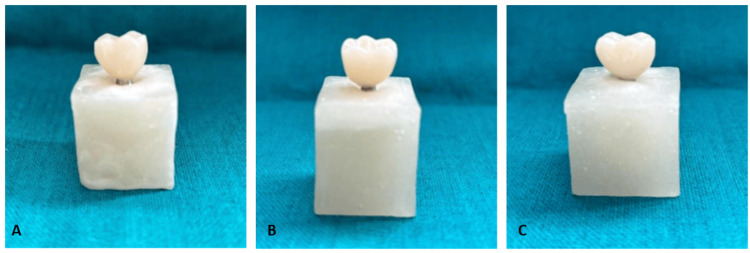 Figure 1
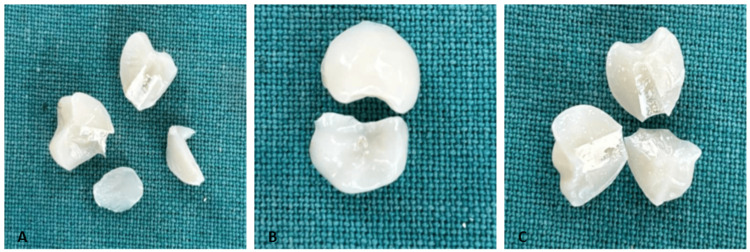 Figure 2
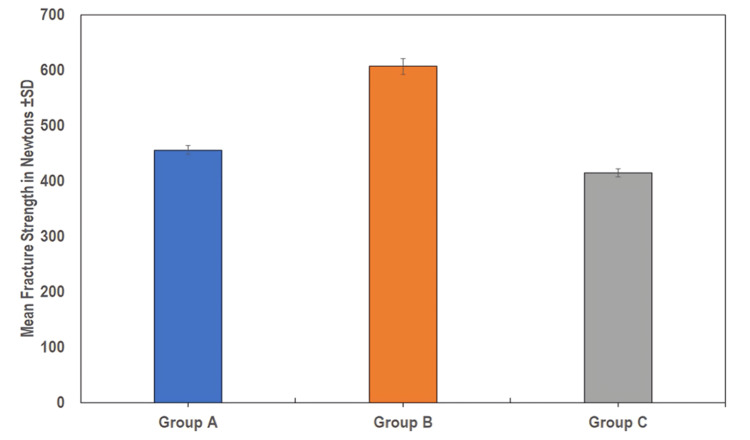 Figure 3
Peer Reviews
No public reviews on file for this paper yet. If you reviewed it on a platform where reviews are public (OpenReview, ICLR, NeurIPS, ICML), you can paste yours below so the community can read it here.
Videos
No videos yet. Explain this paper in a talk, walkthrough, or lecture? Add one.
Taxonomy
TopicsDental materials and restorations · Additive Manufacturing and 3D Printing Technologies · Dental Implant Techniques and Outcomes