A population‐based analyses of the evolving management of cN1M0 prostate cancer in the PSMA‐PET era
Jennifer Ward, Kevin Armstrong, Therese Min‐Jung Kang, Jodie Tham, Yuan‐Hong Lin, Marcus Cheng, Jeremy Grummet, Nathan Lawrentschuk, Marlon Perera, Shomik Sengupta, David Chang, Michael Ng, Jonathan Bensley, Michelle Steeper, Krupa Krishnaprasad, Maggie Johnson, Nikolajs Zeps

TL;DR
This study examines how the treatment of a specific type of prostate cancer has changed over time, especially with the use of a new imaging technique called PSMA-PET.
Contribution
This is the largest population-based study on cN1M0 prostate cancer management in the PSMA-PET era.
Findings
Local therapy use for cN1M0PC increased from 52% in 2008–2012 to 72% in 2018–2022.
PSMA-PET staging and more recent diagnosis were linked to higher local therapy use.
Age, PSA, and tumor grade were associated with lower chances of radical prostatectomy.
Abstract
To evaluate the patterns of management of clinical node‐positive non‐metastatic prostate cancer (cN1M0PC) at a population‐based level over time, and to identify factors associated with the different management approaches. The study included men diagnosed with cN1M0PC in Prostate Cancer Outcome Registry Victoria (PCOR‐Vic) in Australia between 2008 and 2022. The primary outcome was the use of local therapy (radical prostatectomy or prostate+/− pelvic radiation therapy) within the first 12 months of diagnosis. Multivariable logistic regressions were used to evaluate factors associated with local therapy use among all men and the likelihood of having a radical prostatectomy among men who had local therapy. Of the 819 men included in this study, 52% had PSMA‐PET staging, and this increased over time to 74% in 2018–2022. There were 530 (65%) who had local therapy (169 radical…
Genes, proteins, chemicals, diseases, species, mutations and cell lines named across the full text — each resolved to its canonical identifier and authoritative record.
Click any figure to enlarge with its caption.
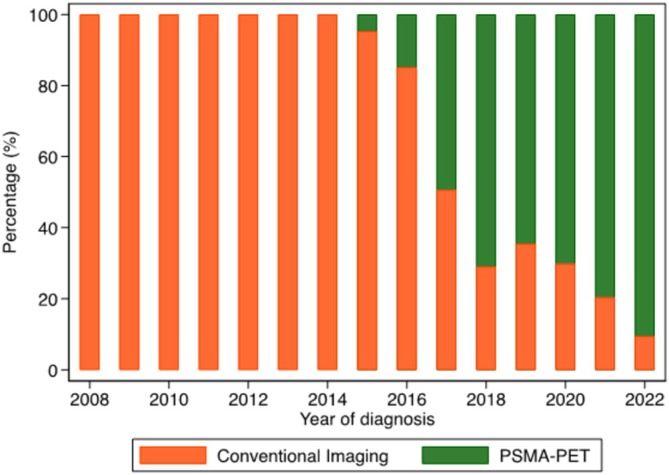 Figure 1
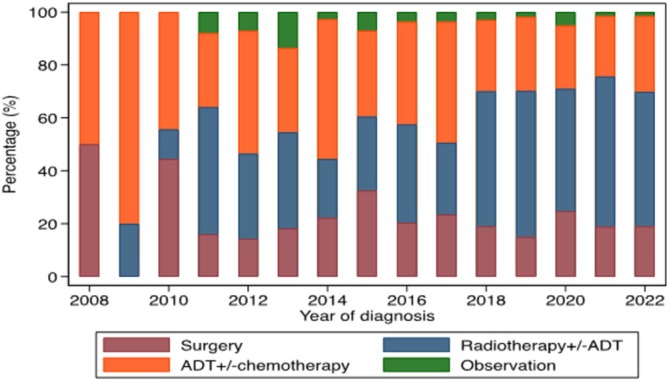 Figure 2
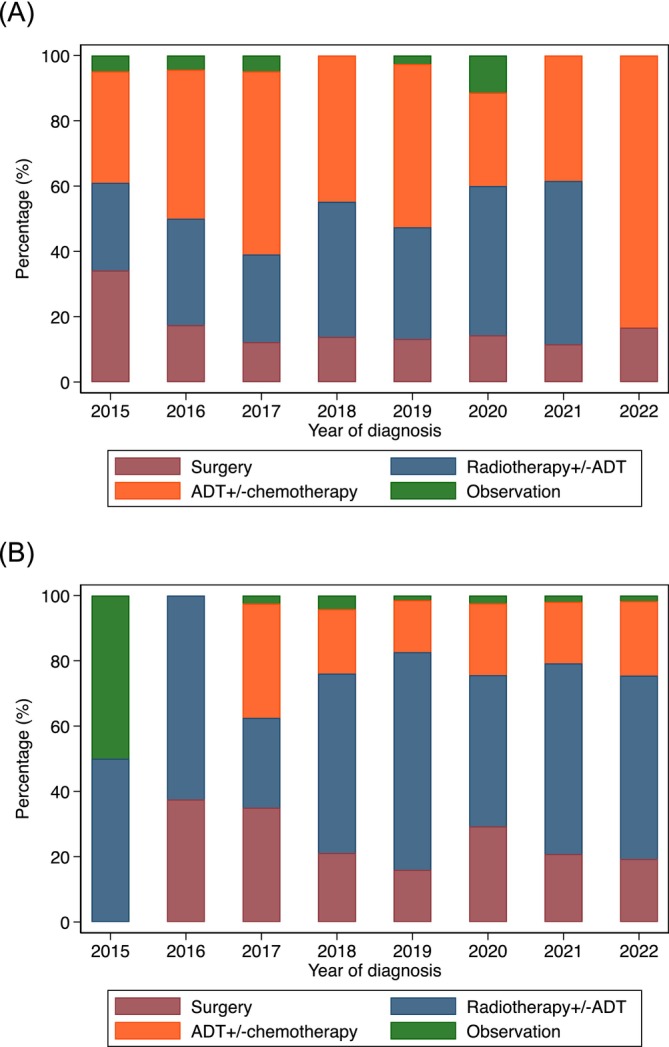 Figure 3
Peer Reviews
No public reviews on file for this paper yet. If you reviewed it on a platform where reviews are public (OpenReview, ICLR, NeurIPS, ICML), you can paste yours below so the community can read it here.
Videos
No videos yet. Explain this paper in a talk, walkthrough, or lecture? Add one.
Taxonomy
TopicsProstate Cancer Treatment and Research · Prostate Cancer Diagnosis and Treatment · Cancer, Lipids, and Metabolism