Exploring Social Cognition Sub‐Domains and Predictors in Multiple Sclerosis: A Cross‐Sectional Study
Ozlem Totuk, Merve Turkkol, Ebru Hatun Uludaşdemir, Hasan Can Güdek, Guldeniz Cetin Erci, Ipek Gungor Dogan, Damla Cetinkaya Tezer, Sevki Sahin, Serkan Demir

TL;DR
This study explores how multiple sclerosis affects social cognition, finding that lower cognition and depression are key predictors of social cognition impairments.
Contribution
The study identifies distinct social cognition sub-domains and their predictors in MS patients, highlighting the independence of these impairments from disease duration and gender.
Findings
Progressive MS patients showed significantly lower social cognition performance across all sub-domains compared to healthy controls.
Lower global cognition (MoCA scores), higher depression (BDI scores), and lower educational attainment were significant predictors of impaired social cognition.
SC deficits were observed even in cognitively preserved individuals, indicating SC impairments are relatively independent of general cognitive decline.
Abstract
Social cognition (SC) is increasingly recognized as a key cognitive domain affected in multiple sclerosis (MS), yet its sub‐domains and clinical correlates remain underexplored. This study aimed to assess different SC sub‐domains and identify their cognitive, emotional, and demographic predictors in people with MS (pwMS). This cross‐sectional study included 93 pwMS and 34 HCs. Assessments included the Reading the Mind in the Eyes Test (RMET) for emotion recognition, the Trail Making Test (TMT) for executive function, the Tromso Social Intelligence Scale (TSIS) for nonverbal understanding, the Implied Meaning Test (IMT) for implicit understanding, the Social‐Emotional Competence Scale for adaptability, the Barratt Impulsiveness Scale for impulsivity, the Stroop Test for inhibition, the Beck Depression Inventory (BDI) for depression, the Montreal Cognitive Assessment (MoCA) for…
Genes, proteins, chemicals, diseases, species, mutations and cell lines named across the full text — each resolved to its canonical identifier and authoritative record.
Click any figure to enlarge with its caption.
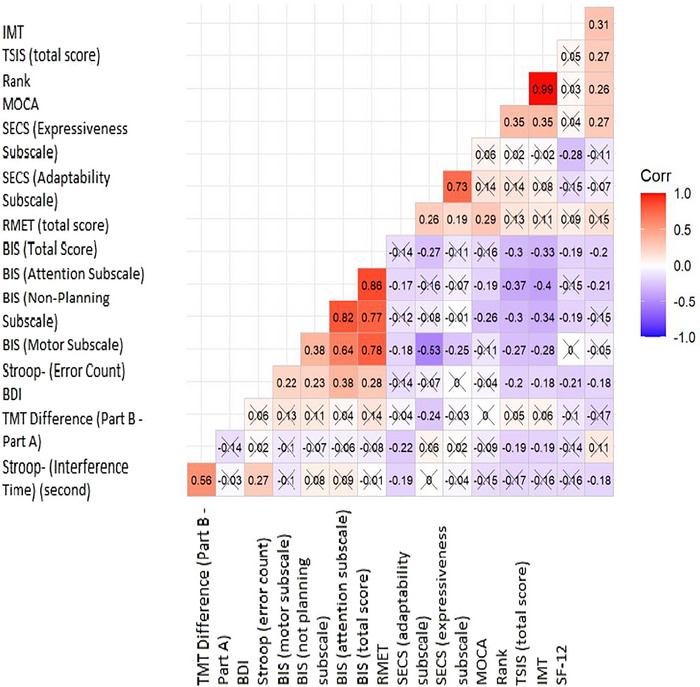 Figure 1
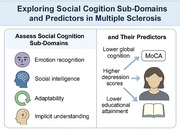 Figure 2
Peer Reviews
No public reviews on file for this paper yet. If you reviewed it on a platform where reviews are public (OpenReview, ICLR, NeurIPS, ICML), you can paste yours below so the community can read it here.
Videos
No videos yet. Explain this paper in a talk, walkthrough, or lecture? Add one.
Taxonomy
TopicsMultiple Sclerosis Research Studies