The Mitochondrial Genome of the Imperiled Goliath Grouper Epinephelus itajara: Selective Pressures in Protein Coding Genes, Secondary Structure of tRNA Genes, and Phylogenetic Placement
Kyla Padgett, J. Antonio Baeza

TL;DR
This study sequenced the mitochondrial genome of the endangered Goliath Grouper, revealing its genetic structure and evolutionary relationships to aid conservation efforts.
Contribution
The complete mitochondrial genome of Epinephelus itajara is reported, including insights into gene structure, selection pressures, and phylogenetic placement.
Findings
The mitochondrial genome of Epinephelus itajara is 16,561 bp with conserved gene order and A+T-rich codon usage.
All protein-coding genes are under purifying selection, with cox1 and nad4 showing the strongest and weakest selection, respectively.
Phylogenetic analysis suggests a sister relationship between Epinephelus itajara and Epinephelus lanceolatus.
Abstract
The goliath grouper Epinephelus itajara (Perciformes: Epinephelidae) is a large, critically endangered fish distributed across coastal habitats in the western Atlantic Ocean, from Florida to southern Brazil, and with additional populations in the eastern Pacific basin. Conservation concerns for this species stem from historical overfishing, habitat loss, and life‐history traits such as slow growth and late sexual maturity. In this study, to aid conservation efforts, we assembled and characterized the complete mitochondrial genome of E. itajara . The mitochondrial genome of Epinephelus itajara is 16,561 bp long and comprises 13 protein‐coding genes (PCGs), two ribosomal RNA genes (12S and 16S rRNA), 22 transfer RNA (tRNA) genes, and an 856 bp control region. Gene order is identical to that reported for other congeneric species. The overall A + T content is 56%, and codon usage shows…
Genes, proteins, chemicals, diseases, species, mutations and cell lines named across the full text — each resolved to its canonical identifier and authoritative record.
Click any figure to enlarge with its caption.
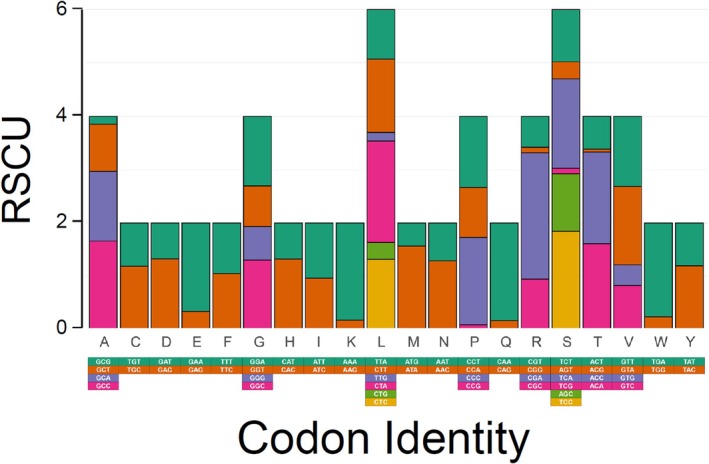 Figure 1
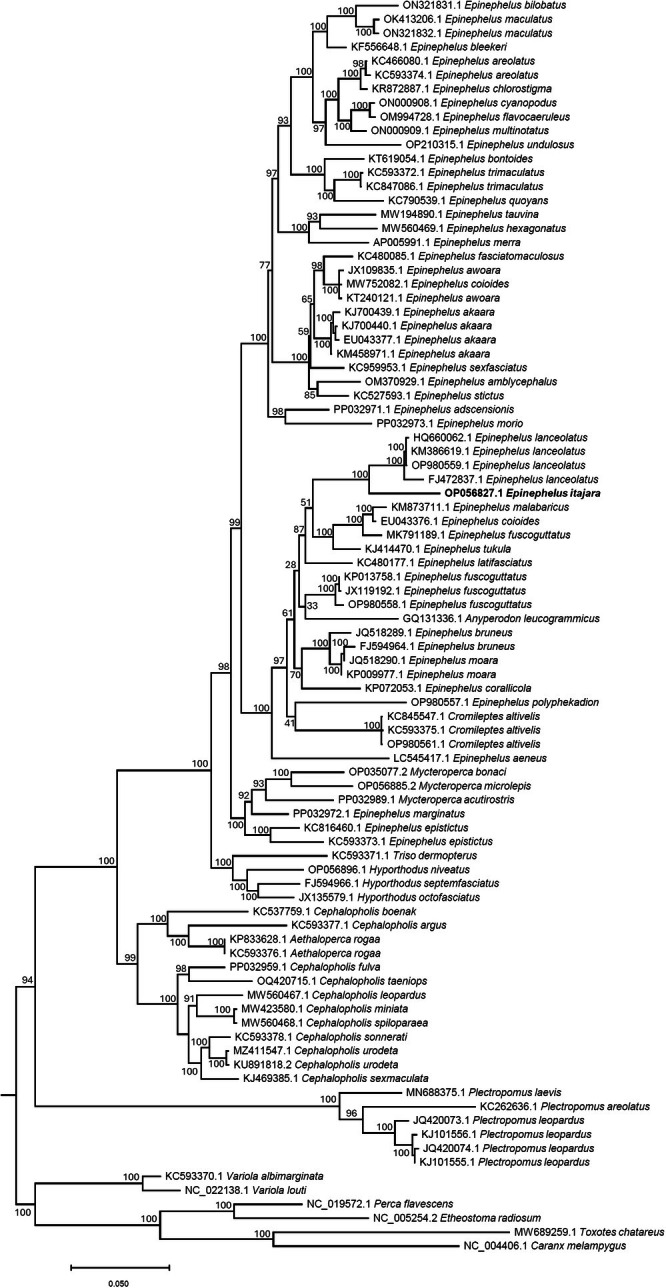 Figure 2
 Figure 3
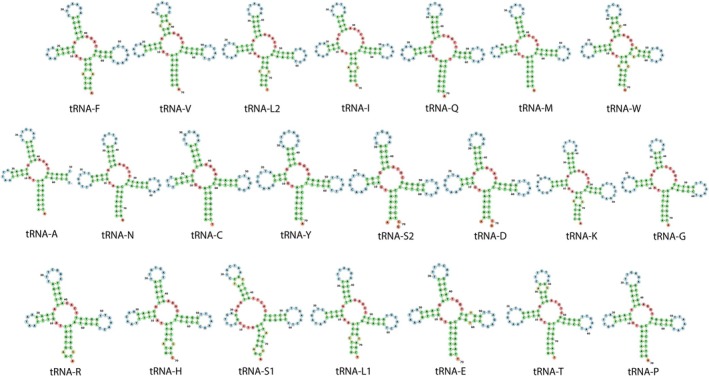 Figure 4
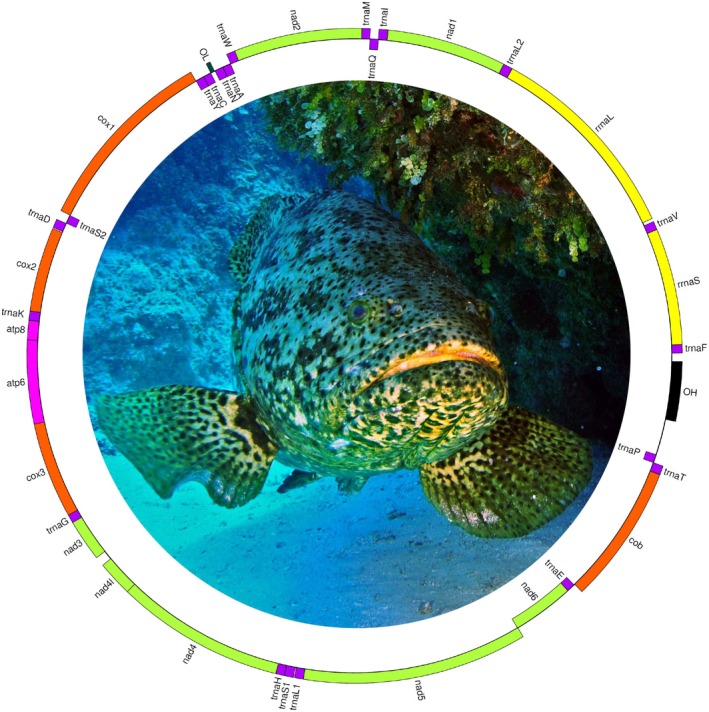 Figure 5
 Figure 6
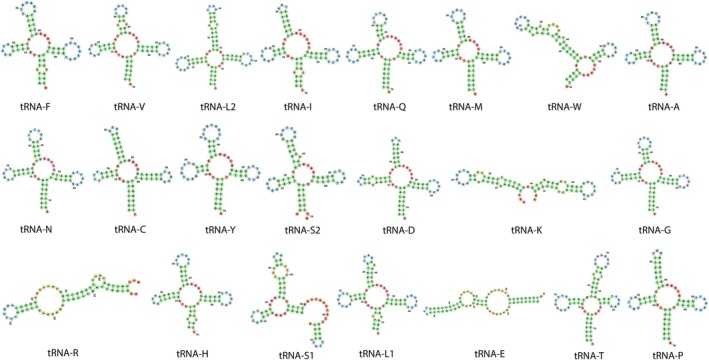 Figure 7
Peer Reviews
No public reviews on file for this paper yet. If you reviewed it on a platform where reviews are public (OpenReview, ICLR, NeurIPS, ICML), you can paste yours below so the community can read it here.
Videos
No videos yet. Explain this paper in a talk, walkthrough, or lecture? Add one.
Taxonomy
TopicsGenomics and Phylogenetic Studies · Fish biology, ecology, and behavior · Physiological and biochemical adaptations