The clinical application of subcutaneous thoracic ratio and capillary leakage index on the occurrence of capillary leak syndrome in neonates with sepsis
Luying Cao, Yuhong Song, Li Zhang, Xiaolu Liu, Yiying Yin, Zhenrong Yu, Yu Zhang, Kun Feng, Weihong Yue, Ya Hu, Ziyu Hua, Hong Wei

TL;DR
This study shows that two clinical measures, S/T ratio and CLI, can help predict capillary leak syndrome in sepsis-affected newborns, but they don't predict survival outcomes.
Contribution
The study identifies S/T ratio and CLI as independent predictors of capillary leak syndrome in neonatal sepsis.
Findings
S/T and CLI are independent risk factors for capillary leak syndrome in neonatal sepsis.
Combining S/T and CLI improves prediction accuracy for capillary leak syndrome.
Neither S/T nor CLI are associated with survival outcomes in neonatal sepsis.
Abstract
To evaluate the predictive and prognostic value of the subcutaneous-thoracic ratio (S/T) and capillary leakage index (CLI) for capillary leak syndrome (CLS) in neonatal sepsis. A cohort of 196 neonates with sepsis, admitted to a tertiary children's hospital in southwestern China between January 2019 and March 2021, was included in the study. The neonates were divided into two groups: the CLS group (n = 55) and the non-CLS group (n = 55). Multivariate logistic regression and receiver operating characteristic (ROC) curve analysis were performed to identify key predictors of CLS. Both S/T and CLI were found to be independent risk factors for CLS in neonatal sepsis (P < 0.05). The median S/T values for the CLS group and non-CLS group were 9.0% and 7.1%, respectively, while the median CLI values were 8.5 and 3.2. The optimal thresholds for predicting CLS were identified as 8.1% for S/T…
Genes, proteins, chemicals, diseases, species, mutations and cell lines named across the full text — each resolved to its canonical identifier and authoritative record.
Click any figure to enlarge with its caption.
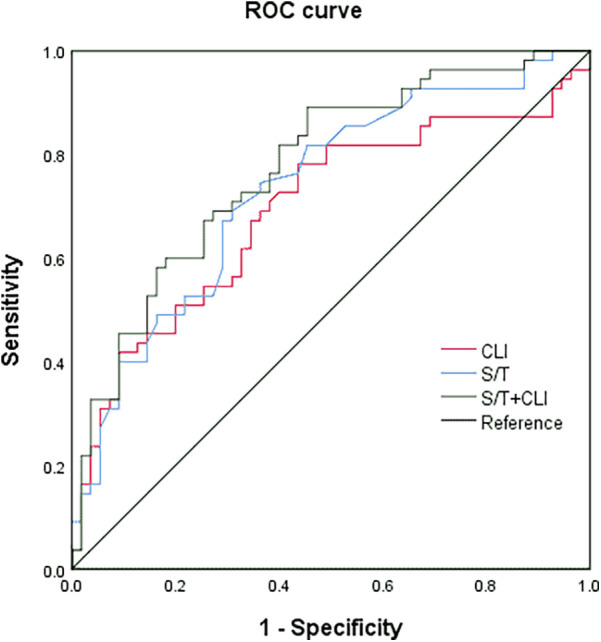 Figure 1
Peer Reviews
No public reviews on file for this paper yet. If you reviewed it on a platform where reviews are public (OpenReview, ICLR, NeurIPS, ICML), you can paste yours below so the community can read it here.
Videos
No videos yet. Explain this paper in a talk, walkthrough, or lecture? Add one.
Taxonomy
TopicsSepsis Diagnosis and Treatment · Muscle and Compartmental Disorders · Dialysis and Renal Disease Management