The associations among genetic features, late gadolinium enhancement and prognosis in hypertrophic cardiomyopathy
Wenhua Su, Hao Wu, Chen Chen, Hongjiang Zhang, Qiuyue Yu, Liwen Liang, Qian Huo, Hongbo Lou, Bingjun Che, Yan Zhao, Juhua Dan, Hong Zhang

TL;DR
This study shows that combining genetic testing with heart imaging improves predicting outcomes in patients with hypertrophic cardiomyopathy.
Contribution
The study demonstrates that combining genetic features and late gadolinium enhancement improves risk stratification in HCM patients with preserved LVEF.
Findings
Patients with both genetic variants and late gadolinium enhancement had the highest risk of adverse events.
Genetic and imaging markers independently predicted poor outcomes even after adjusting for other factors.
Risk stratification was significantly improved by combining genotype and LGE data in HCM patients.
Abstract
To assess the combined prognostic value of genotype and late gadolinium enhancement (LGE) in hypertrophic cardiomyopathy (HCM) patients, including those with preserved left ventricular ejection fraction (LVEF). In 135 HCM patients (age 52.43 ± 11.35 years, 79.26% male), whole-exome sequencing, echocardiography, and cardiac magnetic resonance (CMR) were performed. Major adverse cardiovascular and cerebrovascular events (MACCEs, e.g., cardiac death, progressive heart failure, sustained ventricular tachycardia/ventricular fibrillation, ICDs implantation, stroke, syncope, and atrial fibrillation) were analyzed over a median 15-month follow-up (IQR 9–36 months). Pathogenic/likely pathogenic variants (G+) were identified in 50 (37%) patients, and LGE (L+) in 54 (40%). L+ patients exhibited worse clinical profiles: higher NYHA III–IV class (37% vs. 11%, P < 0.001), increased heart failure…
Genes, proteins, chemicals, diseases, species, mutations and cell lines named across the full text — each resolved to its canonical identifier and authoritative record.
Click any figure to enlarge with its caption.
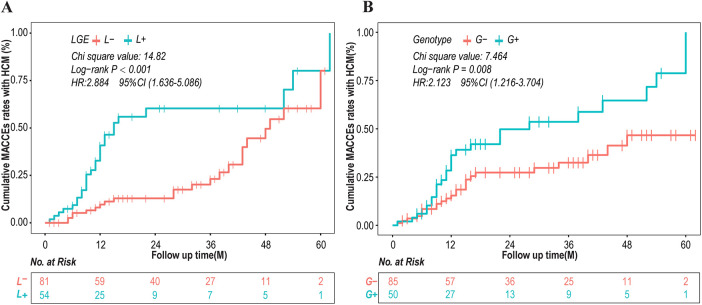 Figure 1
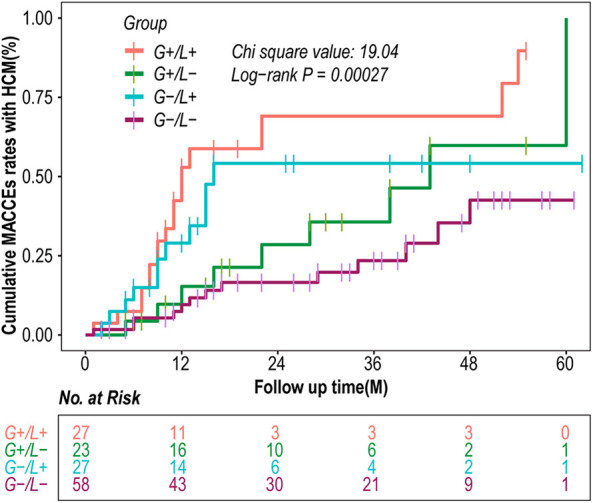 Figure 2
Peer Reviews
No public reviews on file for this paper yet. If you reviewed it on a platform where reviews are public (OpenReview, ICLR, NeurIPS, ICML), you can paste yours below so the community can read it here.
Videos
No videos yet. Explain this paper in a talk, walkthrough, or lecture? Add one.
Taxonomy
TopicsCardiomyopathy and Myosin Studies · Cardiovascular Function and Risk Factors · Cardiovascular Effects of Exercise