Clinically actionable pharmacogenomic landscape of antidepressants and antipsychotics in Qatar: a population-based cohort study
Dinesh Velayutham, Kholoud Bastaki, Areeba Irfan, Mohammed Abuhaliqa, Aisha AlMulla, Suhaila Ghuloum, Muhammad Waqar Azeem, Munir Pirmohamed, Puthen Veettil Jithesh

TL;DR
This study examines how genetic differences in Qataris affect their response to antidepressants and antipsychotics, highlighting the need for personalized treatment approaches.
Contribution
The study provides population-specific insights into actionable pharmacogenomic variants in Qataris for antidepressants and antipsychotics.
Findings
Actionable metabolizer phenotypes for antidepressants range from 1% to 58% in Qataris.
For antipsychotics, actionable phenotypes range from 0.1% to 33% based on CYP3A4 and CYP2D6.
Qataris may require alternative antidepressants, while other populations may only need dosage adjustments.
Abstract
Consortia like the Clinical Pharmacogenetic Implementation Consortium (CPIC) and the Dutch Pharmacogenetic Working Group (DPWG) provide clinical guidelines but pharmacogenomics implementation depends on population prevalence of actionable genetic variants and response phenotypes. We analyzed the distribution of actionable genetic variants and clinical recommendations in 14,354 adult Qataris, focusing only genes with guidelines (CYP2C19, CYP2D6, CYP2B6 and CYP3A4). Haplotypes and diplotypes were generated from 490 alleles using whole genome data and metabolizer phenotypes were predicted based on current knowledge. Qatari population predicted to have actionable metabolizer phenotypes of CYP2C19, CYP2B6 and CYP2D6 impacting response to antidepressants were in the range of 1%–58% and for antipsychotics 0.1%–33% based on CYP3A4 and CYP2D6. Fine-grained analysis based on clinical guidelines…
Genes, proteins, chemicals, diseases, species, mutations and cell lines named across the full text — each resolved to its canonical identifier and authoritative record.
Click any figure to enlarge with its caption.
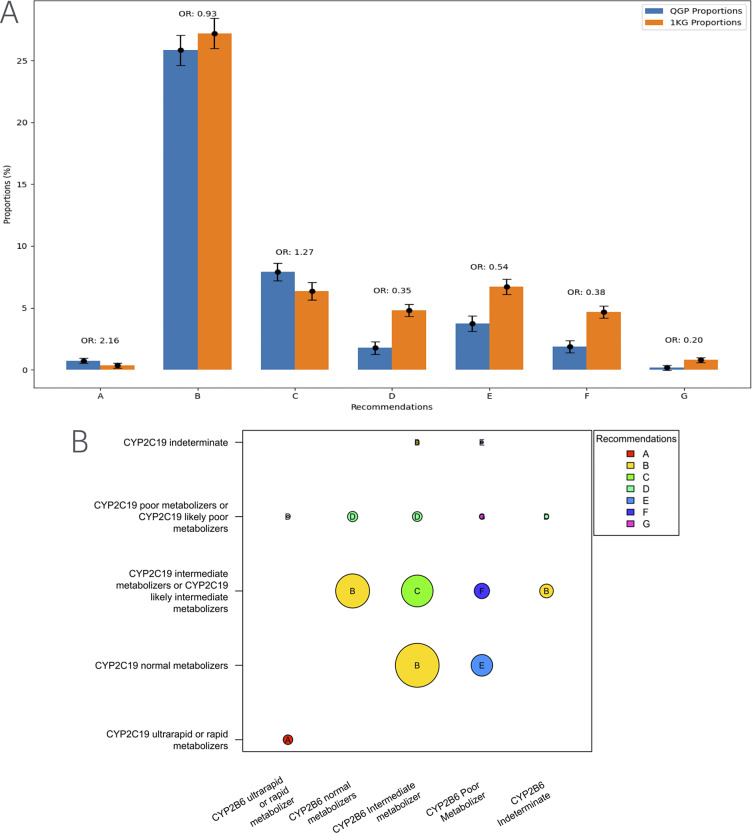 Figure 1
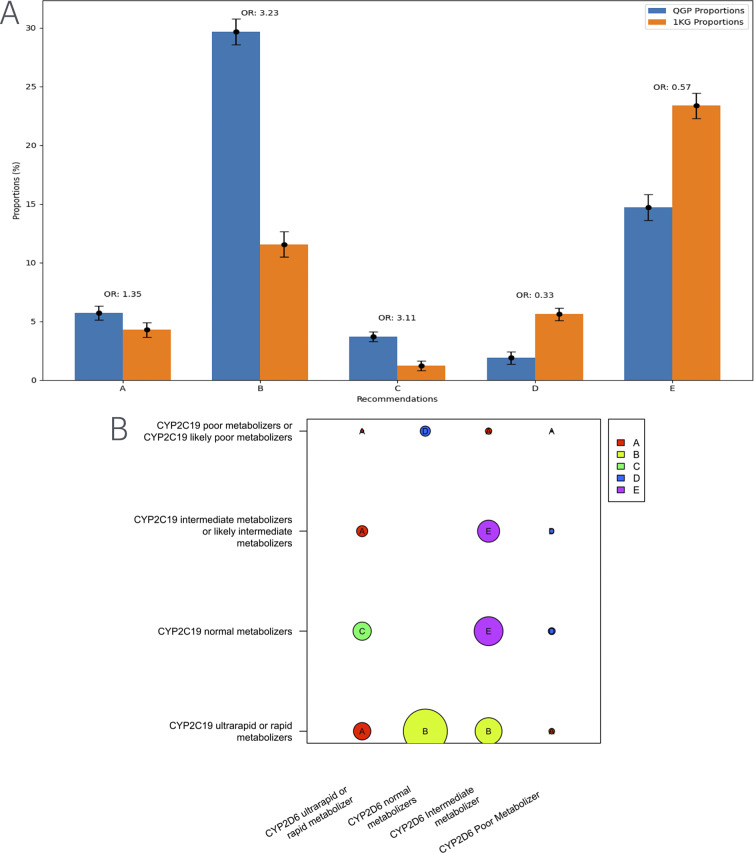 Figure 2
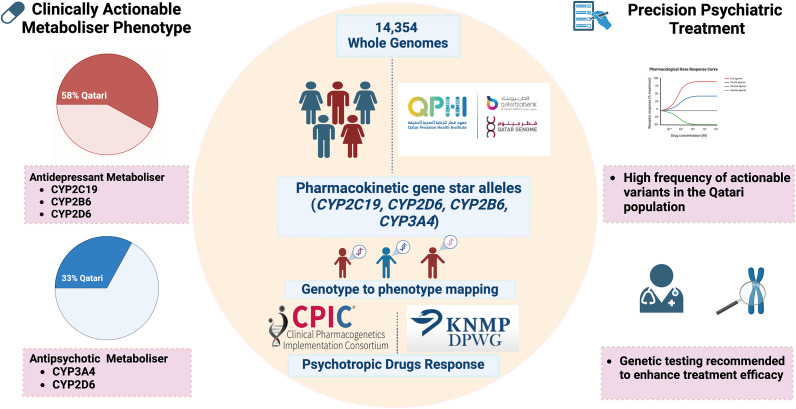 Figure 3
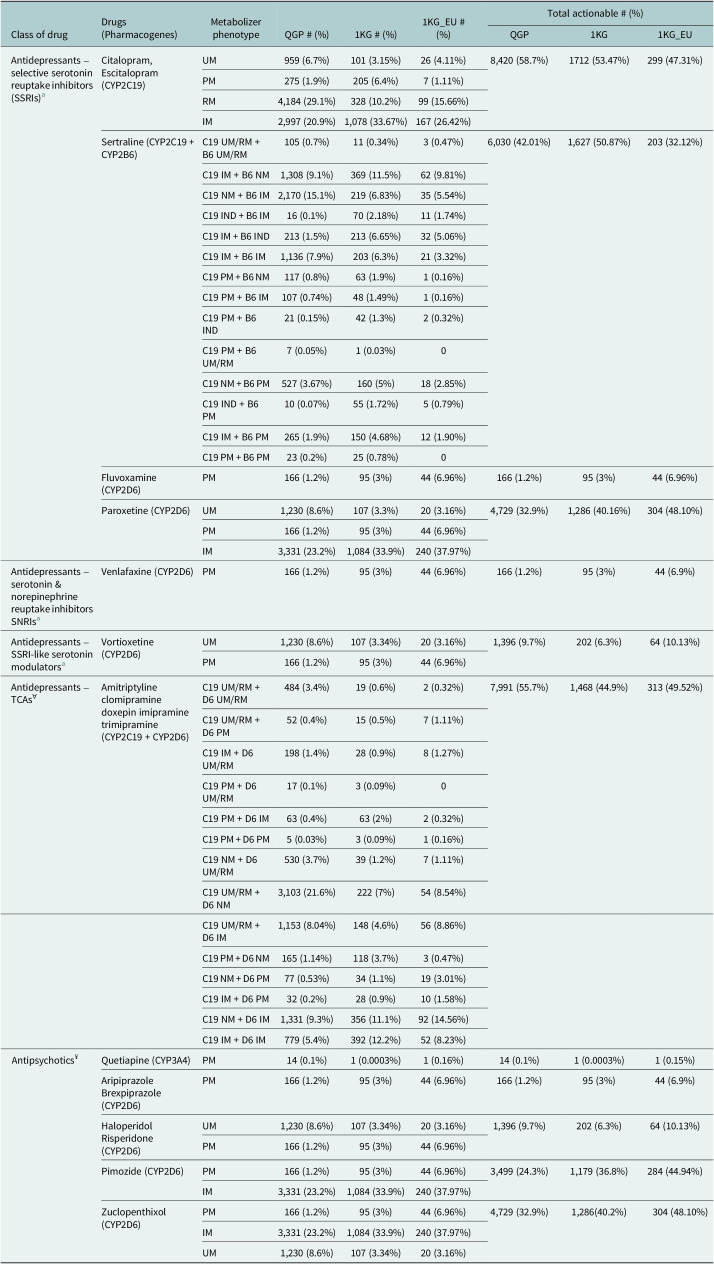 Figure 4
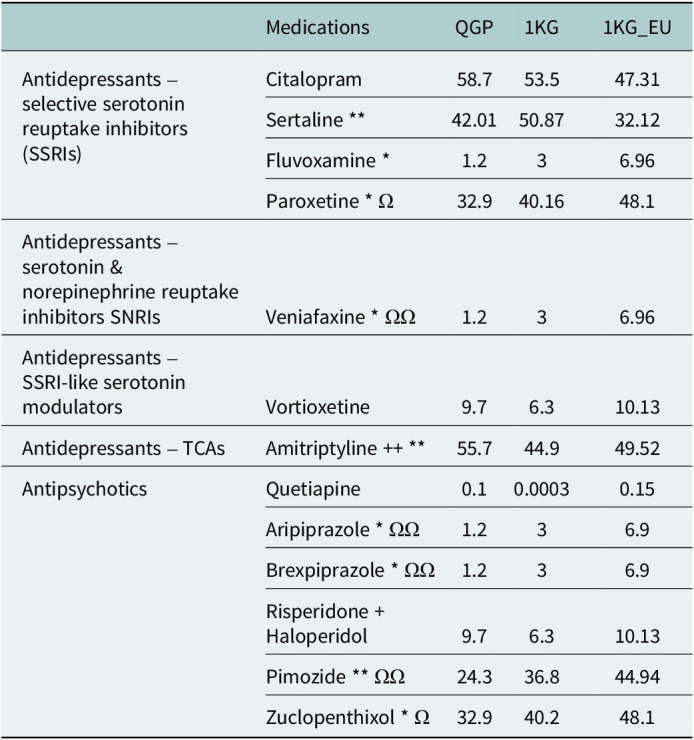 Figure 5
Peer Reviews
No public reviews on file for this paper yet. If you reviewed it on a platform where reviews are public (OpenReview, ICLR, NeurIPS, ICML), you can paste yours below so the community can read it here.
Videos
No videos yet. Explain this paper in a talk, walkthrough, or lecture? Add one.
Taxonomy
TopicsPharmacogenetics and Drug Metabolism