Complete Androgen Insensitivity Syndrome in a Phenotypic Female: The Role of Frozen Section in Assisting Diagnosis
Vipul R Bhatt, Reena Tomar, Nikita Sharma, Deepti Goswami, Nita Khurana

TL;DR
This paper describes a case of a phenotypic female with complete androgen insensitivity syndrome and highlights the role of frozen section in confirming the diagnosis.
Contribution
The paper emphasizes the importance of frozen section in diagnosing complete androgen insensitivity syndrome and ruling out neoplastic lesions.
Findings
The patient had a 46,XY karyotype and absent uterus and adnexal structures.
Frozen section revealed fibro-collagenous tissue and hyalinized seminiferous tubules with no spermatogenesis.
Histopathological examination ruled out neoplastic lesions, confirming complete androgen insensitivity syndrome.
Abstract
Androgen insensitivity syndrome (AIS) is a rare disorder of sexual development. Patients present clinically with a varied phenotypic presentation depending on the residual androgen activity, which can be complete, partial, or mild. Karyotyping is helpful in the diagnosis of AIS. A suspicion of AIS should be considered in any female child presenting with inguinal swellings or labial edema. This report presents a case of this rare disorder in an 18-year-old unmarried girl who failed to achieve menarche. Tanner staging was performed, revealing a Tanner stage 4 for breast development and stage 2 for pubic hair. Clinical examination revealed bilateral inguinal swelling, clitoromegaly, and a blind-ending vagina. Radiological investigations additionally revealed the absence of the uterus and bilateral adnexal structures. Karyotyping was performed, which showed a 46,XY genotype. A surgical…
Genes, proteins, chemicals, diseases, species, mutations and cell lines named across the full text — each resolved to its canonical identifier and authoritative record.
Click any figure to enlarge with its caption.
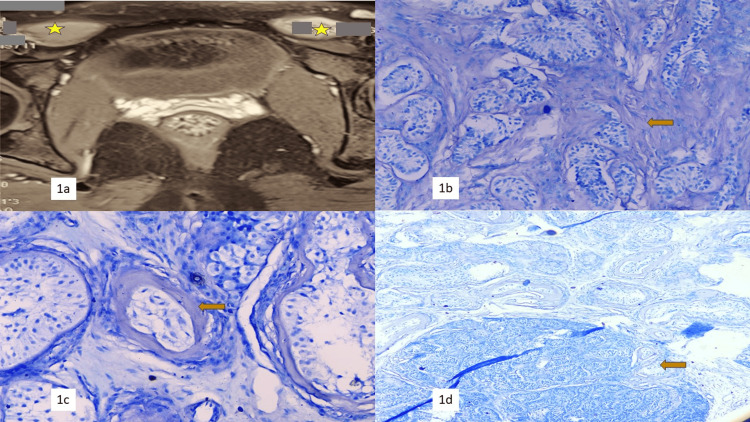 Figure 1
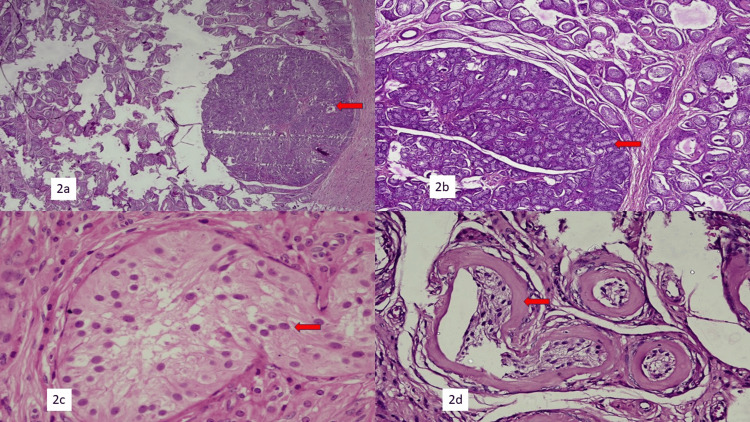 Figure 2
Peer Reviews
No public reviews on file for this paper yet. If you reviewed it on a platform where reviews are public (OpenReview, ICLR, NeurIPS, ICML), you can paste yours below so the community can read it here.
Videos
No videos yet. Explain this paper in a talk, walkthrough, or lecture? Add one.
Taxonomy
TopicsSexual Differentiation and Disorders · Hormonal and reproductive studies · Male Breast Health Studies