Electrical characteristics of the extracellular fluid in the body segments of Apis mellifera bees
Juan Hernandez, Fredy Mesa, Anderson Dussan, Andre Riveros

TL;DR
This paper studies the electrical properties of honeybee body segments, revealing how different parts respond to electrical stimuli and offering new ways to monitor bee health.
Contribution
The study introduces non-invasive methods to measure electrical characteristics of live bees, enabling health monitoring in natural and controlled settings.
Findings
The head of Apis mellifera bees shows high resistance, while the abdomen has high capacitance.
Electrical measurements can be taken non-invasively, allowing for health monitoring of bees.
Variations in electrical properties reflect differences in molecular composition across body segments.
Abstract
This study investigates the electrical properties of the extracellular fluid in honeybees (Apis mellifera) and its relationship with different body segments. By characterizing resistance, capacitance, and electrical impedance, aspects such as ionic composition, molecular polarization, and the differential response of live bees to electrical stimuli were evaluated. The results show that electrical characteristics vary significantly depending on the body segment, with the head exhibiting high resistance values and the abdomen displaying high capacitance, reflecting differences in molecular composition and functionality. Additionally, experiments with live bees demonstrated the feasibility of measuring electrical parameters non-invasively, opening new possibilities for monitoring the health of these pollinators under controlled conditions and in natural environments. This work lays the…
Genes, proteins, chemicals, diseases, species, mutations and cell lines named across the full text — each resolved to its canonical identifier and authoritative record.
Click any figure to enlarge with its caption.
 Figure 1
 Figure 2
 Figure 3
 Figure 4
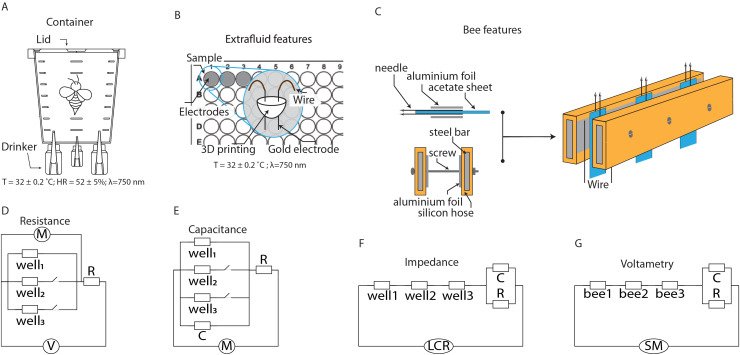 Figure 5
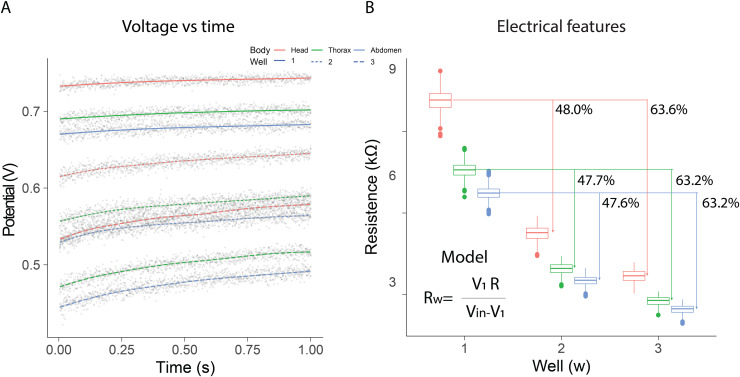 Figure 6
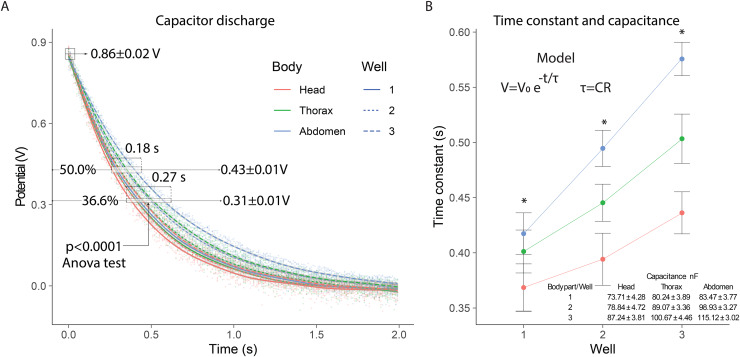 Figure 7
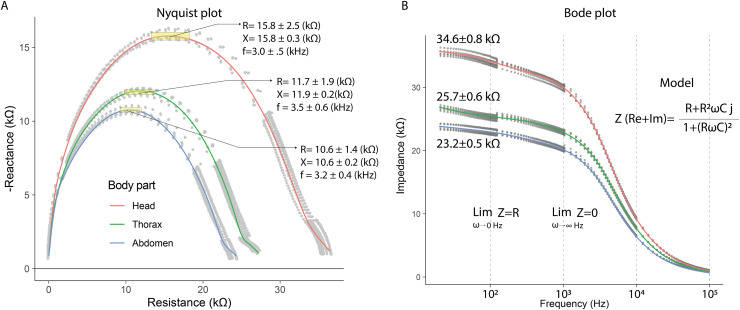 Figure 8
 Figure 9
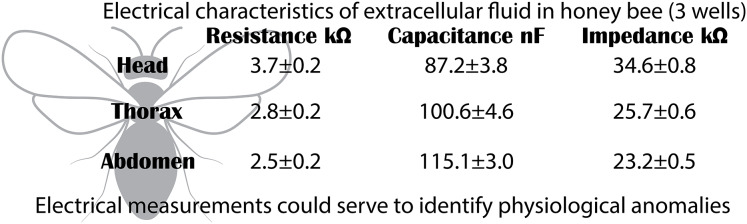 Figure 10
 Figure 11
 Figure 12
 Figure 13
 Figure 14
Peer Reviews
No public reviews on file for this paper yet. If you reviewed it on a platform where reviews are public (OpenReview, ICLR, NeurIPS, ICML), you can paste yours below so the community can read it here.
Videos
No videos yet. Explain this paper in a talk, walkthrough, or lecture? Add one.
Taxonomy
TopicsInsect and Arachnid Ecology and Behavior · Insect and Pesticide Research · Plant and animal studies