Anterior Peripheral Rim Instability Is Prevalent in Young, Skeletally Immature Patients With Discoid Lateral Meniscus and Has Favorable Postoperative Outcomes
Steven Maxwell Henick, Zachariah Samuel, Joseph Nicholas Charla, Emily Ferreri, Emmanuel Mbamalu, Edina Gjonbalaj, Leila Mehraban Alvandi, Jacob Foster Schulz, Eric Daniel Fornari, Mauricio Drummond

TL;DR
Half of young patients with a discoid lateral meniscus have anterior peripheral rim instability, which improves well after surgery.
Contribution
Identifies high prevalence of anterior peripheral rim instability in skeletally immature patients with discoid lateral meniscus and favorable surgical outcomes.
Findings
Anterior peripheral rim instability was present in 50% of patients under 21 with discoid lateral meniscus.
Patients with anterior peripheral rim instability were younger and more skeletally immature.
Arthroscopic repair of anterior peripheral rim instability resulted in good-to-excellent patient-reported outcomes.
Abstract
To report the prevalence and patient characteristics of anterior peripheral rim instability (PRI) in patients <21 years of age with symptomatic discoid lateral meniscus (DLM) requiring operative intervention and to compare preoperative magnetic resonance imaging (MRI) with arthroscopic findings and patient-reported outcomes (PROs) after arthroscopic treatment of anterior compared with nonanterior PRI. A retrospective review was performed at a single academic institution between 2012 and 2022. Patients were <21 years old and underwent operative DLM management with a minimum follow-up period of 2 years. Patients were divided into 2 groups: anterior PRI (isolated anterior PRI and anterior combined with posterior PRI) and nonanterior PRI (nonanterior PRI designated as isolated posterior or no PRI). Data collection included demographics, clinical presentation, MRI results, arthroscopic…
Genes, proteins, chemicals, diseases, species, mutations and cell lines named across the full text — each resolved to its canonical identifier and authoritative record.
Click any figure to enlarge with its caption.
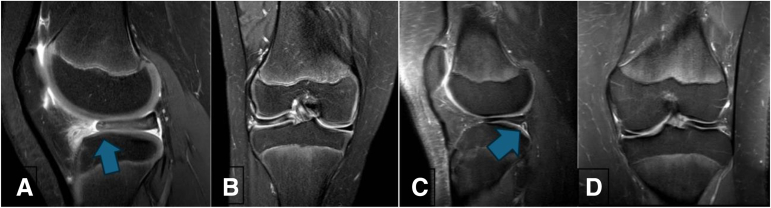 Figure 1
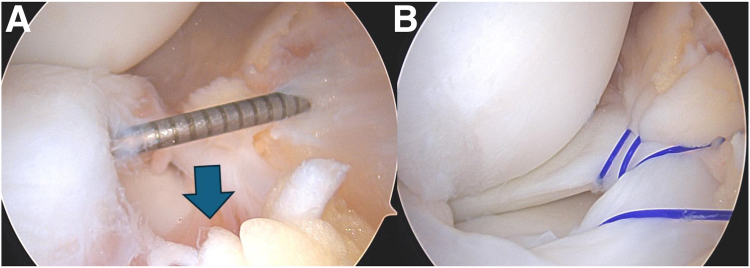 Figure 2
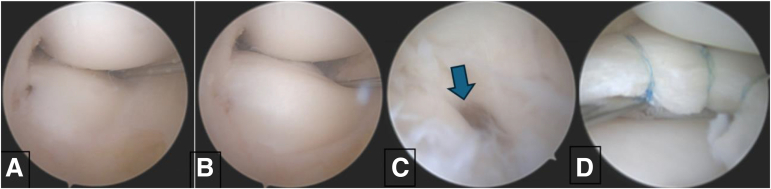 Figure 3
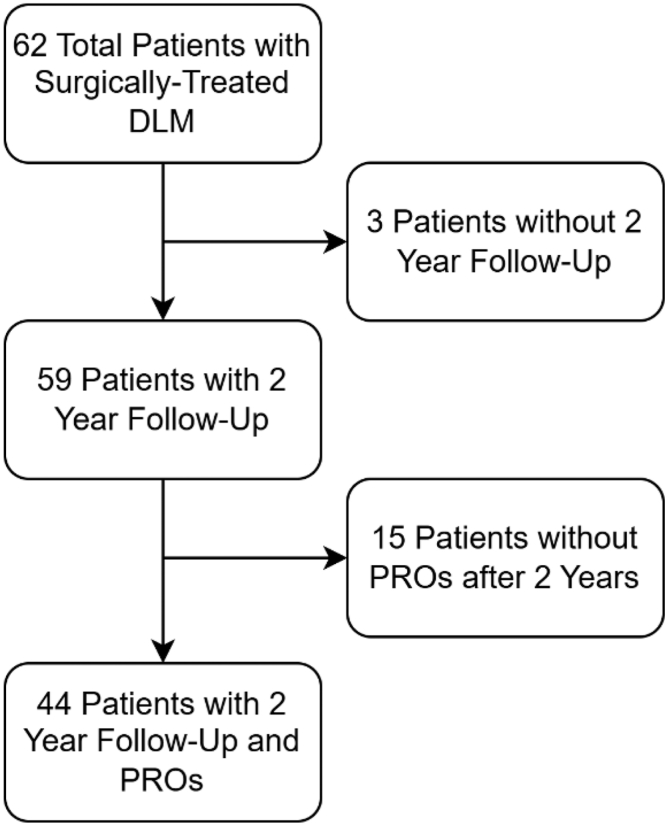 Figure 4
Peer Reviews
No public reviews on file for this paper yet. If you reviewed it on a platform where reviews are public (OpenReview, ICLR, NeurIPS, ICML), you can paste yours below so the community can read it here.
Videos
No videos yet. Explain this paper in a talk, walkthrough, or lecture? Add one.
Taxonomy
TopicsKnee injuries and reconstruction techniques · Shoulder Injury and Treatment · Orthopedic Surgery and Rehabilitation