Realities of using self-administered smartphone surveys to solve sustainability challenges
Amy R. Lewis, Simon Willcock, Ana Casas, Beata Kupiec-Teahan, José Mendoza Sanchez, Fiona Anciano, Dani J. Barrington, Mmeli Dube, Paul Hutchings, Caroline Karani, Arturo Llaxacondor, Hellen López, Anna L. Mdee, Keosothea Nou, Alesia D. Ofori, Joy N. Riungu, Kory C. Russel

TL;DR
This paper explores using smartphone surveys to collect real-time data on human behavior and environmental issues in hard-to-reach areas.
Contribution
The paper provides practical insights and lessons from six field studies on smartphone survey implementation for sustainability research.
Findings
Smartphone surveys can collect detailed human behavior and socio-economic data across diverse regions.
Matching these data with environmental data can help address global sustainability challenges.
Continuous method refinement is needed to improve survey effectiveness.
Abstract
To fill data gaps in human-environment systems, especially in difficult-to-access locations, novel tools are needed to collect (near) real-time data from diverse populations across the globe. Here we discuss the practicalities, constraints, and lessons learnt from six field studies using high spatial and temporal smartphone surveys in six different countries. We suggest that high spatiotemporal, self-administered smartphone surveys will produce novel insights into human behaviour, attitudes, and socio-economic characteristics that, when matched with high spatiotemporal resolution environmental data (e.g., from remote sensing), can be used to address sustainability challenges for global communities. Furthermore, we highlight the need for continuous refinement and improvement in future developments to enhance the efficacy of this methodology. By sharing the practical implications and…
Genes, proteins, chemicals, diseases, species, mutations and cell lines named across the full text — each resolved to its canonical identifier and authoritative record.
Click any figure to enlarge with its caption.
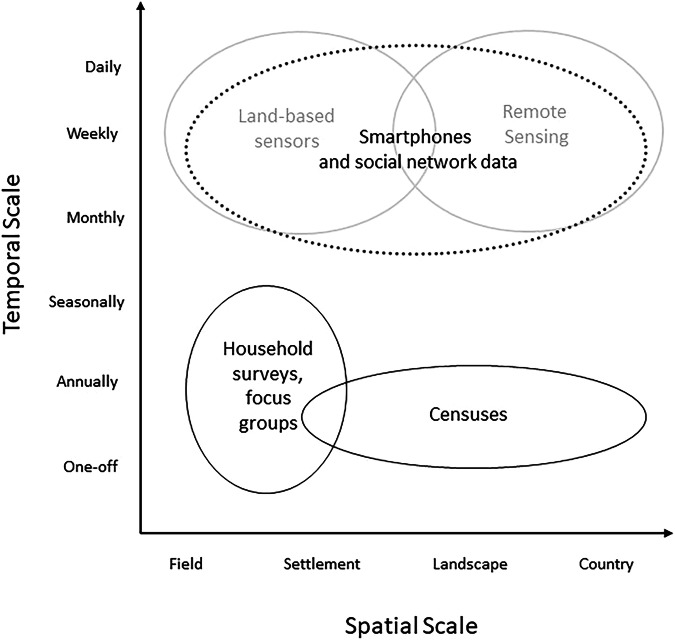 Figure 1
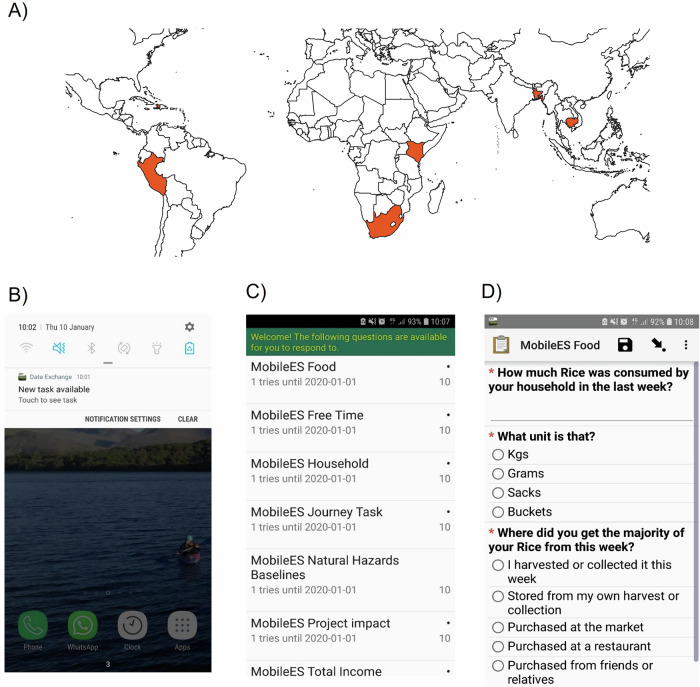 Figure 2
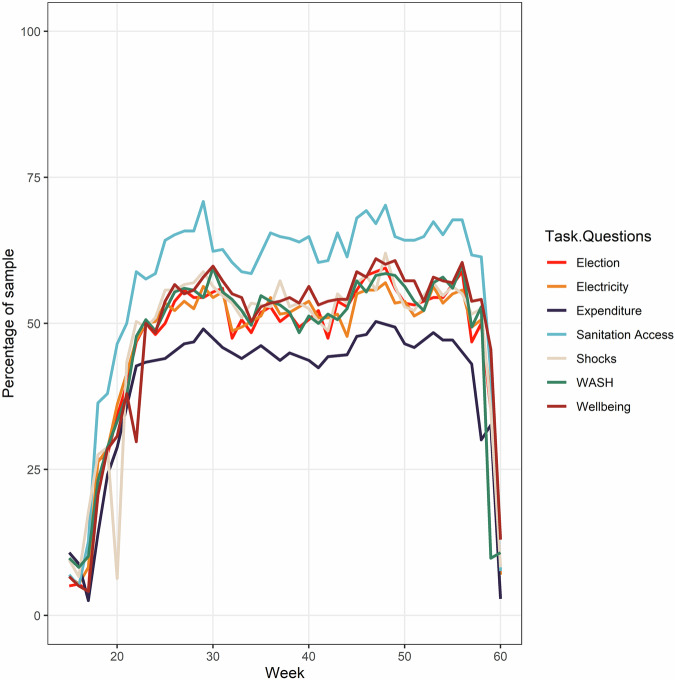 Figure 3
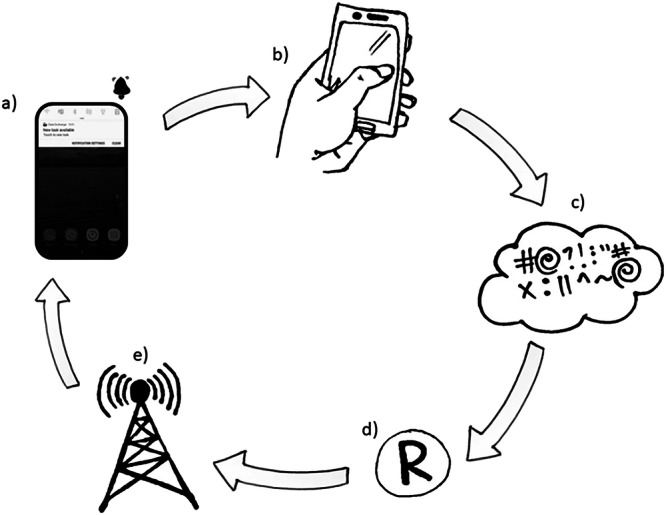 Figure 4
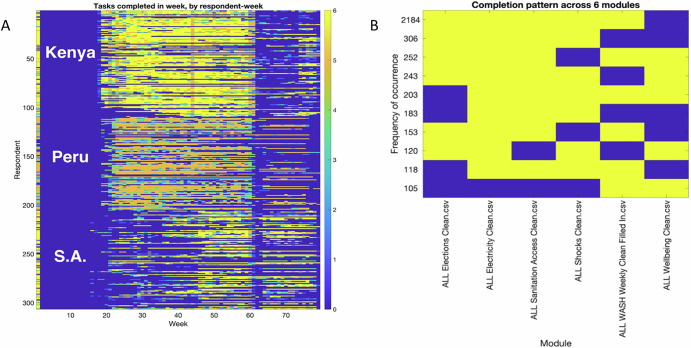 Figure 5
Peer Reviews
No public reviews on file for this paper yet. If you reviewed it on a platform where reviews are public (OpenReview, ICLR, NeurIPS, ICML), you can paste yours below so the community can read it here.
Videos
No videos yet. Explain this paper in a talk, walkthrough, or lecture? Add one.
Taxonomy
TopicsHuman Mobility and Location-Based Analysis · Environmental Education and Sustainability · Urban Transport and Accessibility