A Newly Documented Rare Case of Pachyonychia Congenita II in a Three-Month-Old Baby
Zeinab Youness, Marwa Hallal, Rita Makhoul

TL;DR
A three-month-old baby with rare symptoms was diagnosed with Pachyonychia Congenita II through genetic testing, emphasizing the need for molecular analysis in such cases.
Contribution
This paper presents a rare documented case of Pachyonychia Congenita II in an infant without family history.
Findings
A three-month-old boy was diagnosed with PC Type II via a KRT17 gene mutation (c.275A > G).
The case lacked family history, highlighting the importance of molecular testing for accurate diagnosis.
Early recognition of PC is challenging due to variable clinical manifestations.
Abstract
We report the case of a three-month-old boy presenting with dystrophic nails, hyperhidrosis, congenital natal teeth, and milia-like lesions on the nose, without a family history of pachyonychia congenita (PC). Genetic testing confirmed a heterozygous pathogenic mutation (c.275A > G) in the KRT17 gene, establishing the diagnosis of PC Type II. PC is a rare genetic disorder affecting keratinization, with variable clinical manifestations that can complicate early recognition. This case highlights the importance of molecular testing and dermatologic expertise in diagnosing and managing PC.
Genes, proteins, chemicals, diseases, species, mutations and cell lines named across the full text — each resolved to its canonical identifier and authoritative record.
Click any figure to enlarge with its caption.
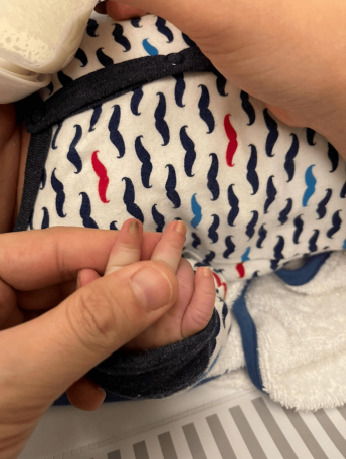 Figure 1
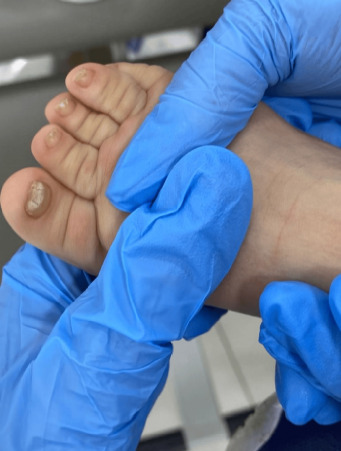 Figure 2
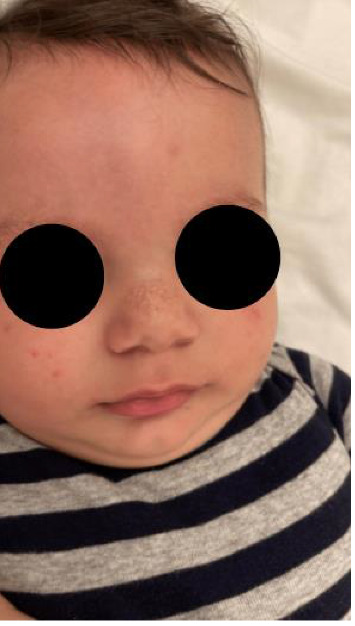 Figure 3
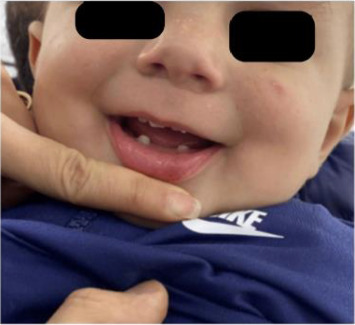 Figure 4
Peer Reviews
No public reviews on file for this paper yet. If you reviewed it on a platform where reviews are public (OpenReview, ICLR, NeurIPS, ICML), you can paste yours below so the community can read it here.
Videos
No videos yet. Explain this paper in a talk, walkthrough, or lecture? Add one.
Taxonomy
TopicsSkin and Cellular Biology Research · Dermatological and Skeletal Disorders · Cellular transport and secretion