Molecular mechanisms of biomolecular condensate formation in Drosophila melanogaster siRNA biogenesis
Clara Hipp, Selina Mussgnug, Purva Choudhary, Hyun-Seo Kang, Sam Asami, Judit Sastre, Carsten Donau, Romy Böttcher, Gerd Gemmecker, Job Boekhoven, Klaus Förstemann, Michael Sattler

TL;DR
The paper explores how biomolecular condensates form during siRNA production in fruit flies, revealing how specific proteins and RNA interact to support antiviral defense.
Contribution
The study identifies the molecular mechanisms and structural features enabling phase separation in Drosophila siRNA biogenesis.
Findings
Loqs-PD and Ago2 form biomolecular condensates in vivo and undergo liquid–liquid phase separation in vitro.
Ago2's intrinsically disordered region forms RNA-dependent condensates with fluid properties and specific interactions.
RNase III activity can disrupt Ago2IDR/dsRNA condensates, suggesting a regulatory role in siRNA processing.
Abstract
Biogenesis of small interfering RNAs (siRNA) in Drosophila melanogaster involves the processing of double-stranded RNA (dsRNA) by Dcr-2 with Loqs-PD/R2D2 and Ago2. Here, we show that Loqs-PD and Ago2 are found in biomolecular condensates in vivo and display liquid–liquid phase separation in vitro. The phase separation of Loqs-PD depends on the RNA-binding capability of its double-stranded RNA-binding domains and is further modulated by the preceding N-terminal region. An intrinsically disordered region in Ago2 (Ago2IDR) forms condensates in the presence of RNA in vitro. Combining NMR spectroscopy and mutational analysis, we show that Ago2IDR/RNA condensates are fluid, with significant polypeptide backbone flexibility, and are stabilized by a dense network of interactions involving arginine and aromatic side chains. Co-partitioning of Loqs-PD into Ago2IDR/dsRNA condensates depends on its…
Genes, proteins, chemicals, diseases, species, mutations and cell lines named across the full text — each resolved to its canonical identifier and authoritative record.
Click any figure to enlarge with its caption.
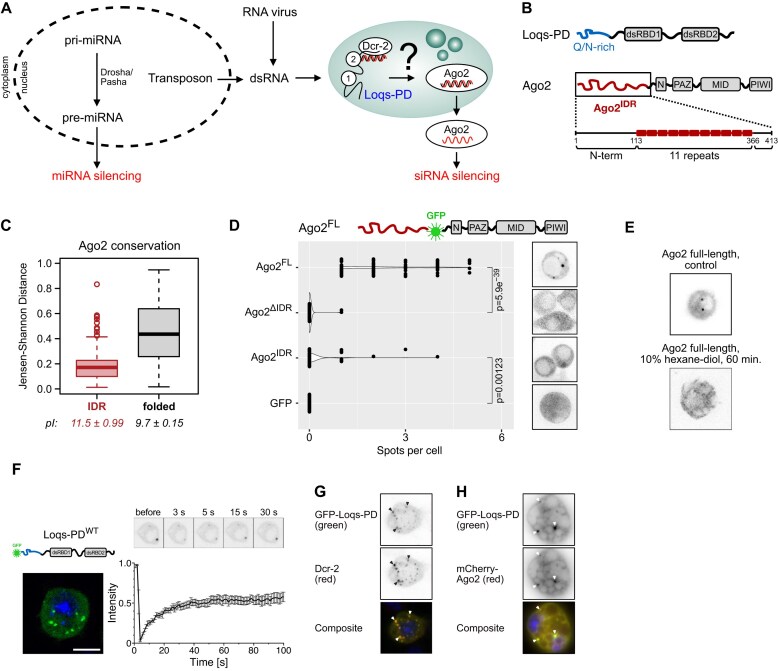 Figure 1
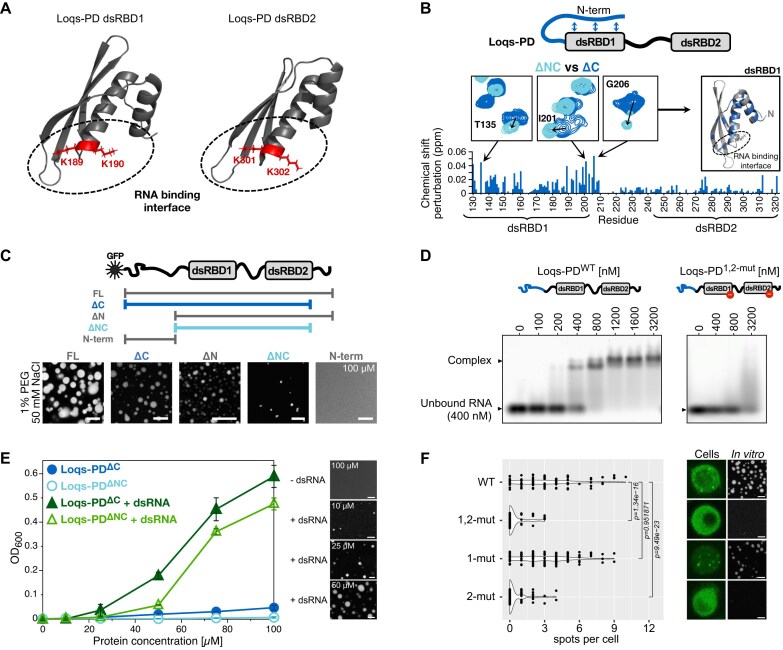 Figure 2
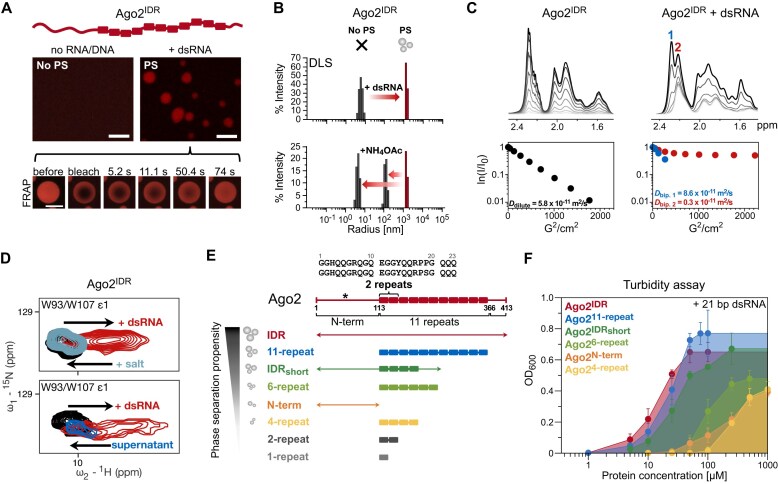 Figure 3
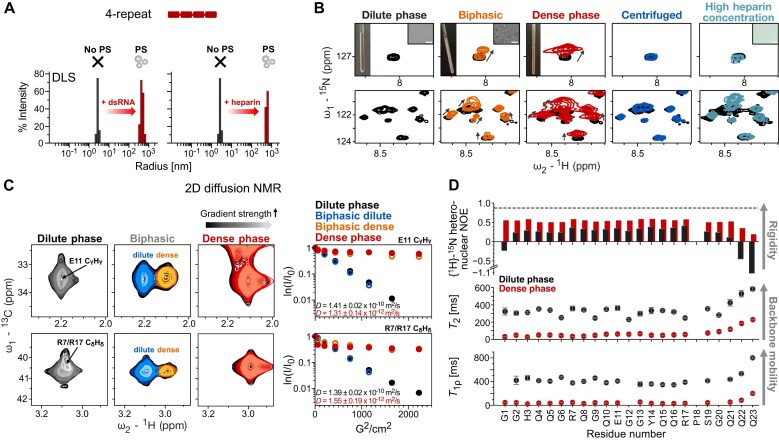 Figure 4
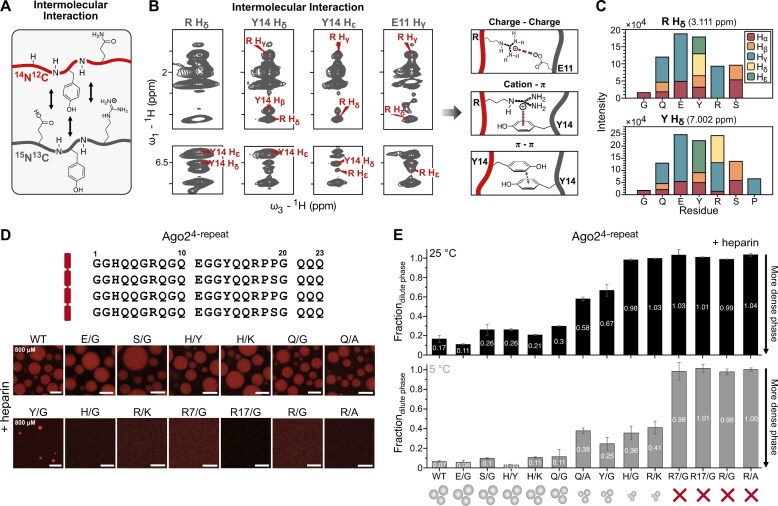 Figure 5
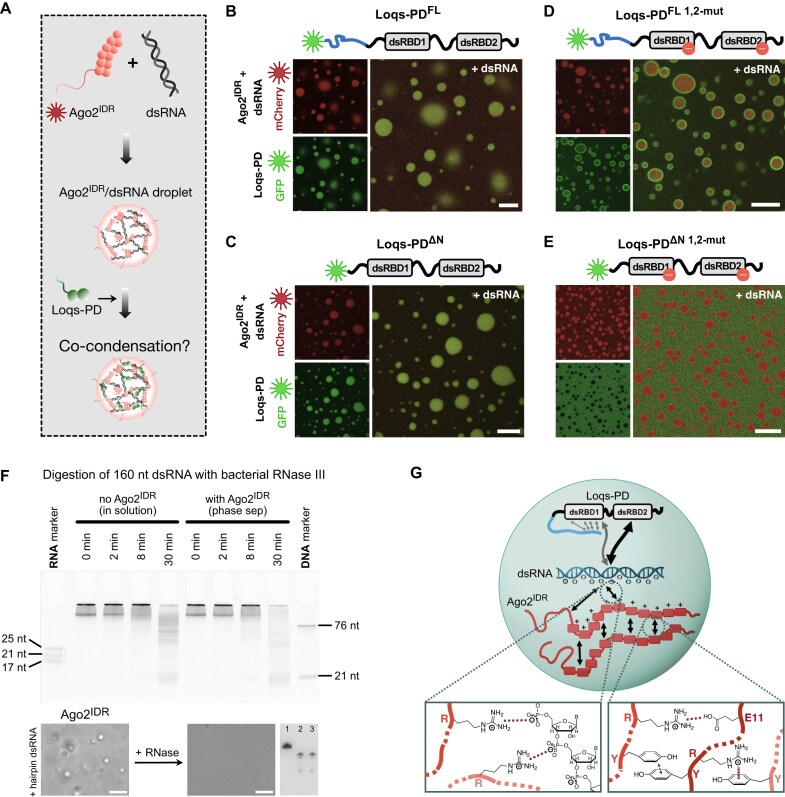 Figure 6
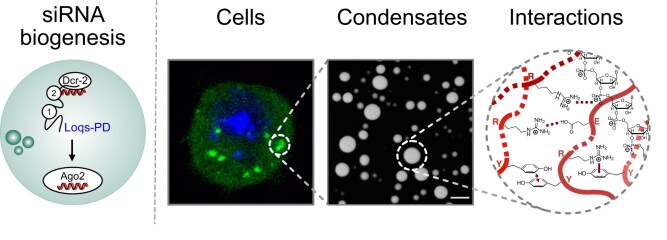 Figure 7
Peer Reviews
No public reviews on file for this paper yet. If you reviewed it on a platform where reviews are public (OpenReview, ICLR, NeurIPS, ICML), you can paste yours below so the community can read it here.
Videos
No videos yet. Explain this paper in a talk, walkthrough, or lecture? Add one.
Taxonomy
TopicsRNA Research and Splicing · RNA modifications and cancer · RNA Interference and Gene Delivery