Complete loss of PAX4 causes transient neonatal diabetes in humans
James Russ-Silsby, Yunkyeong Lee, Varsha Rajesh, Mahsa Amoli, Nasser Ali Mirhosseini, Tushar Godbole, Matthew B. Johnson, D. Evelyn Ibarra, Han Sun, Nicole A.J. Krentz, Matthew N. Wakeling, Sarah E. Flanagan, Andrew T. Hattersley, Anna L. Gloyn, Elisa De Franco

TL;DR
Complete loss of the PAX4 gene in humans causes transient neonatal diabetes, offering new insights into beta cell development and function.
Contribution
Identifies PAX4 loss-of-function variants as a novel genetic cause of transient neonatal diabetes in humans.
Findings
Homozygous PAX4 loss-of-function variants were found in two individuals with transient neonatal diabetes.
PAX4 regulates genes involved in pancreatic beta cell development and glucose-stimulated insulin secretion.
PAX4 is not essential for human pancreatic beta cell development, contrasting findings in mouse models.
Abstract
Gene discovery studies in individuals with diabetes diagnosed within 6 months of life (neonatal diabetes, NDM) can provide unique insights into the development and function of human pancreatic beta-cells. We performed genome sequencing in a cohort of 43 consanguineous individuals with NDM in whom all the known genetic causes had previously been excluded. We used quantitative PCR and RNA-sequencing in CRISPR-edited human induced pluripotent stem cells (iPSCs), and CUT&RUN-sequencing in EndoC-βH1 cells to investigate the effect of PAX4 loss on human pancreatic development. We describe the identification of homozygous PAX4 loss-of-function variants in 2 individuals with transient NDM: a p.(Arg126∗) stop-gain variant and a c.-352_104del deletion affecting the first 4 PAX4 exons. We confirmed the p.(Arg126∗) variant causes nonsense mediated decay in CRISPR-edited iPSC-derived pancreatic…
Genes, proteins, chemicals, diseases, species, mutations and cell lines named across the full text — each resolved to its canonical identifier and authoritative record.
Click any figure to enlarge with its caption.
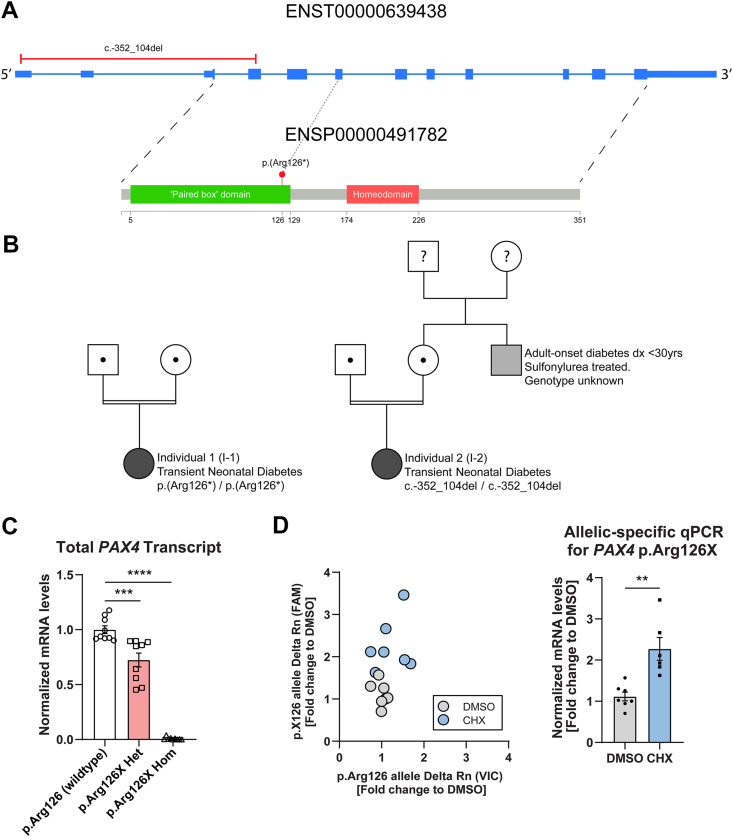 Figure 1
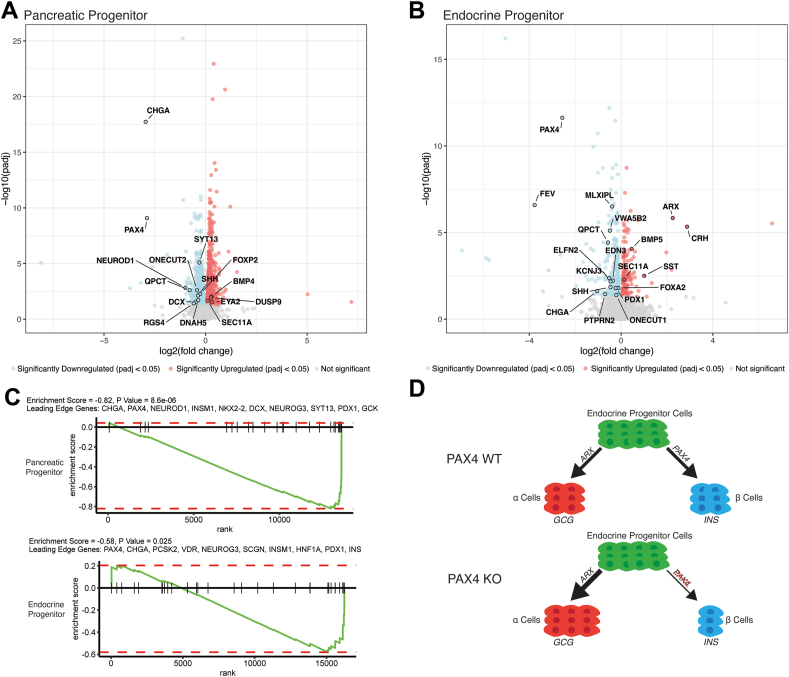 Figure 2
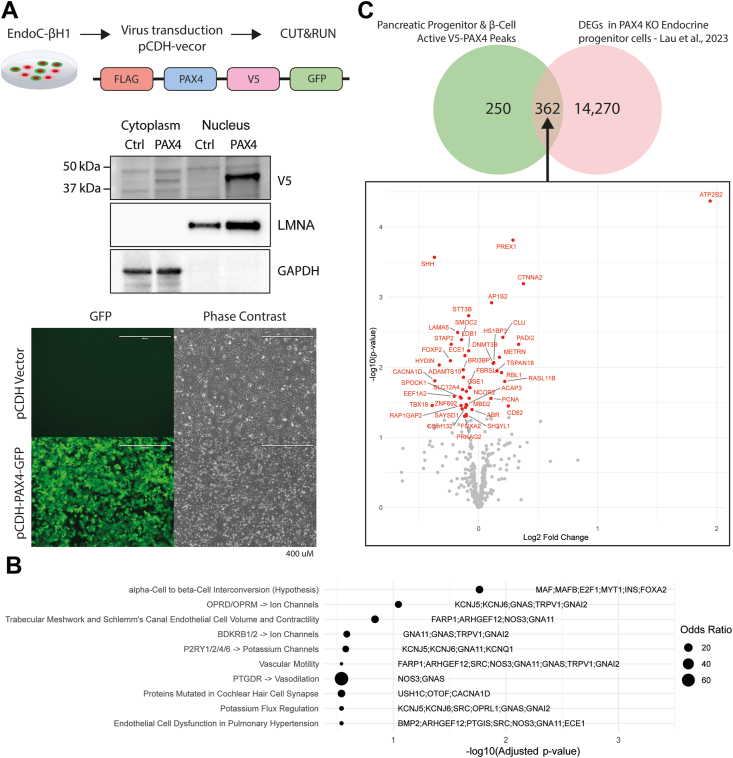 Figure 3
Peer Reviews
No public reviews on file for this paper yet. If you reviewed it on a platform where reviews are public (OpenReview, ICLR, NeurIPS, ICML), you can paste yours below so the community can read it here.
Videos
No videos yet. Explain this paper in a talk, walkthrough, or lecture? Add one.
Taxonomy
TopicsPancreatic function and diabetes · Congenital heart defects research