Insights from dual-platform metabolomics on durian flowers: An alternative source of procyanidins from agricultural waste with bioactivities
Supakorn Potijun, Nattaya Pattarapipatkul, Pitchakorn Boonma, Putthamas Pewlong, Intira Pathtubtim, Thanchanok Muangman, Bunyarit Meksiriporn, Hubert Schaller, Supaart Sirikantaramas

TL;DR
Durian flowers, an agricultural byproduct, contain procyanidins with antioxidant and anti-inflammatory properties, offering a sustainable source for nutraceutical and cosmeceutical applications.
Contribution
This study is the first to identify durian flowers as a novel and sustainable source of bioactive procyanidins.
Findings
Durian flowers contain procyanidins B1, B2, and C1, as identified through dual-platform metabolomics.
An 80% ethanol extract of durian flowers showed antioxidant and anti-inflammatory effects in human keratinocytes.
Procyanidin-rich extracts from durian flowers have potential for use in nutraceutical and cosmeceutical industries.
Abstract
Procyanidins, which are polyphenol compounds in grape seeds, apples, and berries, are known for their anti-inflammatory and antioxidant properties. In this study, we investigated durian flowers, an agricultural waste, as a novel procyanidin source. Durian trees bloom prolifically, but not all flowers develop into mature fruits, representing underutilized resources. Dual-platform metabolomic analysis using ultra-high-performance liquid chromatography with electrospray ionization quadrupole time-of-flight mass spectrometry and gas chromatography–mass spectrometry annotates polyphenols such as (−)-epicatechin, procyanidins B1, B2, and C1. The 80 % (v/v) ethanol extraction yielded a crude extract with a total procyanidin content of 7.68 mg/g. Bioactivity assays revealed that the procyanidin-rich crude extract reduced oxidative stress and exhibited anti-inflammatory effects against UVA in…
Genes, proteins, chemicals, diseases, species, mutations and cell lines named across the full text — each resolved to its canonical identifier and authoritative record.
Click any figure to enlarge with its caption.
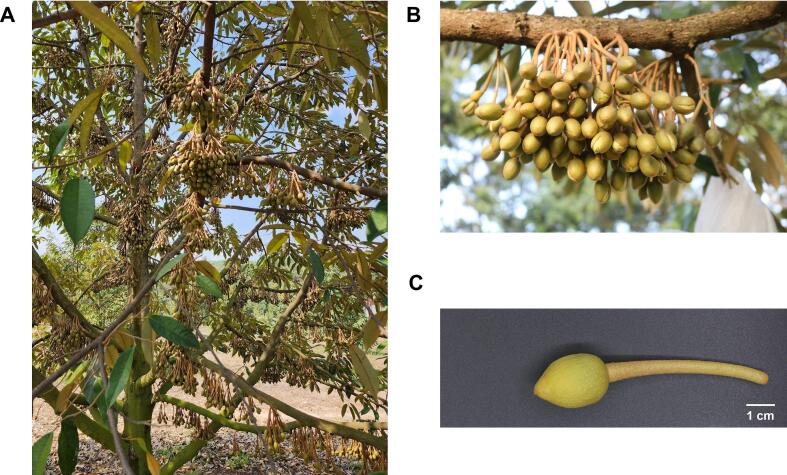 Figure 1
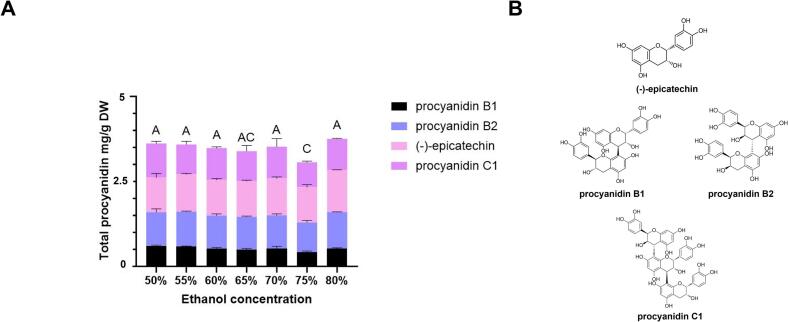 Figure 2
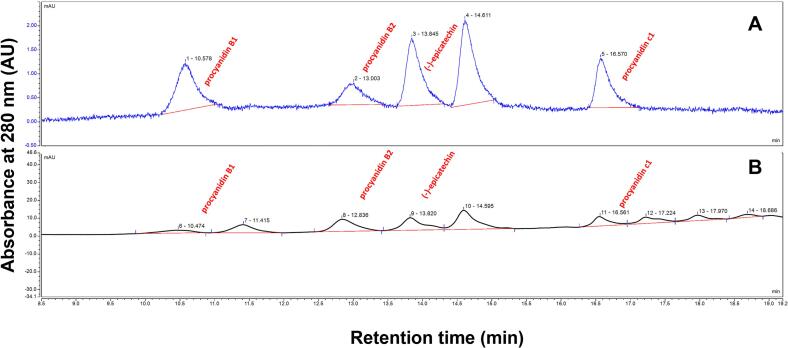 Figure 3
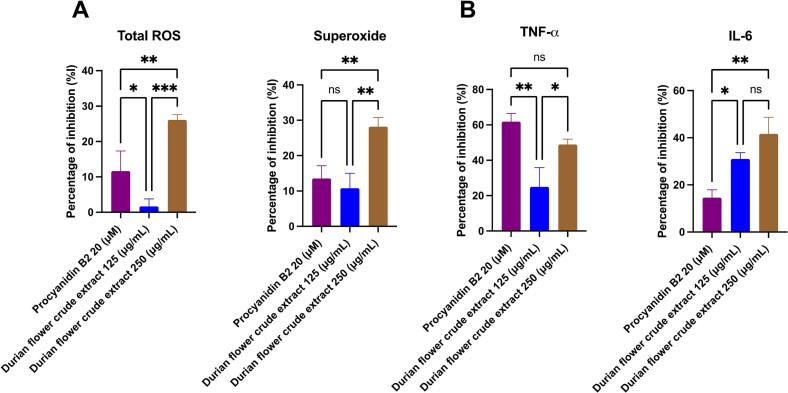 Figure 4
Peer Reviews
No public reviews on file for this paper yet. If you reviewed it on a platform where reviews are public (OpenReview, ICLR, NeurIPS, ICML), you can paste yours below so the community can read it here.
Videos
No videos yet. Explain this paper in a talk, walkthrough, or lecture? Add one.
Taxonomy
TopicsPhytochemicals and Antioxidant Activities · Metabolomics and Mass Spectrometry Studies · Natural Products and Applications