Greater fatigue is more strongly associated with reduced reward sensitivity in the long-term phase of coronavirus disease (COVID-19) than in the early phase
Judith M. Scholing, Britt I.H.M. Lambregts, Ruben van den Bosch, Esther Aarts, Marieke E. van der Schaaf

TL;DR
Long-term fatigue after COVID-19 is linked to reduced sensitivity to rewards, more so than in the early stages of the disease.
Contribution
The study reveals that reward sensitivity is more strongly affected by fatigue in the long-term phase of COVID-19 compared to the early phase.
Findings
Participants with long-term post-COVID-19 fatigue showed significantly lower reward sensitivity compared to those in the early phase or with no prior infection.
Fatigue was more strongly associated with reduced reward sensitivity in the long-term group than in the early phase group.
Older age, unhealthy lifestyle, and worrying during the early phase of COVID-19 predicted lower reward sensitivity in the long-term group.
Abstract
Fatigue and depressive mood is inherent to acute disease, but a substantial group of people report persisting disabling fatigue and depressive symptoms long after a COVID-19 infection. Infections have been shown to change decisions about engaging in effortful and rewarding activities, but it is currently unclear whether fatigue and depressive symptoms are similarly associated with decision making during early and persistent phases after a COVID-19 infection. Here, we investigated whether fatigue and depressive mood are associated with altered weighting of reward and effort in decision making at different timepoints after COVID-19 infection. We conducted an online cross-sectional study between March 2021 and March 2022, in which 242 participants (18–65 years) with COVID-19 < 4 weeks ago (n = 62), COVID-19 > 12 weeks ago (n = 81), or no prior COVID-19 (n = 90; self-reported) performed an…
Genes, proteins, chemicals, diseases, species, mutations and cell lines named across the full text — each resolved to its canonical identifier and authoritative record.
Click any figure to enlarge with its caption.
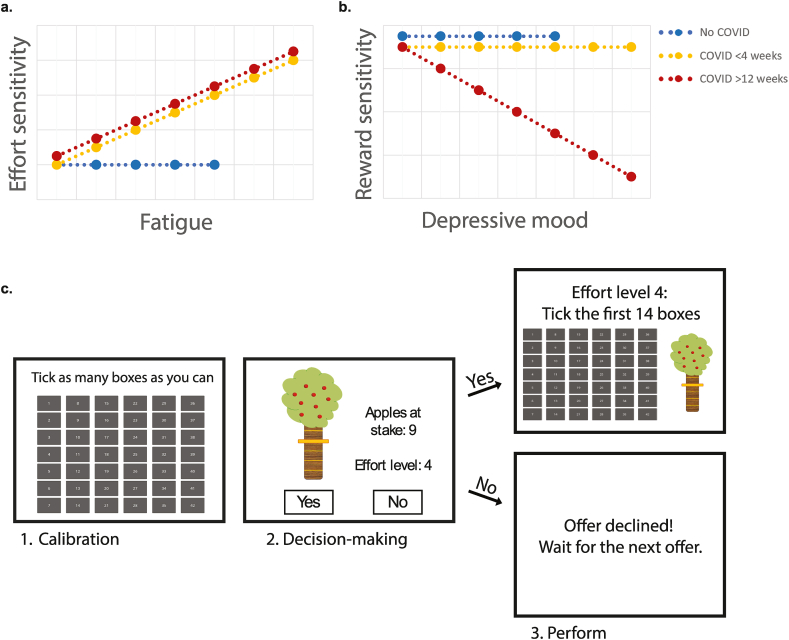 Figure 1
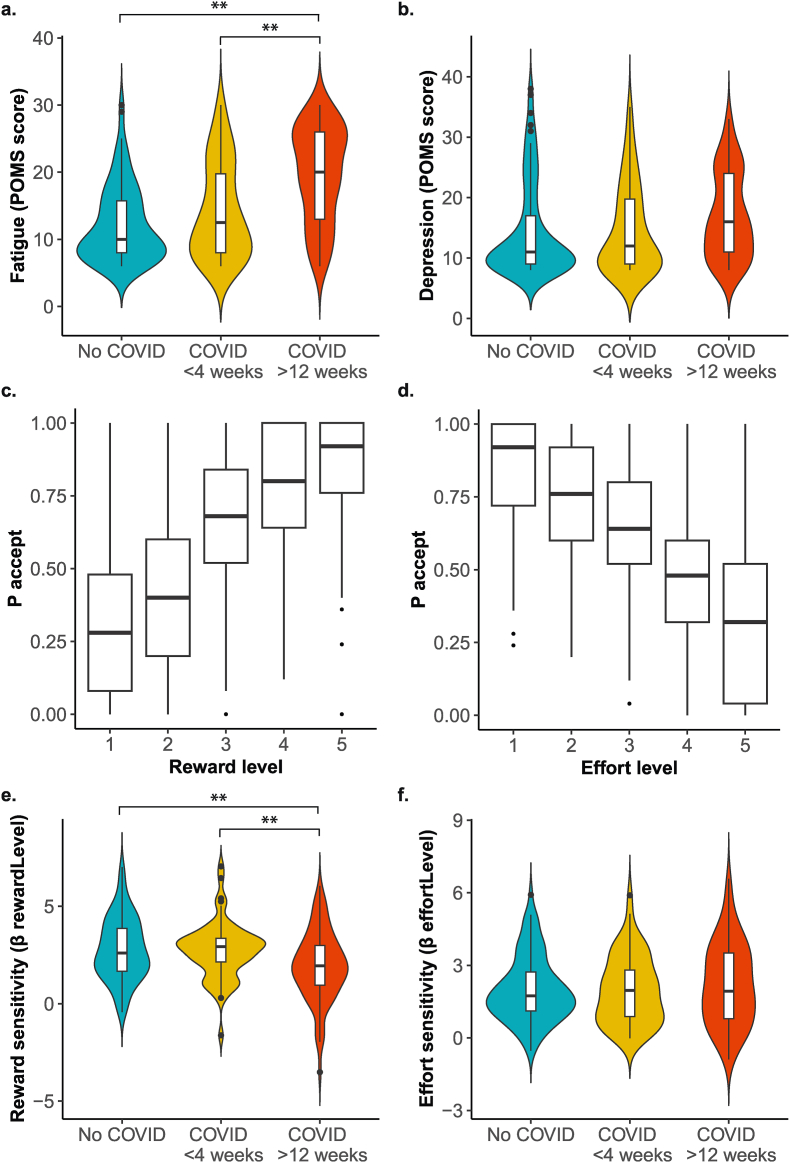 Figure 2
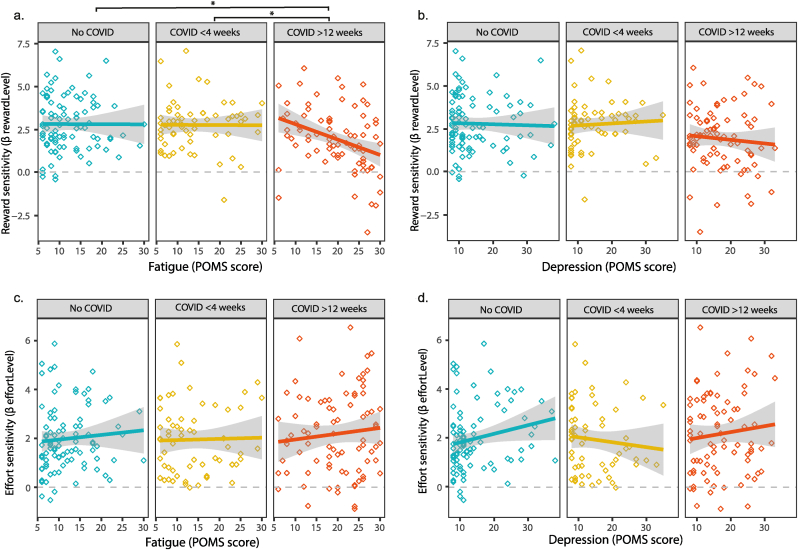 Figure 3
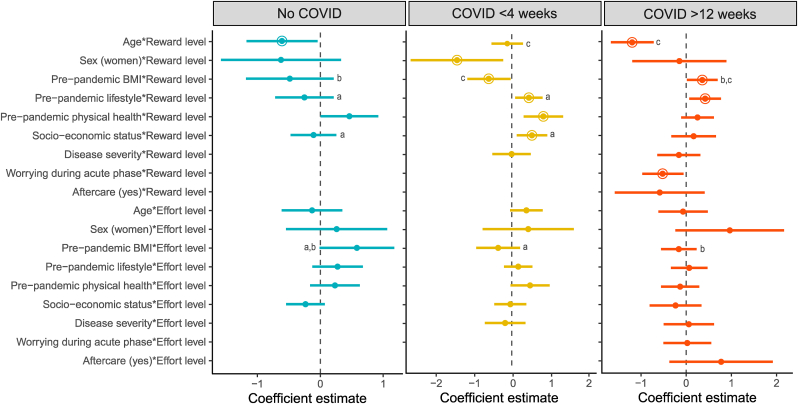 Figure 4
Peer Reviews
No public reviews on file for this paper yet. If you reviewed it on a platform where reviews are public (OpenReview, ICLR, NeurIPS, ICML), you can paste yours below so the community can read it here.
Videos
No videos yet. Explain this paper in a talk, walkthrough, or lecture? Add one.
Taxonomy
TopicsLong-Term Effects of COVID-19 · Fibromyalgia and Chronic Fatigue Syndrome Research · COVID-19 and Mental Health