UBE2J2 is essential for the progression of meiosis prophase I during spermatogenesis in mice
Xiaochen Yu, Jie Cen, Yaxuan Zhang, Tongtong Li, Mingyu Zhang, Fei Gao, Hongbin Liu, Yongzhi Cao

TL;DR
This study shows that UBE2J2 is crucial for meiosis during mouse spermatogenesis, and its absence leads to infertility due to meiotic arrest and disrupted protein regulation.
Contribution
The study reveals a novel role for UBE2J2 in meiotic recombination and progression during spermatogenesis in mice.
Findings
Ube2j2−/− mice exhibit azoospermia and meiotic arrest at the mid-pachytene stage.
UBE2J2 deficiency leads to unstable homologous recombination complexes and failed crossover formation.
Proteomic analysis shows unexpressed meiosis- and chromosome segregation–related proteins in Ube2j2−/− spermatocytes.
Abstract
The coordination of numerous proteins is necessary for spermatogenesis, including degradation through the ubiquitin-proteasome pathway. Ubiquitin binding enzyme E2 (UBE2J2) is involved in the degradation of endoplasmic reticulum-associated proteins, while its role in spermatogenesis remains unclear. We found that Ube2j2−/− mice exhibit azoospermia and spermatocytes undergo meiotic arrest at the mid-pachytene stage. Examining homologous recombination (HR) markers indicated that HR intermediate complexes are unstable and fail to form crossovers in Ube2j2−/− spermatocytes. Proteomics analysis uncovered an extensive suite of meiosis- and chromosome segregation–associated proteins unexpressed in mouse spermatocytes lacking functional UBE2J2. Our findings suggest that UBE2J2 could possibly play a key role in SC disassembly, ensuring meiosis can proceed in the late pachynema during male…
Genes, proteins, chemicals, diseases, species, mutations and cell lines named across the full text — each resolved to its canonical identifier and authoritative record.
Click any figure to enlarge with its caption.
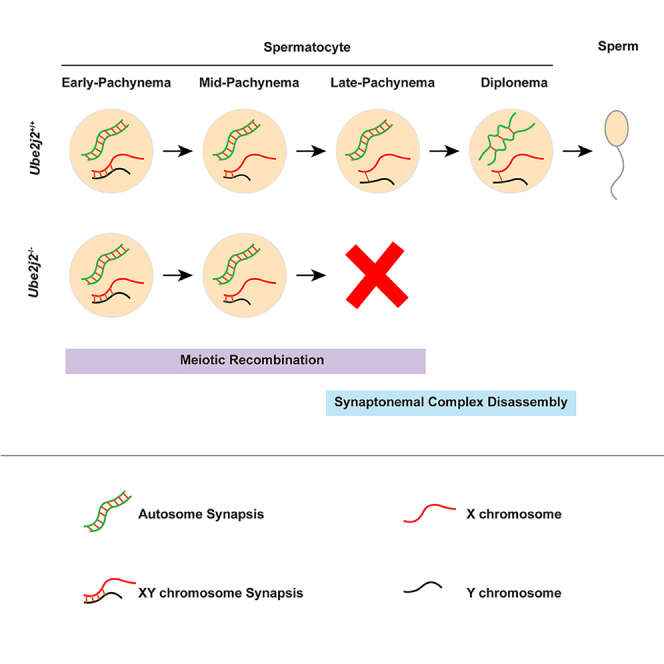 Figure 1
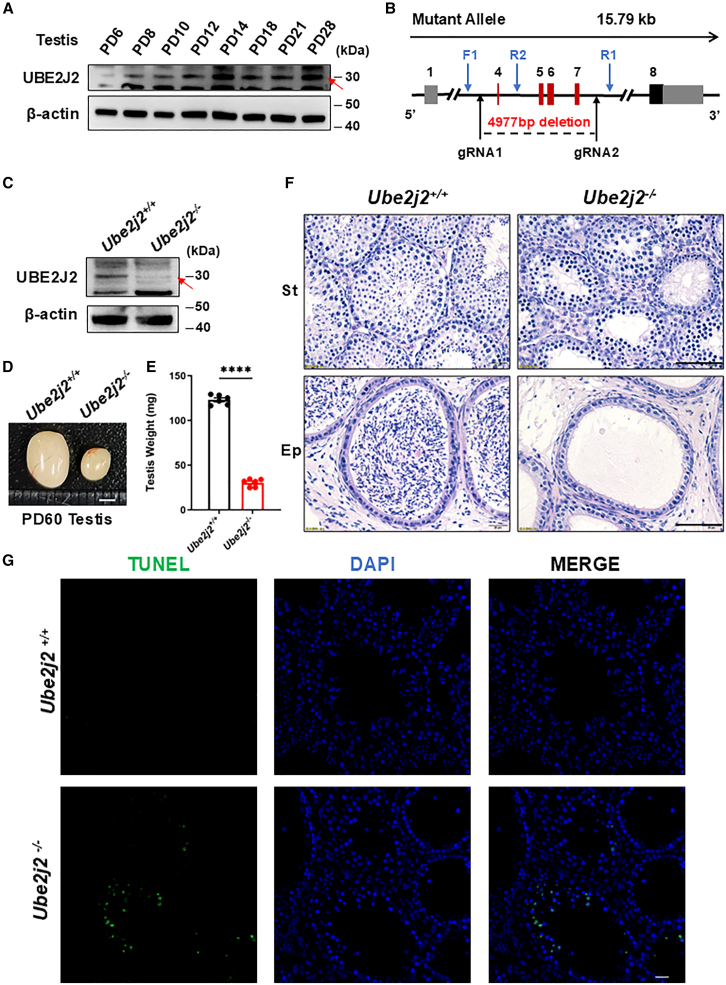 Figure 2
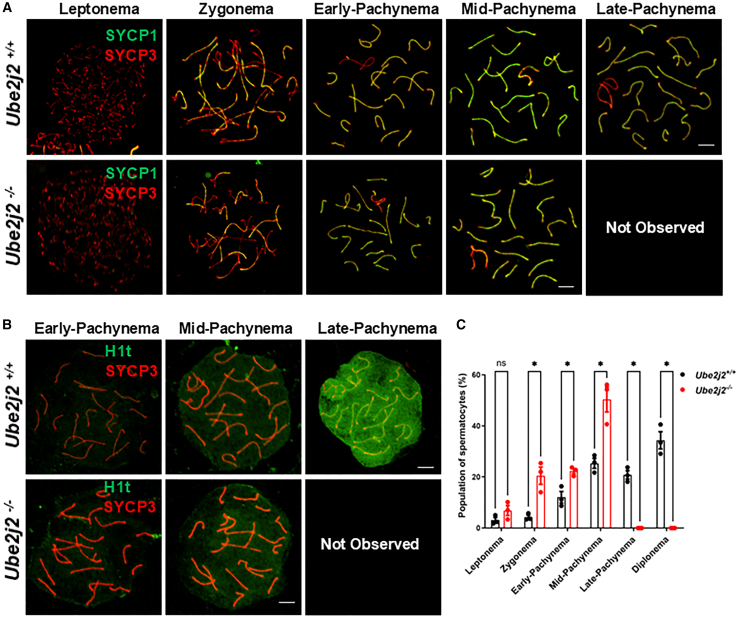 Figure 3
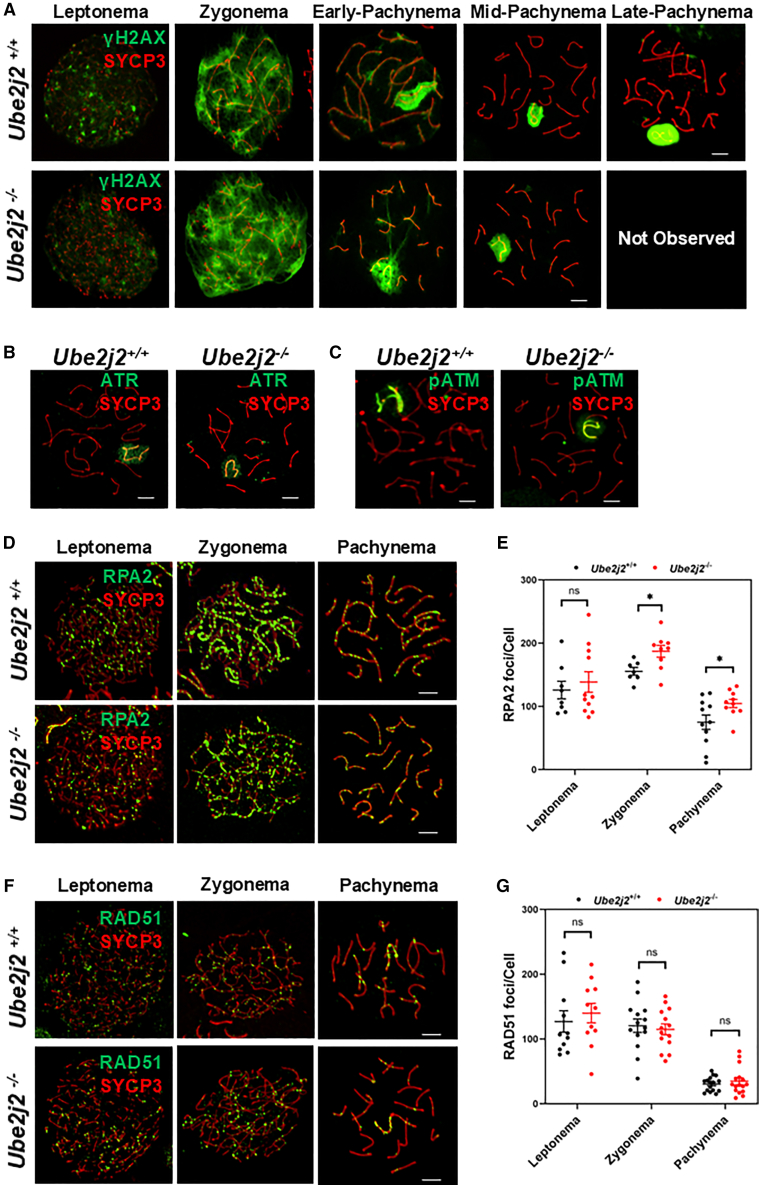 Figure 4
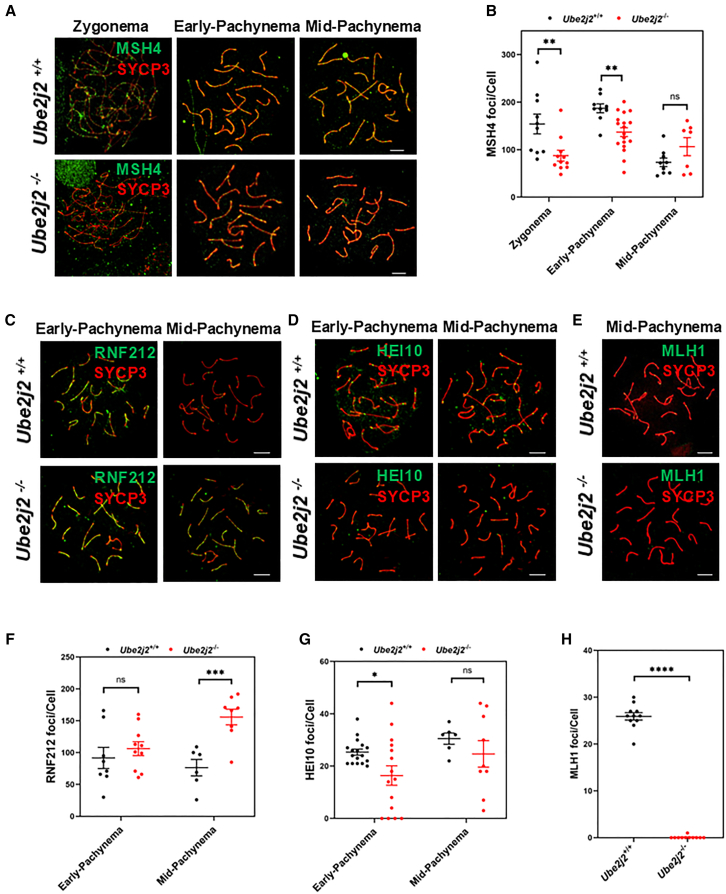 Figure 5
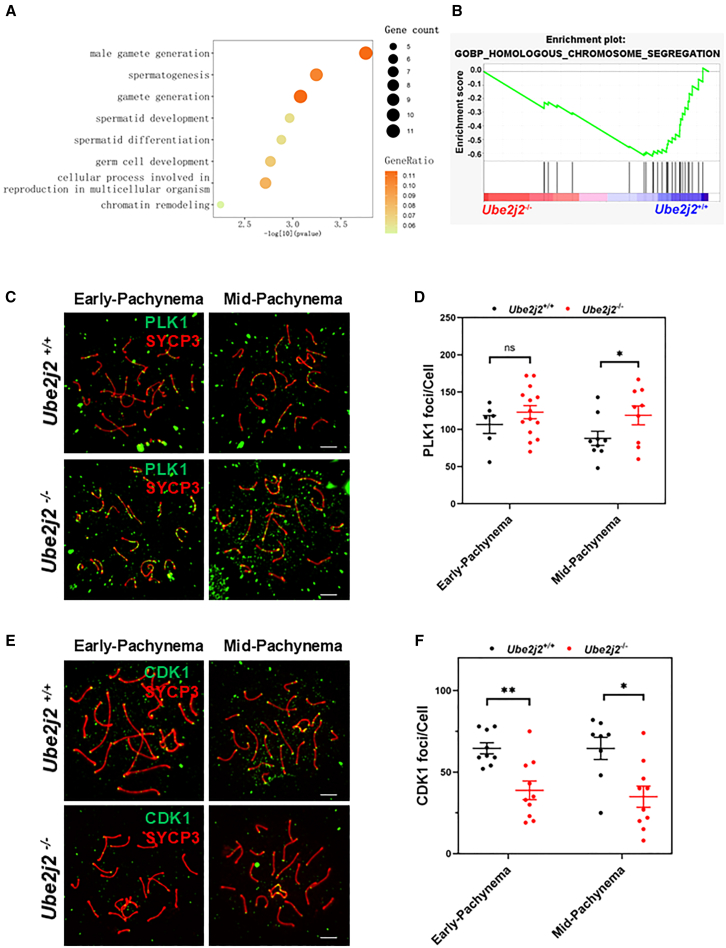 Figure 6
Peer Reviews
No public reviews on file for this paper yet. If you reviewed it on a platform where reviews are public (OpenReview, ICLR, NeurIPS, ICML), you can paste yours below so the community can read it here.
Videos
No videos yet. Explain this paper in a talk, walkthrough, or lecture? Add one.
Taxonomy
TopicsDNA Repair Mechanisms · Epigenetics and DNA Methylation · Genetics, Aging, and Longevity in Model Organisms