'Do Fever-Sugar-Swallow Protocols improve nurses' and physicians' satisfaction with the management of fever, hyperglycemia and dysphagia in stroke patients: A pre-and post-implementation survey of the “Quality in Acute Stroke Care” (QASC) Program‘
Anne-Kathrin Cassier-Woidasky, Winfried Zinn, Sandy Middleton, Simeon Dale, Waltraud Pfeilschifter

TL;DR
This study examines whether implementing Fever-Sugar-Swallow Protocols in German stroke units improves nurses' and physicians' satisfaction with managing fever, hyperglycemia, and dysphagia.
Contribution
The study evaluates the impact of FeSS Protocols on nurses' autonomy and physicians' satisfaction in stroke care within Germany's healthcare system.
Findings
Nurses reported significant improvements in autonomy and self-efficacy in managing fever, hyperglycemia, and dysphagia.
Physicians noted improved training activities for new colleagues on FeSS parameters and related clinical issues.
The study suggests FeSS Protocols could enhance the quality of stroke care and work environment in Germany.
Abstract
Nurses play a key role for delivery of high-quality patient care in the interprofessional stroke team. Nurses’ autonomy and advanced competencies are essential to a positive work environment, yet, are not well developed in Germany. To assess whether using the Fever-Sugar-Swallow (FeSS) Protocols in stroke care improves: a) nurses’ satisfaction regarding their ability to autonomously manage fever, hyperglycemia, and dysphagia; and b) physicians’ satisfaction regarding the management of these parameters in German stroke units. A pre-test/post-test survey administered to nursing and medical staff in eight stroke units was conducted prior to and following implementation of the FeSS Protocols. An online survey, comprising items regarding global job satisfaction, the target parameters and control parameters, was distributed to participating stroke units. T-tests were calculated for…
Genes, proteins, chemicals, diseases, species, mutations and cell lines named across the full text — each resolved to its canonical identifier and authoritative record.
Click any figure to enlarge with its caption.
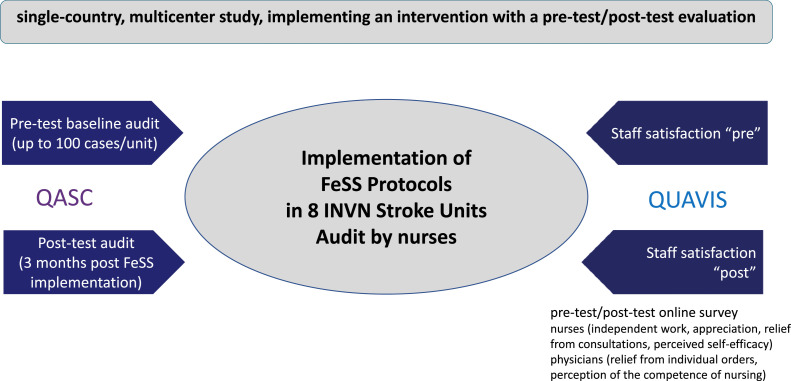 Figure 1
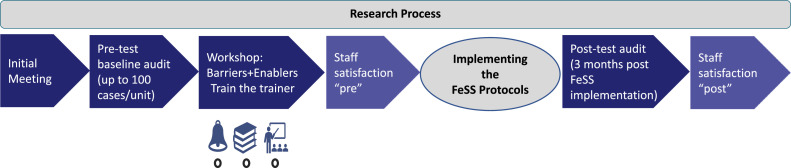 Figure 2
Peer Reviews
No public reviews on file for this paper yet. If you reviewed it on a platform where reviews are public (OpenReview, ICLR, NeurIPS, ICML), you can paste yours below so the community can read it here.
Videos
No videos yet. Explain this paper in a talk, walkthrough, or lecture? Add one.
Taxonomy
TopicsDysphagia Assessment and Management · Stroke Rehabilitation and Recovery · Acute Ischemic Stroke Management