Erythema Ab Igne: Toasted Skin Syndrome as a Cutaneous Marker of Chronic Pain
Nuha Mahmood, Alana Pinheiro Alves, Thomas A Melgar

TL;DR
A woman developed a skin condition called erythema ab igne from long-term use of hot water bags to relieve chronic pain, showing how heat exposure can lead to lasting skin changes.
Contribution
This case highlights EAI as a potential cutaneous marker of chronic pain and its long-term effects.
Findings
A 38-year-old woman developed erythema ab igne from prolonged hot water bag use.
Discontinuing heat application reduced hyperpigmentation, but skin changes persisted years later.
Abstract
Erythema ab igne (EAI) is a rare skin reaction caused by prolonged exposure to low-level heat, resulting in a reticular pattern of localized erythema and hyperpigmentation. This condition carries a potential risk of transformation into cutaneous malignancy. We present the case of a 38-year-old woman who developed a reticular-patterned rash on her abdomen. She had been using hot water bags to alleviate severe abdominal pain associated with chronic cholecystitis, which led to the development of hyperpigmented, mottled, erythematous skin changes across her entire abdomen. After discontinuing heat application, her hyperpigmentation significantly decreased, although the skin changes persisted years later.
Genes, proteins, chemicals, diseases, species, mutations and cell lines named across the full text — each resolved to its canonical identifier and authoritative record.
Click any figure to enlarge with its caption.
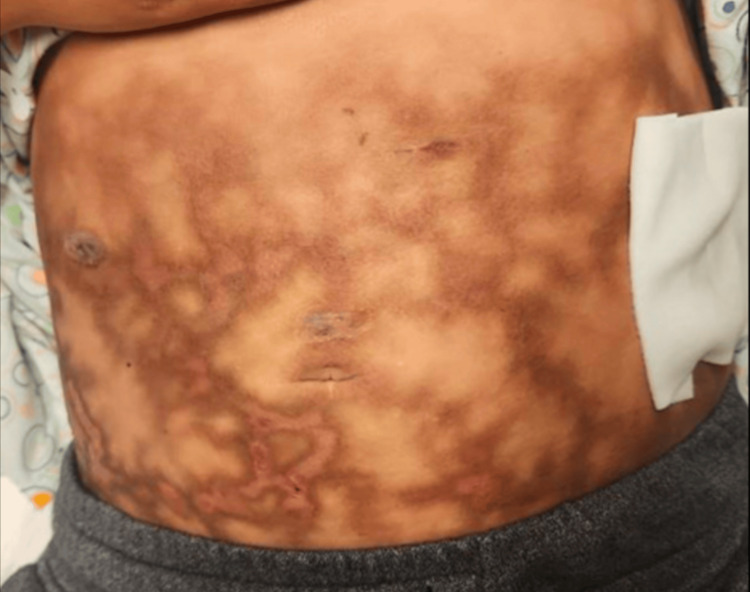 Figure 1
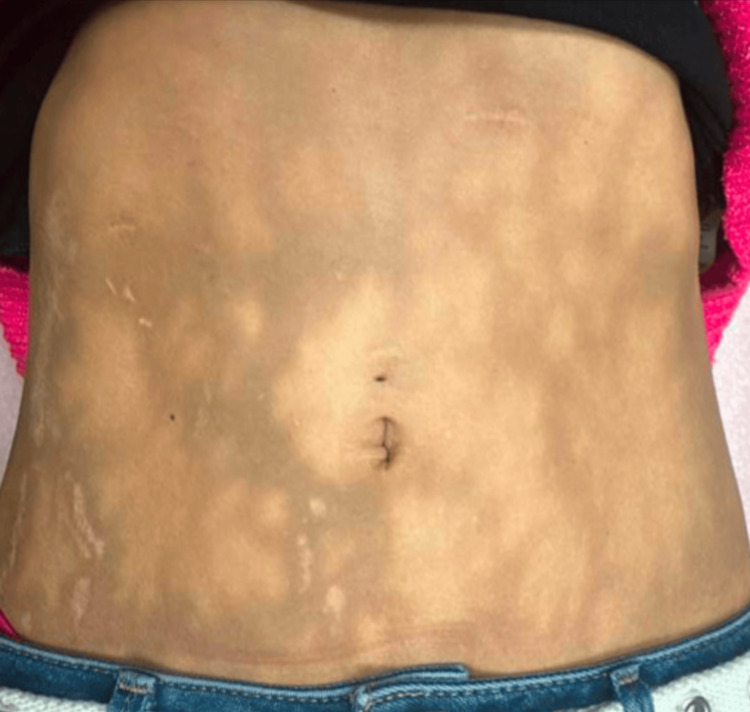 Figure 2
Peer Reviews
No public reviews on file for this paper yet. If you reviewed it on a platform where reviews are public (OpenReview, ICLR, NeurIPS, ICML), you can paste yours below so the community can read it here.
Videos
No videos yet. Explain this paper in a talk, walkthrough, or lecture? Add one.
Taxonomy
TopicsDermatological and COVID-19 studies · Genital Health and Disease · Chemotherapy-related skin toxicity