MitSorter: a standalone tool for accurate discrimination of mtDNA and NuMT ONT reads based on differential methylation
Sharon Natasha Cox, Angelo Sante Varvara, Graziano Pesole

TL;DR
MitSorter is a new tool that accurately separates mitochondrial DNA from nuclear mitochondrial DNA segments using methylation patterns in long-read sequencing data.
Contribution
MitSorter introduces a novel method for distinguishing mtDNA and NuMTs using differential CpG methylation in ONT sequencing data.
Findings
MitSorter partitions reads into unmethylated (mtDNA) and methylated (NuMTs) categories with high accuracy.
The tool improves the accuracy of mtDNA mutation profiling by reducing NuMT contamination.
MitSorter is validated and applicable to various genomic research areas.
Abstract
The accurate differentiation between mitochondrial DNA (mtDNA) and nuclear mitochondrial DNA segments (NuMTs) is a critical challenge in studies involving mitochondrial disorders. Mapping the mtDNA mutation spectrum and quantifying heteroplasmy are complex tasks when using next-generation sequencing methods, mostly due to NuMTs contamination in data analysis. Here, we present a novel, easy-to-use standalone command-line tool designed to reliably discriminate long reads originated by either mtDNA or NuMTs and generated by Oxford Nanopore Technologies (ONT) sequencing based on the known lack of CpG methylation in human mtDNA. MitSorter aligns the reads to the mitochondrial genome incorporating base modification calls directly from raw POD5 files. The resulting BAM file is then partitioned into two separate BAM files: one containing unmethylated reads and the other containing methylated…
Genes, proteins, chemicals, diseases, species, mutations and cell lines named across the full text — each resolved to its canonical identifier and authoritative record.
Click any figure to enlarge with its caption.
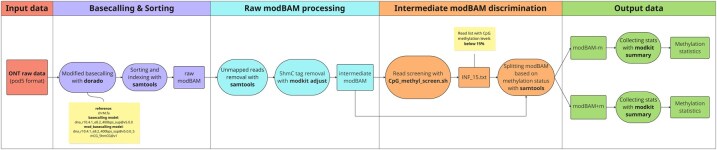 Figure 1
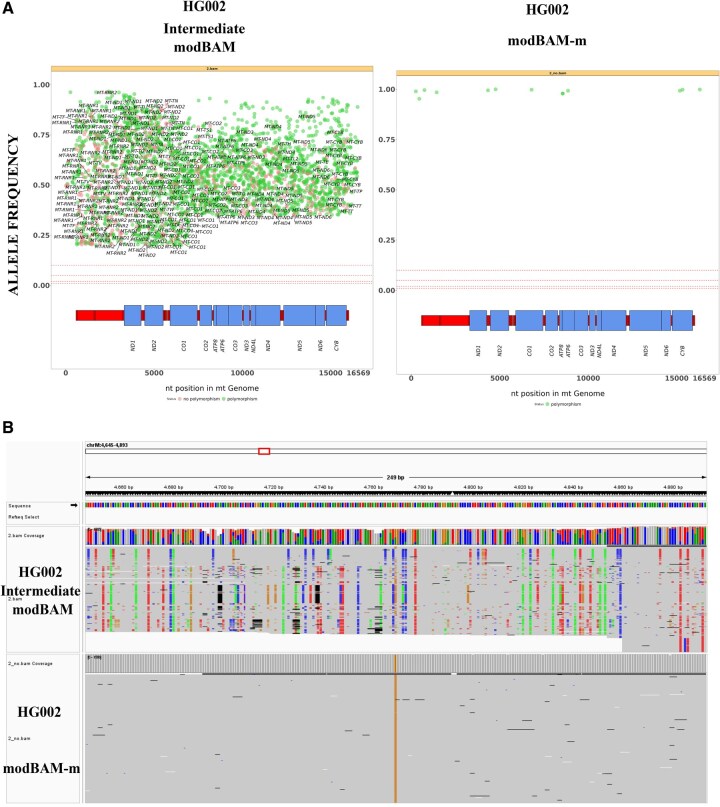 Figure 2
Peer Reviews
No public reviews on file for this paper yet. If you reviewed it on a platform where reviews are public (OpenReview, ICLR, NeurIPS, ICML), you can paste yours below so the community can read it here.
Videos
No videos yet. Explain this paper in a talk, walkthrough, or lecture? Add one.
Taxonomy
TopicsCancer-related molecular mechanisms research