Anatomy Gone Wrong: A Rare Tale of Superior Mesenteric Artery Syndrome and Duodenal Obstruction
Soraya Gioftsiou, Malak Faiz, Mohamed Mohammadi

TL;DR
This paper presents a rare case of a 16-year-old with SMA syndrome causing duodenal obstruction, highlighting the need for timely diagnosis and surgical treatment when conservative methods fail.
Contribution
The paper contributes a detailed clinical case emphasizing the importance of recognizing SMA syndrome in adolescents with unexplained gastrointestinal symptoms.
Findings
The patient had a significantly reduced aorto-mesenteric angle (12°) and a hilum-to-SMA diameter ratio of 7.4, confirming SMA syndrome and nutcracker syndrome.
Conservative treatments failed, but laparoscopic gastrojejunostomy led to clinical improvement and resolution of symptoms.
The case underscores the need for cross-sectional imaging in diagnosing SMA syndrome and considering surgery when conservative management is ineffective.
Abstract
Aorto-mesenteric compression syndrome, also known as superior mesenteric artery (SMA) syndrome, is a rare but potentially serious condition caused by compression of the third portion of the duodenum between the abdominal aorta and the SMA. This anatomical narrowing leads to partial or complete duodenal obstruction and is often associated with significant weight loss and gastrointestinal symptoms. We present a case of a 16-year-old male who experienced four months of progressive postprandial vomiting, early satiety, and an 8 kg weight loss. On examination, he appeared mildly undernourished (BMI: 18) with epigastric tenderness. Laboratory tests revealed hypokalemia and metabolic acidosis. Abdominal contrast-enhanced CT demonstrated a significantly reduced aorto-mesenteric angle (12°) and compression of the left renal vein with a hilum-to-SMA diameter ratio of 7.4, consistent with the…
Genes, proteins, chemicals, diseases, species, mutations and cell lines named across the full text — each resolved to its canonical identifier and authoritative record.
Click any figure to enlarge with its caption.
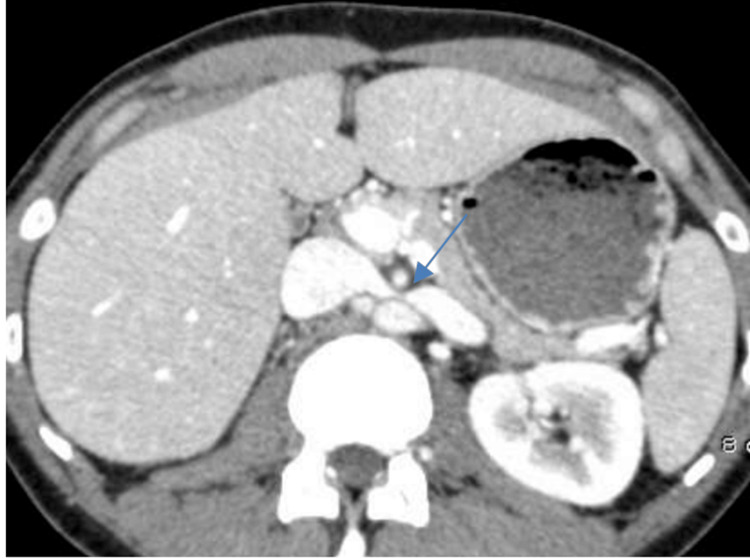 Figure 1
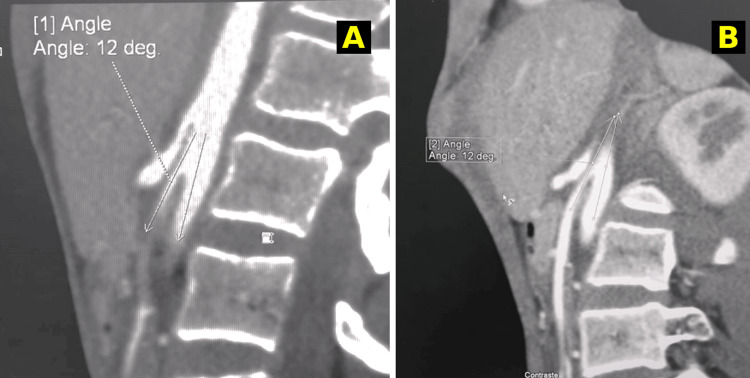 Figure 2
Peer Reviews
No public reviews on file for this paper yet. If you reviewed it on a platform where reviews are public (OpenReview, ICLR, NeurIPS, ICML), you can paste yours below so the community can read it here.
Videos
No videos yet. Explain this paper in a talk, walkthrough, or lecture? Add one.
Taxonomy
TopicsVascular anomalies and interventions · Abdominal vascular conditions and treatments · Renal and Vascular Pathologies