Racial disparities in diabetes care and outcomes for people with visual impairment: a descriptive analysis of the TriNetX research network
Charisse Madlock-Brown, Austin Lee, Jaime Seltzer, Anthony Solomonides, Nisha Mathews, Jimmy Phuong, Nicole Weiskopf, William G. Adams, Harold Lehmann, Juan Espinoza

TL;DR
This study finds that people with visual impairment and diabetes face racial disparities in care and outcomes, especially among White and African American groups.
Contribution
The study reveals how visual impairment interacts with race to affect diabetes management and health outcomes using a large-scale medical record network.
Findings
Diabetes prevalence is nearly doubled in visually impaired individuals across White, Asian, and African American populations.
Higher rates of chronic kidney disease were observed in visually impaired individuals, with significant risk ratios for White and African American groups.
Testing disparities for A1c and GFR were found, with White individuals less likely to receive tests and African Americans with visual impairment more likely to receive both.
Abstract
This research delves into the confluence of racial disparities and health inequities among individuals with disabilities, with a focus on those contending with both diabetes and visual impairment. Utilizing data from the TriNetX Research Network, which includes electronic medical records of roughly 115 million patients from 83 anonymous healthcare organizations, this study employs a directed acyclic graph (DAG) to pinpoint confounders and augment interpretation. We identified people with visual impairments using ICD-10 codes, deliberately excluding diabetes-related ophthalmology complications. Our approach involved multiple race-stratified analyses, comparing co-morbidities like chronic pulmonary disease in visually impaired patients against their counterparts. We assessed healthcare access disparities by examining the frequency of annual visits, instances of two or more A1c…
Genes, proteins, chemicals, diseases, species, mutations and cell lines named across the full text — each resolved to its canonical identifier and authoritative record.
Click any figure to enlarge with its caption.
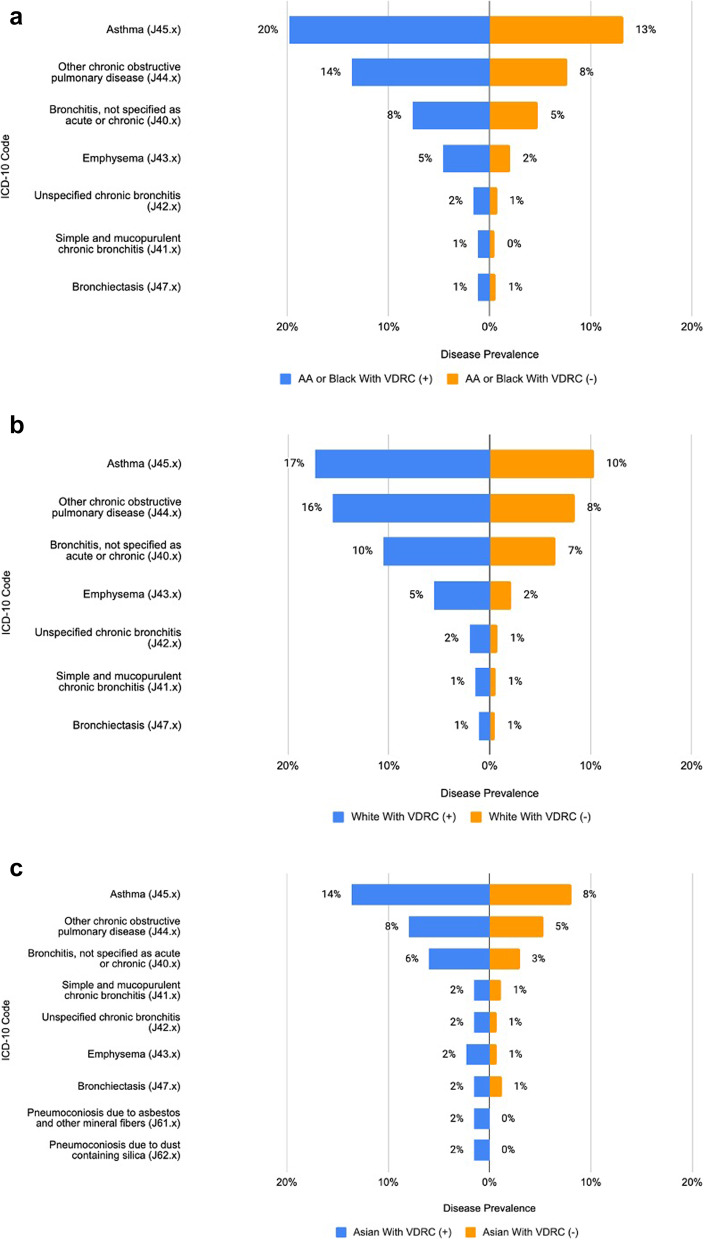 Figure 1
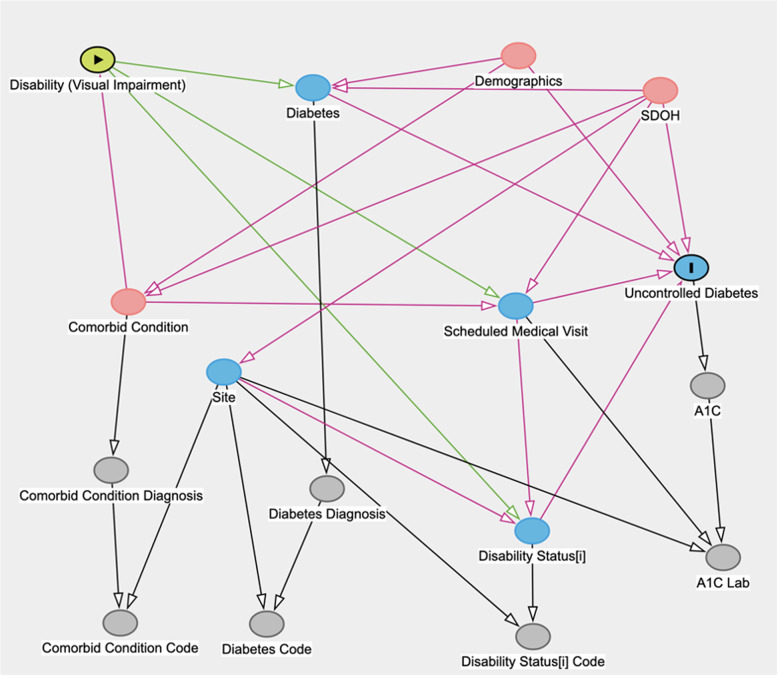 Figure 2
Peer Reviews
No public reviews on file for this paper yet. If you reviewed it on a platform where reviews are public (OpenReview, ICLR, NeurIPS, ICML), you can paste yours below so the community can read it here.
Videos
No videos yet. Explain this paper in a talk, walkthrough, or lecture? Add one.
Taxonomy
TopicsRetinal Diseases and Treatments · Retinal Imaging and Analysis · Ophthalmology and Visual Impairment Studies