AI-Driven segmentation and morphogeometric profiling of epicardial adipose tissue in type 2 diabetes
Fan Feng, Abdallah I. Hasaballa, Ting Long, Xinyi Sun, Justin Fernandez, Carl-Johan Carlhäll, Jichao Zhao

TL;DR
This paper introduces an AI method to accurately segment and analyze epicardial fat in type 2 diabetes patients, revealing structural differences linked to cardiometabolic risk.
Contribution
A novel shape-aware AI framework for EAT segmentation and morphogeometric profiling in T2D, identifying key structural biomarkers.
Findings
EAT-Seg achieved high segmentation accuracy (DSC 0.881, HD95 3.213 mm, ASSD 0.602 mm).
Morphogeometric features like volume and thickness gradients were strong discriminators between T2D and controls (r > 0.8, P < 0.05).
Random Forest classification reached an AUC of 0.703 for T2D detection using these features.
Abstract
Epicardial adipose tissue (EAT) is associated with cardiometabolic risk in type 2 diabetes (T2D), but its spatial distribution and structural alterations remain understudied. We aim to develop a shape-aware, AI-based method for automated segmentation and morphogeometric analysis of EAT in T2D. A total of 90 participants (45 with T2D and 45 age-, sex-matched controls) underwent cardiac 3D Dixon MRI, enrolled between 2014 and 2018 as part of the sub-study of the Swedish SCAPIS cohort. We developed EAT-Seg, a multi-modal deep learning model incorporating signed distance maps (SDMs) for shape-aware segmentation. Segmentation performance was evaluated using the Dice similarity coefficient (DSC), the 95% Hausdorff distance (HD95), and the average symmetric surface distance (ASSD). Statistical shape analysis combined with partial least squares discriminant analysis (PLS-DA) was applied to…
Genes, proteins, chemicals, diseases, species, mutations and cell lines named across the full text — each resolved to its canonical identifier and authoritative record.
Click any figure to enlarge with its caption.
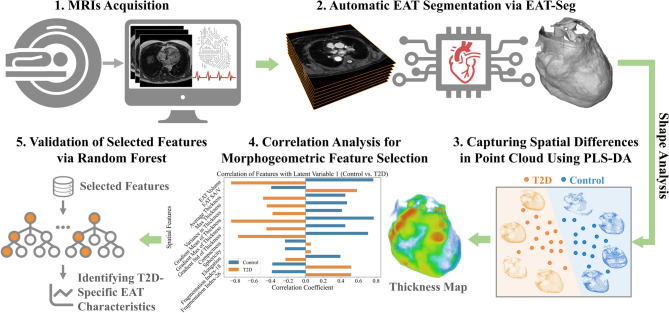 Figure 1
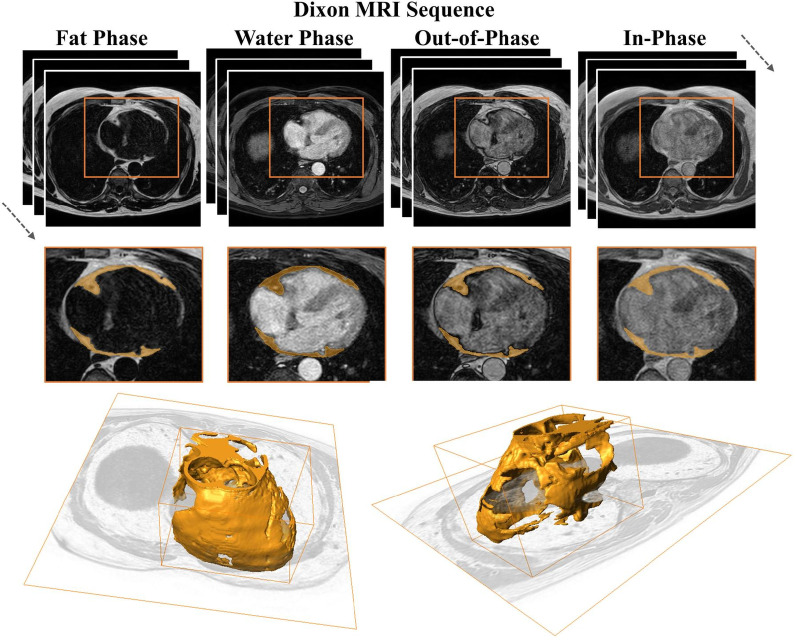 Figure 2
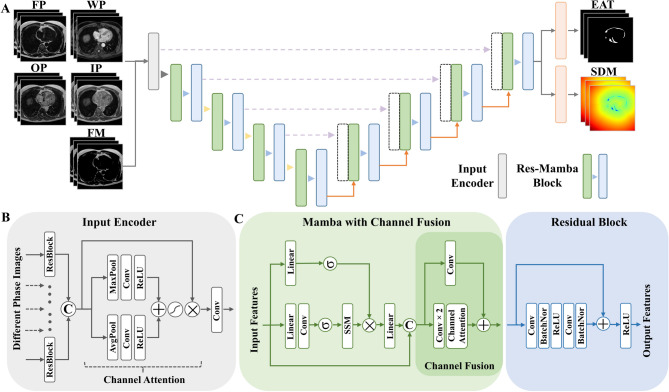 Figure 3
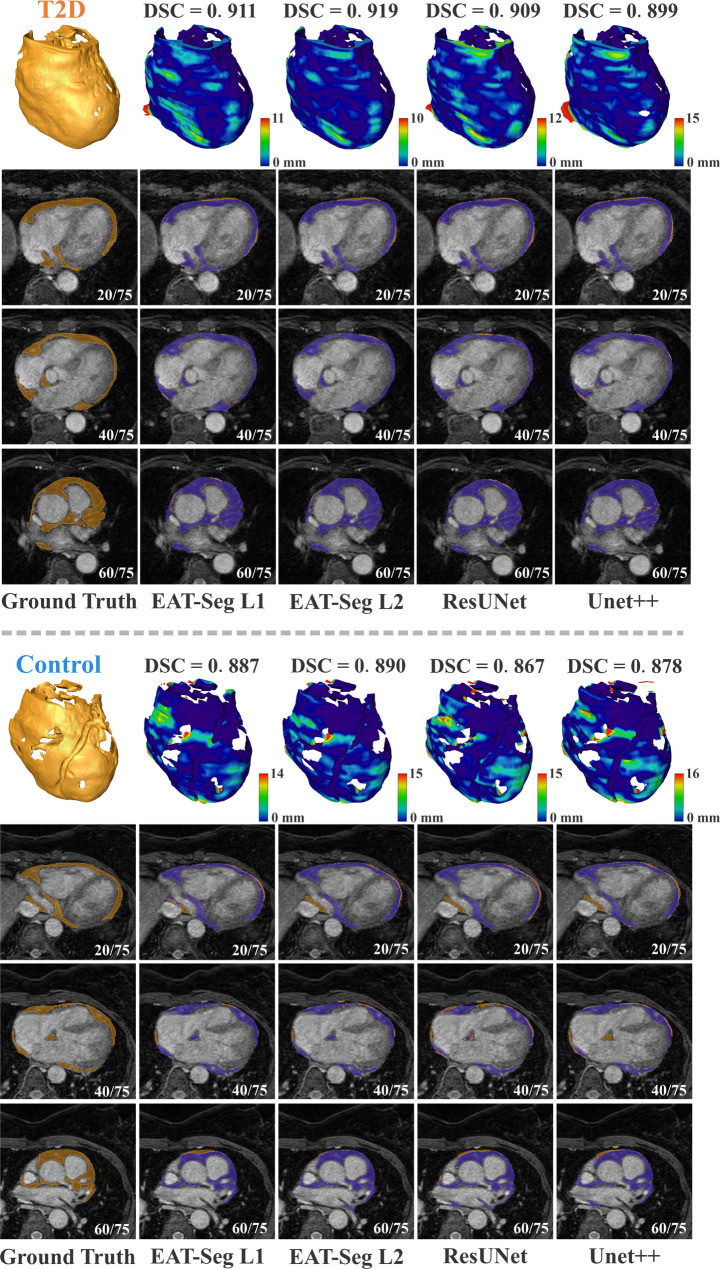 Figure 4
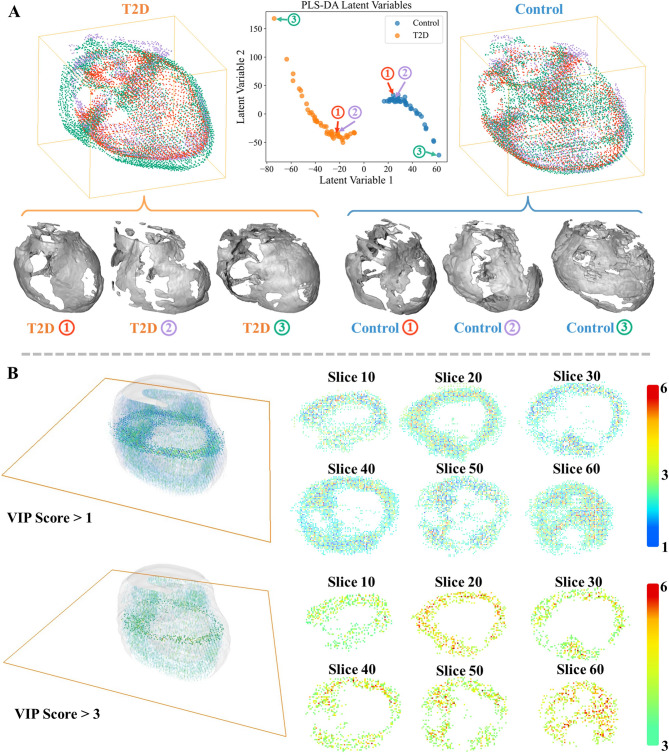 Figure 5
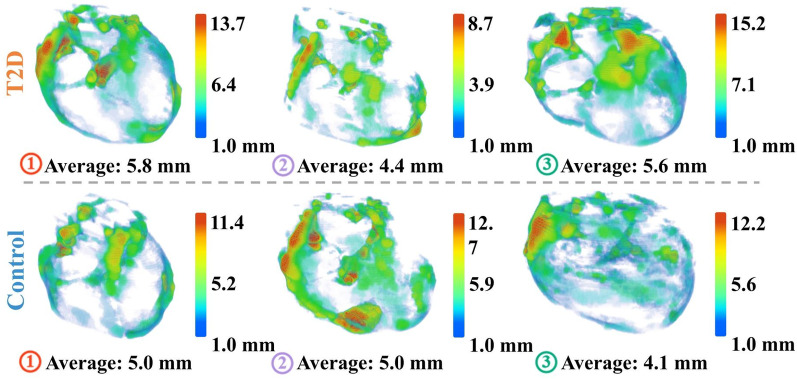 Figure 6
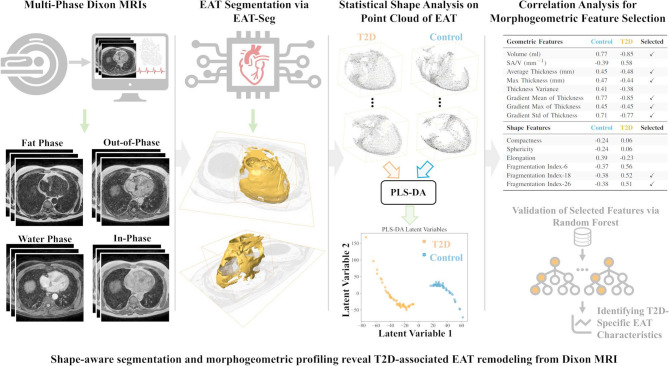 Figure 7
Peer Reviews
No public reviews on file for this paper yet. If you reviewed it on a platform where reviews are public (OpenReview, ICLR, NeurIPS, ICML), you can paste yours below so the community can read it here.
Videos
No videos yet. Explain this paper in a talk, walkthrough, or lecture? Add one.
Taxonomy
TopicsCardiovascular Disease and Adiposity · Cardiovascular, Neuropeptides, and Oxidative Stress Research