Health systems science and systems thinking: qualitative evaluation of preclinical medical student reflections in a role-play simulation game
Thi Kim Chi Dang, Kyung Hye Park, Sangmi Teresa Lee

TL;DR
This study explores how a role-play simulation game helps preclinical medical students develop systems thinking skills, which are important for understanding and improving healthcare systems.
Contribution
The study introduces and evaluates the use of the simulation game Friday Night at the ER to foster systems thinking in preclinical medical education.
Findings
High-performing teams in the simulation game used collaboration, data-driven decisions, and innovation more effectively.
Students' reflections revealed themes like teamwork, patient-centered care, and systems thinking habits.
The game helps preclinical students form a professional identity focused on system-based practice.
Abstract
The importance of systems thinking in Health Systems Science is increasingly recognised, yet its integration into undergraduate medical education remains inconsistent. Evidence on the use of simulation games to promote experiential learning and systems thinking development during the preclinical phase is also limited. This study examined the effect of the simulation game Friday Night at the ER (FNER) on the development of systems thinking in preclinical medical students. The research questions focused on (1) What core systems thinking strategies affected team performance scores in the FNER game? (2) How were these strategies related to the Habits of a Systems Thinker framework? (3) What emotions and insights did students gain through the FNER game? Following simulation-based experiential learning in a systems-focused curriculum, we analysed open-ended reflections from 22 preclinical…
Genes, proteins, chemicals, diseases, species, mutations and cell lines named across the full text — each resolved to its canonical identifier and authoritative record.
Click any figure to enlarge with its caption.
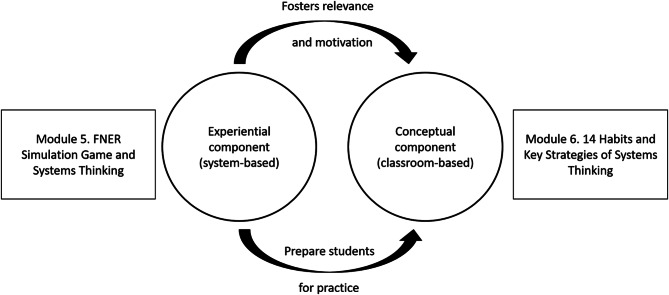 Figure 1
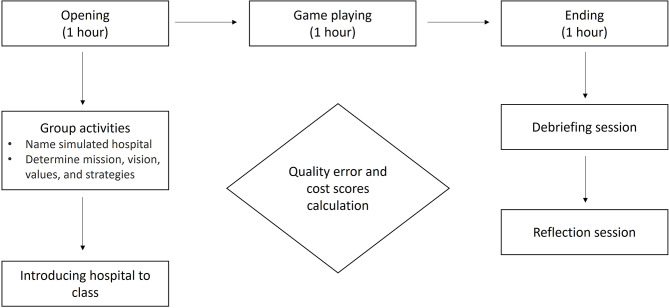 Figure 2
Peer Reviews
No public reviews on file for this paper yet. If you reviewed it on a platform where reviews are public (OpenReview, ICLR, NeurIPS, ICML), you can paste yours below so the community can read it here.
Videos
No videos yet. Explain this paper in a talk, walkthrough, or lecture? Add one.
Taxonomy
TopicsInnovations in Medical Education · Clinical Reasoning and Diagnostic Skills · Interprofessional Education and Collaboration